
As an Amazon Associate KitchenwareSets.com earns from qualifying purchases.
11 Genius Kitchen Layouts That Work Without An Island
Do you dream of a beautiful kitchen but feel crushed by your small, island-less space? You’re not alone. Many apartment dwellers and homeowners feel that a kitchen without an island is automatically cramped and inefficient. This can make cooking feel like a chore.
A kitchen without an island can be more functional by prioritizing an efficient layout and using smart alternatives. This guide will show you 11 genius kitchen layouts that prove you don’t need an island to have a stylish and highly workable kitchen. You’ll discover how to maximize your flow, storage, and style.
Contents
show
Is a Small Kitchen Crushing Your Culinary Dreams?
Feeling frustrated by a cramped kitchen is a common problem, especially in apartments. There’s a persistent myth that a great kitchen must have a central island. When you don’t have the square footage for one, it’s easy to feel like you’re missing out on counter space, storage, and a social hub. This often leads to awkward workflows and a constant battle with clutter.
But what if the lack of an island is actually a design opportunity? By embracing an island-free layout, you can create a kitchen with superior traffic flow, a more open feel, and a unique character that’s perfectly tailored to your space. It’s about shifting your mindset from what you lack to the possibilities you can create.
A kitchen without an island can be even more functional by prioritizing an efficient layout like a U-shape or galley, which maximizes perimeter counters. Alternatives like peninsulas, counter-height tables, and rolling carts can successfully replace the prep space, storage, and seating functions of an island.
11 Genius Kitchen Layouts That Work Without An Island
Forget the idea that you’re just looking for a simple substitute. These 11 island-free kitchen ideas are complete layout concepts designed to create a beautiful, high-functioning heart of your home. Each one is a proven strategy based on core interior design principles for ergonomics and space maximization. We’ll explore how each layout optimizes your kitchen work triangle—the path between your sink, stove, and refrigerator—to make your daily routine a breeze.
1. The Classic Kitchen Peninsula for a Built-In Feel

Pin this space-saving idea to your ‘Kitchen Remodel’ board!
A peninsula is the number one alternative to a kitchen island. It provides the same benefits—extra counter space, storage in the base, and a casual seating area—but connects to a wall on one end. This simple difference saves a huge amount of floor space because you only need a walkway on three sides instead of four, making it perfect for an L-shaped or U-shaped kitchen layout.
Key Elements Needed:
- Base cabinets to match your existing kitchen style
- A single piece of countertop material (quartz, butcher block, or granite) with a 15-inch overhang for knee space
- Decorative end panel to finish the exposed side of the cabinet
- 2-3 comfortable counter-height stools that can tuck underneath
How to Implement It:
- Plan the Location: Identify the end of a counter run where the peninsula will extend, ensuring it doesn’t block major walkways (leave at least 36 inches).
- Secure the Base: Anchor the new base cabinet(s) to the floor and the adjacent cabinet for stability.
- Install the Countertop: Have a professional template and install the countertop, ensuring the overhang is properly supported.
- Finish the Details: Attach the decorative end panel and slide your new stools into place.
A peninsula is the perfect place to add feature lighting. A pair of stylish pendant lights hung above will define the space and add task lighting.

2. The Sociable Counter-Height Table Hub

Save this flexible kitchen idea for your apartment!
If a built-in peninsula isn’t an option, a freestanding counter-height table is a brilliant, flexible solution. It acts as both a prep space and a dining spot. Because it’s furniture, it feels lighter and less bulky than a traditional island, keeping your kitchen feeling open. Plus, you can take it with you when you move.
Key Elements Needed:
- A sturdy counter-height (36-inch) or bar-height (42-inch) table suitable for your space
- 2-4 matching stools that can be completely tucked under the table to clear walkways
- Optional: A clear acrylic or glass top to protect a wood surface during heavy prep work
How to Implement It:
- Measure Carefully: Measure your open kitchen space, leaving at least 36 inches for walkways on all sides of the proposed table.
- Choose Your Height: A 36-inch counter-height table will be the same height as your counters, creating a seamless look for prep work. A 42-inch bar-height table creates more visual separation.
- Select a Style: Choose a table that complements your kitchen decor. A rustic wood table adds warmth, while a metal one adds an industrial feel.
- Position and Use: Place the table in the center of your workspace. Use it for morning coffee, casual meals, and extra counter space when cooking.
Look for a narrow rectangular or square table to maximize function in smaller or galley-style kitchens. A round table works well in an L-shaped kitchen corner.

3. The Flexible Rolling Butcher Block Cart

Pin this renter-friendly kitchen tips!
For ultimate flexibility and a budget-friendly price point, nothing beats a high-quality rolling kitchen cart. This is the perfect renter-friendly solution. You can roll it into the center of your kitchen when you need an extra prep surface, then push it against a wall to clear the floor when you’re done. Many models offer shelves and drawers, adding valuable storage space.
Key Elements Needed:
- A high-quality rolling kitchen cart with a durable top like butcher block or stainless steel
- Ensure the model has heavy-duty locking caster wheels for safety and stability
- Look for features like shelves, drawers, or a towel bar for extra utility
How to Implement It:
- Assess Your Needs: Decide what you’ll use the cart for most. If it’s for heavy chopping, prioritize a thick butcher block top. If for storage, look for multiple shelves or drawers.
- Check Dimensions: Choose a cart that fits comfortably in your space, allowing it to be pushed against a wall when not in use.
- Assemble and Organize: Assemble the cart according to the instructions. Stock the shelves with frequently used pots, mixing bowls, or dry goods.
- Roll Into Action: Wheel the cart to the center of your kitchen when you need extra prep space. Lock the wheels before you start chopping. Push it aside to create an open floor plan when entertaining.
Don’t cheap out on the wheels. Flimsy, non-locking wheels are a safety hazard and make the cart feel unstable.
4. The Supremely Efficient U-Shaped Kitchen

Save this ultimate layout for small kitchen efficiency!
Sometimes the best solution is to embrace the layout your space provides. A U-shaped kitchen, with counters and cabinets on three walls, is an ergonomic powerhouse. It naturally creates a compact and efficient work triangle, keeping your sink, stove, and refrigerator just a few steps apart. You get an enormous amount of continuous counter space and storage without needing a central island at all.
Key Elements Needed:
- Cabinetry and countertops along three adjacent walls
- A clever corner storage solution, like a Lazy Susan or a pull-out shelf, to make corners accessible
- Strategic placement of the sink, stove, and refrigerator to form a compact work triangle
How to Implement It:
- Design the Triangle: Place your three main work centers (sink, stove, fridge) on the three different walls. The distance between them should be minimal for ultimate efficiency.
- Maximize Corners: The biggest challenge in a U-shape is the two corners. Install specialized hardware like a Lazy Susan or blind corner pull-outs so no space is wasted.
- Utilize All Walls: Run upper cabinets along all three walls for maximum storage. Consider glass-front cabinets on one wall to prevent the space from feeling too boxed-in.
- Keep it Open: The open end of the ‘U’ should lead into a dining or living area, creating an open feel and preventing the cook from being isolated.
For a U-shaped kitchen to work, the distance between the two parallel legs of the ‘U’ should be at least 5-6 feet to allow for comfortable movement and for appliance doors to open.

5. The Airy and Open-Concept L-Shaped Layout

Pin this perfect open-plan kitchen idea!
An L-shaped kitchen layout is ideal for open-concept apartment living. With cabinets and counters running along two adjacent walls, it leaves the rest of the space completely open, promoting great traffic flow and a connection to the living or dining area. The open corner created by the ‘L’ is the perfect spot for a small dining table, which can serve as the social hub and extra prep space an island might have provided.
Key Elements Needed:
- Cabinetry and countertops running along two perpendicular walls
- A plan to utilize the open corner created by the ‘L’, often with a small dining table or a comfortable armchair
- Open shelving on the end of a cabinet run to ease the transition into the living space
How to Implement It:
- Place Major Appliances: Position the refrigerator on one end of the ‘L’ and the stove/oven on the other, with the sink in the middle, to spread out the work zones.
- Embrace the Corner: Don’t let the open space go to waste. Add a small round table and chairs to create a dining nook. This piece of furniture will anchor the space where an island might have gone.
- Create Flow: The L-shape naturally directs traffic flow away from the core workspace, which is great for households with kids or for entertaining.
- Blend the Spaces: Use consistent flooring throughout the kitchen and living area. Add a stylish runner rug in the kitchen to define the zone without closing it off.
An L-shaped layout is the easiest to add a peninsula to later if you change your mind and have the space. It’s a very flexible starting point.

6. The Sleek and Streamlined Galley Kitchen

Save this idea for making a narrow kitchen work!
Galley kitchens, featuring two parallel runs of cabinets, are a classic for a reason: they are supremely efficient. This narrow kitchen layout is designed for a linear workflow. With smart design choices, you can make a galley kitchen feel open and sleek, not cramped. The key is to use visual tricks to create a sense of space.
Key Elements Needed:
- Two parallel runs of base and upper cabinets
- Light-colored cabinets and countertops to reflect light and create a sense of space
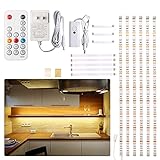
- Excellent lighting, especially under-cabinet task lighting, is non-negotiable
- A minimum of 3-4 feet of space in the central corridor
How to Implement It:
- Separate Wet and Dry: Place the sink and dishwasher on one wall (the ‘wet’ zone) and the stove and refrigerator on the opposite wall (the ‘dry’ zone). This creates an incredibly efficient workflow.
- Go Handleless: Choose flat-panel cabinets with integrated handles or push-to-open mechanisms. This removes visual clutter and saves a few precious inches of space.
- Trick the Eye: Use reflective surfaces like glossy cabinets or a mirrored backsplash to make the space feel wider. Lay flooring planks or a runner rug lengthwise to draw the eye and elongate the room.
- Keep Uppers Light: Consider using open shelving or glass-front doors for some of the upper cabinets on one wall to reduce the feeling of a closed-in corridor.
If one of the “walls” is a half-wall or peninsula opening to another room, you get all the efficiency of a galley with the social benefit of an open-plan kitchen.
7. The Minimalist One-Wall Kitchen with a Work Table

Pin this ultimate space-saver for studio apartments!
For the ultimate in space-saving, especially in a studio apartment, the one-wall kitchen is a minimalist dream. All your cabinets, appliances, and plumbing are consolidated along a single wall, which keeps the rest of your floor plan completely open. To add crucial prep space, a freestanding work table is placed opposite the main wall, acting as a functional yet visually light island substitute.
Key Elements Needed:
- A single wall of base and upper cabinets containing the sink, cooktop, and a compact or under-counter refrigerator
- A freestanding work table (stainless steel is a durable, professional choice) placed opposite the cabinet wall
- Vertical storage solutions like a wall-mounted pot rack or magnetic knife strip
How to Implement It:
- Consolidate Everything: Plan your single wall meticulously. The sink should be in the center, with the fridge on one side and the cooktop on the other, creating prep space in between.
- Choose the Right Table: Select a sturdy, counter-height work table. Models with a lower shelf are invaluable for storing pots, pans, or small appliances.
- Define the Zone: Place a durable, easy-to-clean rug on the floor between the cabinet wall and the table to visually define the kitchen “zone” in an open studio.
- Go Vertical: Since cabinet space is limited, use the wall space above the work table for open shelving or pot racks to store frequently used items.
In a one-wall kitchen, every item must earn its place. Be ruthless about decluttering. This layout only works with a minimalist approach.

8. The Cozy and Custom Built-In Breakfast Nook

Save this charming idea for adding seating and storage!
If your primary need is comfortable seating, a built-in breakfast nook or banquette is a fantastic, space-efficient solution. Tucked into a corner, it provides more seating in less space than a traditional table and chairs. The best part? The base of the banquette bench can be designed with hinged lids, creating a massive amount of hidden storage.
Key Elements Needed:
- A DIY or custom-built bench frame, typically in an L-shape to fit a corner
- Plywood for the top of the bench, ideally on hinges for access to storage below
- Comfortable 2-3 inch thick foam for the cushions, cut to size
- Durable, easy-to-clean upholstery fabric
- A small pedestal or trestle table that allows for easy sliding in and out of the bench
How to Implement It:
- Identify a Corner: Find an underutilized corner in or near your kitchen. A corner with a window is ideal.
- Build the Base: Construct simple wood frames to form the base of the banquette. Ensure they are securely attached to the wall studs.
- Create Storage Lids: Attach the plywood tops with piano hinges so they can lift up, revealing hidden storage compartments inside the bench – perfect for seasonal items or small appliances.
- Add Comfort: Get foam cut to the exact dimensions of your bench tops and wrap it in your chosen fabric using a staple gun for a taught, professional finish.
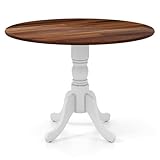
- Select a Table: A pedestal table is key, as it eliminates corner legs that would block people from sliding in and out easily.
Make the seat depth around 18 inches and the seat height (including cushion) around 18 inches for maximum comfort.
9. The Open and Organized Baker’s Rack Station

Pin this vertical storage solution for small kitchens!
To compensate for the storage you lose by not having an island, you need to think vertically. A tall baker’s rack or étagère is an elegant and practical way to do this. Placed against an empty wall, it can serve as a dedicated station for your coffee maker and microwave, freeing up valuable counter space for food prep. Its open shelving adds storage without the visual bulk of another cabinet.
Key Elements Needed:
- A sturdy, high-quality baker’s rack or étagère with a weight capacity suitable for a microwave or other small appliances
- A collection of attractive baskets and canisters to organize smaller items
- S-hooks for hanging mugs, utensils, or towels
How to Implement It:
- Find a Free Wall: Identify a stretch of empty wall in your kitchen or an adjacent dining area.
- Create a Zone: Dedicate the baker’s rack to a specific function. It could be a coffee/breakfast bar, a baking station, or a place to house the microwave and toaster oven to free up main prep counters.
- Organize by Level: Place the heaviest item (like the microwave) on the sturdiest shelf, usually the main wood or butcher block surface. Use upper shelves for lighter items like mugs and glassware, and lower shelves for cookbooks or baskets of produce.
- Use Hooks and Baskets: Maximize every inch. Use S-hooks to hang items from the wire shelves. Use decorative baskets to corral clutter like dish towels or snacks.
Always use the included anti-tip hardware to secure the baker’s rack to the wall, especially if you have children or pets.

10. The Elegant and Repurposed Console Table Buffet

Save this stylish storage idea for your dining space!
Think outside the kitchen. In an open-plan home, a narrow console table or sofa table placed on a wall in the adjacent dining area can serve as a beautiful and functional buffet. It provides a dedicated surface for serving food during gatherings and can store less-frequently used items like serving platters, table linens, and specialty glassware, freeing up prime real estate in your kitchen cabinets.
Key Elements Needed:
- A narrow console table or sofa table (typically 12-18 inches deep) with a style that complements your home decor
- A large mirror or piece of art to hang above the table to create a focal point
- Storage baskets or trays that fit neatly on the lower shelf or surface
How to Implement It:
- Think Outside the Kitchen: This solution works best on a wall in an adjacent dining room or open-plan living area, acting as a bridge between the spaces.
- Choose a Statement Piece: Select a console table that adds character. It doesn’t need to match your kitchen cabinets. A vintage or antique piece can add a lot of charm.
- Style for Function: Use the top surface as a buffet for serving food during parties or as a bar area. Use the lower shelves or drawers to store items you don’t use daily, like serving platters, specialty glassware, or table linens.
- Create a Vignette: Hang a mirror or art above the console and add a lamp or a pair of candlesticks. This elevates the piece from simple storage to a true design feature.
A console table is not meant for heavy food prep. Its primary roles are storage and serving, so don’t plan on using it as a cutting board.

11. The Space-Saving Drop-Leaf Wall-Mounted Table

Pin this genius solution for tiny spaces!
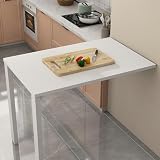
When every square inch counts, a wall-mounted drop-leaf table is the ultimate space-saving champion. This brilliant piece of furniture, sometimes called a Murphy table, provides a dining or prep surface when you need it and folds down flat against the wall, taking up virtually zero floor space when you don’t. It’s the perfect solution for tiny kitchens, studio apartments, or any area where a permanent table isn’t feasible.
Key Elements Needed:
- A wall-mounted drop-leaf table kit with sturdy hinges and support bracket
- Heavy-duty wall anchors or lag bolts to ensure a secure installation into wall studs
- A pair of slim, folding stools that can be hung on the wall or stored in a closet
How to Implement It:
- Locate Wall Studs: This is critical. Use a stud finder to locate the wall studs where you plan to hang the table. It must be anchored into solid wood, not just drywall.
- Mount Securely: Follow the manufacturer’s instructions precisely. Mount the table hinge bracket securely into the studs at your desired height (standard table height is 30 inches).
- Test the Mechanism: Once installed, test the folding mechanism several times to ensure it operates smoothly and the support bracket locks securely in place.
- Pair with Folding Stools: The magic of this solution is that everything can disappear. Use folding stools that can be hung on wall hooks nearby when the table is down.
This table can double as a standing desk or a small laptop workstation, making it an incredibly versatile piece for a studio apartment.
Key Takeaways: Your Quick Guide to an Island-Free Kitchen
- Prioritize Flow: A great kitchen is one you can move around in easily. The #1 benefit of skipping an island is improved traffic flow. Always ensure walkways are at least 36 inches wide.
- Furniture is Flexible: A counter-height table or a high-quality rolling cart can provide 90% of an island’s function with 100% more flexibility, which is perfect for renters or those who like to reconfigure their space.
- Embrace Your Layout: A well-designed U-shaped or galley kitchen can offer more storage and a more efficient workflow than a poorly planned kitchen with a cramped island.
- Go Vertical: To make up for the lost storage in an island base, think vertically. Use tall solutions like baker’s racks, pot racks, and wall-to-ceiling pantry cabinets.
- Create Zones: Use peninsulas, tables, or even rugs to create dedicated zones for prep, cooking, and dining, giving your open-concept space structure and purpose.
People Also Ask About Kitchens Without Islands
Will I regret not having a kitchen island?
You are unlikely to regret it if you choose a smart alternative that solves for your primary needs. Many people prefer the open space and better traffic flow of an island-less design. The key is to first identify if you need more prep space, seating, or storage, and then implement a solution like a peninsula or work table that specifically provides that function.
What can I put in the middle of my kitchen if there is no island?
For function, a counter-height work table or a rolling butcher block cart are the best options. They provide a central prep surface. For a more social or dining-focused centerpiece, a round dining table works beautifully. If you simply want to fill the space visually without adding bulk, a beautiful vintage runner rug can anchor the room.
Is a peninsula a good idea for a small kitchen?
Yes, a peninsula is often a better choice than an island for a small kitchen. It provides similar counter space and seating benefits but only requires walkway clearance on three sides instead of four. This saves a significant amount of floor space and helps to open up the layout, preventing a cramped feeling.
How do you add counter space to a kitchen without an island?
Maximize your perimeter and add flexible surfaces. A U-shaped layout provides the most built-in counter space. Additionally, a freestanding work table or rolling kitchen cart can be brought in when needed. You can also use temporary solutions like over-the-sink cutting boards or stove top covers to create extra prep areas.
Final Thoughts
A stylish, highly functional kitchen is defined by its workflow and smart design, not by the presence of a single piece of furniture. By embracing the space you have and choosing clever alternatives, you can create a kitchen that feels open, works beautifully, and is uniquely yours. An island-free design isn’t a compromise; it’s a confident choice that prioritizes flow and flexibility.
Which of these island-free ideas could you see working in your home? Let us know in the comments below
Last update on 2026-09-17 at 11:31 / Affiliate links / Images from Amazon Product Advertising API
