
As an Amazon Associate KitchenwareSets.com earns from qualifying purchases.
Outdoor Kitchen Concrete Countertops Complete DIY Guide
Tired of seeing high-end outdoor kitchens with price tags that break the bank? You want a custom, rock-solid countertop that can handle anything, but the cost of granite or stone feels completely out of reach. You’re ready for a DIY project but feel intimidated by the thought of working with concrete.
Outdoor kitchen concrete countertops are an excellent DIY project because they offer unmatched durability, weather resistance, and customization at a fraction of the cost of stone or granite. They can be poured in place to create a seamless, custom-fit surface that integrates perfectly with grills and sinks, providing a high-end look for a budget-friendly price. This approach gives you full creative control over your outdoor space.
Leveraging tested frameworks and documented project results, this guide breaks down the entire process into simple, manageable steps. We’ll show you exactly how to build a beautiful, professional-quality concrete countertop you can be proud of. Get ready to transform your patio into the ultimate outdoor entertainment hub.
Contents
show
Why Build Outdoor Kitchen Concrete Countertops Yourself?
Choosing the right material for your outdoor kitchen countertops is a critical decision. You need something that not only looks great but can withstand sun, rain, and extreme temperatures year after year. While materials like granite and quartz are popular, they come with a hefty price tag and require professional installation. This is where DIY outdoor kitchen concrete countertops shine as the superior choice for the hands-on homeowner. They offer an unparalleled combination of rugged durability, complete design freedom, and significant cost savings. After completing multiple outdoor concrete projects, we’ve refined this process to avoid common pitfalls. This guide uses proven outdoor concrete techniques to ensure your project is a success, resulting in a weatherproof, custom surface that becomes the centerpiece of your patio design. Imagine having a custom, rock-solid countertop you built yourself. Ready to see how it’s done?
Your Complete 7-Step DIY Guide to Outdoor Kitchen Concrete Countertops
Building your own concrete countertops is a multi-day project that requires patience and attention to detail, but it’s an incredibly rewarding process. We’ve broken down the entire workflow into seven distinct stages to make it approachable for anyone with intermediate DIY skills. This step-by-step guide covers everything from the crucial planning and substrate preparation to the final sealing and long-term maintenance. Following this proven method ensures you don’t miss a single critical step, leading to a professional-grade finish that will last for decades. Each stage includes a detailed list of what you’ll need and clear, actionable instructions to guide you through the pour-in-place concrete method.
1. Plan, Measure, and Prepare the Substrate

Pin this essential first step to your ‘Outdoor Kitchen Ideas’ board!
A successful concrete countertop begins long before you mix any concrete. The foundation, or substrate, must be perfectly level, stable, and ready to support the weight of the concrete. This step is arguably the most critical because any flaws in the base will be magnified in the final product and can lead to cracking down the road. Proper planning involves accurately measuring your outdoor kitchen cabinets, deciding on the countertop thickness and overhang, and accounting for any cutouts for your BBQ grill or sink. Using cement board is the industry standard for creating a durable and stable base that concrete can bond to effectively.
What You Need
- Tape Measure & Pencil
- Level (4-foot recommended)
- Circular Saw with Carbide Blade (for cement board)
- Drill/Driver
- 1/2-inch Cement Board (e.g., HardieBacker or Durock)
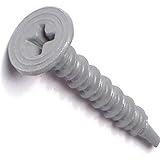
- 1-1/4 inch Cement Board Screws
- Construction Adhesive (rated for exterior use)
- Fiberglass Mesh Tape (for seams)
Steps
- Measure Accurately: Measure the length and width of your cabinet base. Add your desired overhang (typically 1 to 1.5 inches) to the front and any open sides.
- Cut Cement Board: Mark your measurements on the cement board sheets. Wearing a mask and safety glasses, cut the board to size using a circular saw.
- Attach Substrate: Apply a generous amount of construction adhesive to the top of the cabinet frame. Lay the cement board down and press firmly.
- Secure with Screws: Fasten the cement board to the frame using cement board screws every 6-8 inches.
- Tape the Seams: Cover any seams between pieces of cement board with fiberglass mesh tape to create a single, unified surface.
Pro-Tip: Double-check that your entire substrate is perfectly level. A slight error here will be magnified in the final countertop. Use shims under the cement board if necessary to achieve a perfectly level base.
2. Construct and Install the Countertop Forms

Save this form-building technique for a flawless finish!
The forms are the mold that will give your countertop its final shape, size, and edge profile. Creating a leak-proof and perfectly square form is essential for a professional finish. You have two main options: commercial systems like Z Form concrete countertops, which provide a clean square edge form, or building your own from melamine sheets. For DIYers, commercial forms are highly recommended as they simplify the process and guarantee a perfect edge. This is also the stage where you will place reinforcement and block out any openings for sinks or grills.
What You Need
- Countertop Edge Forms (e.g., Z Form Square Edge) or Melamine Sheets
- Screws (for attaching forms)
- Silicone Caulk and Caulk Gun
- Wire Mesh or 3/8″ Rebar
- Foam Knockouts (for sink or faucet holes)
- Hot Glue Gun (for knockouts)
- Bolt Cutters (for mesh/rebar)
Steps
- Cut & Attach Forms: Cut your edge forms to length with a miter saw for clean 45-degree corners. Screw the forms directly into the edge of the cement board substrate.
- Seal All Seams: Apply a thin, smooth bead of silicone caulk to all inside corners and seams where the forms meet the cement board. This is critical to prevent leaks.
- Place Reinforcement: Cut the wire mesh or rebar to fit inside the forms, leaving about 1 inch of space from all edges. Prop it up on small plastic spacers (or small pieces of foam) so it sits in the middle of the countertop’s thickness.
- Install Knockouts: Use hot glue to secure foam knockouts for any sink, faucet, or grill cutouts you need.
Pro-Tip: For an ultra-smooth edge, run your finger along the wet silicone bead to create a perfectly rounded transition (called a ‘fillet’). This small detail makes a huge difference in the final look and prevents chipping.
3. Mix the High-Strength Concrete Correctly

Get the perfect mix every time! Pin this for your project.
Not all concrete is created equal. For countertops, you must use a specialized, high-strength mix like the CX Pro-Formula concrete mix or a similar outdoor-rated product. These mixes contain finer aggregates and polymers that result in a denser, smoother, and stronger final product compared to standard concrete. The most critical factor in this step is the water-cement ratio, especially for outdoor applications. Adding too much water weakens the concrete, making it prone to cracking and reducing its freeze-thaw resistance. The goal is a thick, consistent mix that holds its shape.
What You Need
- Bagged Countertop Concrete Mix (e.g., Quikrete Countertop Mix or CX Pro-Formula)
- Wheelbarrow or Concrete Mixer
- Mixing Hoe or Drill with Paddle Mixer
- Measuring Bucket (for water)
- Fiber Reinforcement (if not included in mix)
Steps
- Read the Bag: Every mix is slightly different. Read the manufacturer’s instructions for the precise amount of water required per bag.
- Add Mix First: Pour the dry concrete mix into your wheelbarrow or mixer.
- Add Water Slowly: Add about 3/4 of the recommended water and begin mixing thoroughly. Scrape the sides and bottom to ensure there are no dry pockets.
- Achieve Ideal Consistency: Continue adding small amounts of water until the mix has a thick, oatmeal-like or peanut butter consistency. It should hold its shape but not be dry and crumbly.
- Mix for 5 Minutes: Mix continuously for at least 5 minutes to ensure all ingredients are fully hydrated and the mix is uniform.
Pro-Tip: A common rookie mistake is adding too much water, which significantly weakens the concrete. The mix should NOT be soupy. A good test: grab a handful (with gloves on). It should form a ball without dripping water.

4. Pour, Vibrate, and Level the Concrete

The most satisfying step! Pin this for pouring day.
This is where your countertop starts to take shape. The process involves carefully placing the mixed concrete into the forms, vibrating it to remove air bubbles, and leveling the surface. Vibrating is a non-negotiable step; it consolidates the concrete, eliminates voids and “bug holes,” and ensures the mix fully encases the reinforcement. While a concrete countertop vibrator is ideal, you can achieve good results by tapping the form sides with a mallet. After vibrating, you’ll screed the surface to create a flat, level plane, followed by a light troweling to smooth it out.
What You Need
- Bucket or Shovel (to transfer concrete)
- Concrete Vibrator (or rubber mallet/orbital sander)
- Magnesium Trowel
- A very straight 2×4 (for screeding)
Steps
- Place Concrete: Start at one end and place buckets of concrete into the forms. Do not just dump it all in the middle. Spread it out as you go. Slightly overfill the forms.
- Vibrate Thoroughly: Turn on your concrete vibrator and stick the tip into the wet concrete, moving it throughout the entire form. You will see air bubbles rising to the surface. Alternatively, firmly tap the sides of the forms with a rubber mallet or run an orbital sander (without sandpaper) along the sides.
- Screed the Surface: Lay a straight 2×4 board across the top of the forms. In a back-and-forth sawing motion, pull the board towards you, dragging the excess concrete off and creating a perfectly flat surface.
- Trowel Smooth: After screeding, use a magnesium trowel held at a slight angle to create a smooth, consolidated surface. Do not overwork it.
Pro-Tip: Work quickly and have a helper. Once you start mixing, the clock is ticking. Having one person mix and ferry concrete while another pours and levels is the key to a stress-free pour.

5. Cure, Strip Forms, and Finish the Surface

The secret to a silky smooth finish! Save this guide.
Concrete doesn’t just dry; it undergoes a chemical reaction called hydration, or curing. To reach its maximum strength, concrete must be kept damp for several days. After pouring, you’ll cover the slab with plastic to trap moisture. Once it has cured for 48-72 hours, you can strip the forms and begin the finishing process. This usually involves wet-polishing with a concrete grinder and a series of diamond polishing pads. Starting with a low grit and working your way to a high grit allows you to achieve anything from a matte finish to a high-gloss sheen. A key professional technique is to create a slurry from the grinding dust to fill in any tiny pinholes for a flawless surface.
What You Need
- Plastic Sheeting
- Spray Bottle with Water
- Pry Bar & Hammer (for form removal)
- Wet/Dry Concrete Grinder/Polisher
- Diamond Polishing Pads (from 50-grit to 1500+ grit)
- Squeegee
Steps
- Cure the Concrete: As soon as the surface is hard to the touch (a few hours), lightly mist it with water and cover it with plastic sheeting. Keep it covered and damp for at least 5-7 days. This is crucial for strength.
- Strip the Forms: After 48-72 hours, you can carefully remove the form screws and gently pry off the forms. Be careful with the corners.
- Begin Polishing (Wet): Start with the lowest grit pad (e.g., 50 or 100). Spray the countertop with water and begin grinding in a circular motion, covering the entire surface evenly.
- Fill Pinholes: Use a squeegee to collect the cement dust and water (slurry) and work it back into any tiny pinholes on the surface. Let it dry, then continue.
- Progress Through Grits: Wipe the surface clean and move up to the next grit pad (e.g., 200, then 400, 800, 1500). The higher you go, the more sheen you will achieve.
Pro-Tip: Wet polishing is non-negotiable. It keeps harmful silica dust out of the air, extends the life of your diamond pads, and gives a much better finish than dry grinding.

6. Seal for Weatherproof Durability

Protect your hard work! Pin these sealing instructions.
Sealing is the most important step for protecting your outdoor concrete countertops from the elements. Concrete is naturally porous, and an unsealed surface will absorb water, oils, and other stains. For outdoor use, it is absolutely essential to choose a high-quality concrete countertop sealer that is UV resistant to prevent yellowing and degradation from the sun. The sealer protects the concrete surface and makes it stain-resistant and easy to clean. For any food prep area, using a food-safe certified sealer is a professional standard that ensures safety and peace of mind.
What You Need
- High-Quality Outdoor Concrete Countertop Sealer (UV-resistant and food-safe)
- Microfiber Applicator Pad or high-density foam roller
- Clean, lint-free rags
- Acetone or Denatured Alcohol (for final cleaning)
Steps
- Wait for Full Cure: Do not apply sealer until the concrete has cured for at least 14-28 days, depending on the sealer manufacturer’s instructions.
- Clean Thoroughly: Wipe the entire surface down with acetone or denatured alcohol to remove any dust, oils, or residue. The surface must be perfectly clean and dry.
- Apply a Thin First Coat: Pour a small amount of sealer onto the surface and immediately spread it into a very thin, even layer using your applicator. Work in one direction.
- Apply Subsequent Coats: Let the first coat dry per the instructions (usually 1-2 hours). Apply 3-5 thin coats in total, alternating the application direction (e.g., left-to-right, then front-to-back) with each coat to ensure full coverage.
- Let it Cure: Allow the sealer to fully cure for the time specified by the manufacturer (often 24-72 hours) before use.
Pro-Tip: Thin coats are far better than one thick coat. A thick coat can look cloudy and fail to adhere properly. The goal is to build up multiple, imperceptibly thin layers of protection.
7. Long-Term Care and Maintenance

Keep your countertops looking new for years. Pin these tips!
One of the best attributes of concrete is that it’s extremely low maintenance. With a proper sealer applied, daily care is simple. However, to ensure longevity and keep your countertops looking pristine, a few best practices should be followed. This involves using the right cleaners, protecting the surface from scratches, and understanding when to re-apply a maintenance coat of sealer. Based on long-term durability testing, your re-sealing schedule will depend on your climate; in snowy climates, for instance, you should plan to re-seal every 2 years to maintain optimal protection.
What You Need
- pH-Neutral Cleaner (avoid acidic or abrasive cleaners)
- Soft Microfiber Cloths
- Cutting Boards
- Trivets for hot pans
- Concrete Countertop Wax (optional, for added protection)
Steps
- Daily Cleaning: Wipe up spills immediately using a soft cloth and water. For regular cleaning, use a pH-neutral cleaner specifically designed for stone or concrete.
- Avoid Harsh Chemicals: Never use acidic cleaners like vinegar or lemon juice, or abrasive cleaners like Comet, as they can etch and damage the sealer.
- Use Cutting Boards: While the concrete is hard, the sealer can be scratched. Always use a cutting board for chopping.
- Use Trivets: Concrete is heat-resistant, but thermal shock from a very hot pan can damage the sealer. Use trivets as a precaution.
- Periodic Re-sealing: Depending on your climate and use, you may need to apply a fresh coat of sealer every 2-5 years. If water no longer beads up on the surface, it’s time to re-seal.
Pro-Tip: Applying a coat of food-safe countertop wax every 6 months can act as a sacrificial layer, protecting the underlying sealer and making the surface even more stain-resistant and easier to clean.

Key Takeaways: Your Quick Guide to Outdoor Kitchen Concrete Countertops
Building outdoor kitchen concrete countertops is a detailed but achievable DIY project. To ensure success, focus on these critical points that make the difference between an amateur attempt and a professional-quality result.
- Preparation is Paramount: A perfectly level and stable cement board substrate is non-negotiable. Errors here cannot be fixed later.
- Use a Countertop-Specific Mix: Don’t use standard concrete. A dedicated concrete countertop mix has the right aggregate size and strength for a smooth, crack-resistant finish.
- Vibration Creates Perfection: Removing air bubbles by vibrating the wet concrete is the single most important step for achieving a dense, professional-looking surface without voids.
- Curing is Not Drying: Keeping the concrete damp and covered for at least 5-7 days (cure concrete properly) is what gives it its ultimate strength, not just letting it air dry.
- Outdoor Sealer is a Must: You must use a high-quality, UV resistant concrete sealer specifically made for exterior use. Indoor sealers will yellow and fail in the sun.
- Thin Coats are Best: When sealing, apply multiple thin, even coats rather than one thick one. This ensures better adhesion and a more durable, streak-free finish.
People Also Ask About Outdoor Kitchen Concrete Countertops
What is the best sealer for outdoor concrete countertops?
The best sealer is a UV-stable, penetrating, and food-safe silane/siloxane sealer. Unlike topical acrylics that can yellow or peel, a penetrating sealer soaks into the concrete to provide water and stain resistance from within, which is far more durable against weather exposure. Always look for products specifically labeled for “outdoor countertop” use.
What thickness should outdoor concrete countertops be?
The industry standard thickness for concrete countertops is 1.5 to 2 inches. This provides excellent structural integrity and a substantial look without adding excessive weight. For a standard outdoor kitchen cabinet base, 1.5 inches is perfectly sufficient and helps manage the total weight.
Are concrete countertops cheaper than granite for an outdoor kitchen?
Yes, DIY concrete countertops are significantly cheaper than professionally installed granite. The material cost for a DIY concrete project can be 70-80% less than the cost of granite slabs and installation labor. While professionally made concrete countertops can be comparable in price to granite, the DIY route offers massive savings.
Do outdoor concrete countertops crack?
Properly reinforced and cured concrete countertops are highly resistant to cracking. Cracks are typically caused by an improper mix (too much water), inadequate curing, or insufficient support from the base. Using wire mesh reinforcement and keeping the concrete damp during the 7-day curing process are the best ways to prevent concrete countertop cracking outdoor.
How long do outdoor concrete countertops last?
A well-made and properly sealed concrete countertop can last a lifetime. The key to longevity is maintenance. The concrete itself is incredibly durable, but the sealer needs to be reapplied every 2-5 years to protect it from staining and water penetration, ensuring it withstands weather for decades.
What is the best concrete mix for outdoor countertops?
A high-strength, bagged countertop mix with a compressive strength of at least 5000 PSI is best. Look for mixes that are polymer-modified or contain fiber reinforcement. Products like Quikrete Countertop Mix or specialized mixes from brands like CX Pro-Formula are engineered for this purpose and perform much better than standard concrete sacks.
Can you pour concrete countertops in place?
Yes, pouring in place is the most common and practical method for DIY outdoor kitchen countertops. This technique, detailed in this guide, allows you to create a seamless, custom-fit countertop directly on your cabinet base without needing to flip a heavy, precast slab.
How do you protect concrete countertops from stains?
The sealer is the primary protection against stains. A high-quality, food-safe sealer will repel most common outdoor kitchen spills like oil, wine, and acidic foods. It’s also crucial to wipe up spills immediately and use a pH-neutral cleaner, as harsh chemicals can damage the sealer.
Is concrete good for outdoor countertops?
Concrete is one of the best materials for outdoor countertops due to its durability and weather resistance. Unlike some natural stones, it won’t be damaged by freeze-thaw cycles when properly sealed. It’s also completely customizable in shape, color, and finish, making it a top choice for outdoor kitchen build projects.
Do you need rebar in a 1.5-inch concrete countertop?
For a 1.5-inch thick countertop, wire mesh is generally preferred over rebar. Rebar can be too thick and risk “ghosting” (being visible) on the surface. A grid of 1/8-inch steel wire mesh or fiber reinforcement added to the mix provides excellent tensile strength to prevent cracking without the bulk of rebar.
Final Thoughts on Your DIY Concrete Countertop Project
Building your own outdoor kitchen concrete countertops is more than just a home improvement project; it’s an opportunity to create a custom, durable, and truly unique centerpiece for your outdoor living space. While it demands careful planning and methodical work over several days, the result is a high-end feature that you built with your own hands for a fraction of the cost of other materials. By following proven track record methods like those outlined here—from proper substrate preparation to meticulous curing and sealing—you can achieve a professional finish that will impress your guests and provide years of enjoyment. Now that you have the complete blueprint, which step are you most excited to start?
Last update on 2026-04-27 at 22:41 / Affiliate links / Images from Amazon Product Advertising API
