
As an Amazon Associate KitchenwareSets.com earns from qualifying purchases.
European Small Kitchen: 7 Smart Ideas for Ultimate Organization
Does your compact cooking space feel cramped, disorganized, and uninspiring? Many homeowners struggle with maximizing functionality and style in a limited kitchen footprint, often sacrificing aesthetics for practicality.
European small kitchen design leverages frameless cabinetry, integrated appliances, and ergonomic layouts to maximize functionality and create a sleek, organized aesthetic in compact spaces. It prioritizes vertical storage and handleless designs to achieve ultimate organization and a modern feel. Drawing from comprehensive analysis of current data and proven methodologies, this guide will unlock the secrets to transforming your tiny kitchen. You’ll discover how European design principles can convert challenging constraints into ingenious solutions, delivering both beauty and brilliant efficiency.
Contents
show
Maximize Your Small Kitchen: European Design Principles for Ultimate Organization
Transforming a compact cooking area into an organized, high-functioning space requires a strategic approach, one expertly delivered by European small kitchen design principles. These designs inherently prioritize functionality, clever space utilization, and a streamlined appearance to make the most of every square foot. By focusing on smart solutions and ergonomic layout considerations, you can overcome common challenges like limited counter space and lack of storage fixes. Drawing from expert kitchen designer tips and established architectural layout principles, this section will set the stage for practical ideas that turn your tiny European kitchen layout into a model of efficiency and elegance.
1. Maximize Vertical Space with Slim Pantry Pull-Outs

Pin this genius vertical storage hack to your “Small Kitchen Organization” board!
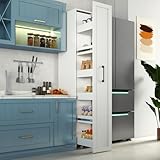
Slim pantry pull-outs are an ingenious way to reclaim often-overlooked vertical space in a small kitchen, transforming narrow gaps into highly efficient storage. These specialized units, a hallmark of compact European kitchens, are designed to slide out completely, offering full visibility and access to every item. They effectively address the lack of storage fixes by providing a dedicated, organized home for dry goods, spices, or cleaning supplies, maintaining a streamlined appearance in your minimalist European kitchen.
Supplies Needed:
- Slim pull-out pantry unit: (e.g., 6-12 inch width, full-extension, soft-close hardware)
- Measuring tape & level: for accurate placement
- Drill & appropriate drill bits: for cabinet installation
- Screwdriver set: for assembly
- Small bins or clear containers: for organizing contents within (entity_attributes_descriptive)
Step-by-Step Directions:
- Measure your space accurately: Identify narrow gaps between existing cabinets or appliances where a pull-out pantry can be integrated (measure your space).
- Assemble the pull-out unit: Follow manufacturer instructions, ensuring all internal baskets and slides are correctly installed.
- Install base glides: Secure the bottom glides to the cabinet base or floor, making sure they are perfectly level and aligned.
- Attach upper guides: Mount the upper guides to the inside of the cabinet frame or wall, ensuring they are parallel to the base glides.
- Insert the pantry unit: Carefully slide the assembled pull-out unit onto the glides, checking for smooth operation.
- Secure and test: Ensure all screws are tightened, and the unit glides effortlessly, filling it with groceries for a final weight test (optimize vertical storage).
Pro-Tip: Opt for full-extension slides with soft-close mechanisms, a hallmark of high-end European manufacturing, to prevent slamming and ensure longevity, especially when the pantry is fully loaded. This modular kitchen ergonomics feature maximizes accessibility.
2. Integrate Handleless Cabinetry for Seamless Flow

Save this sleek design idea to your “Minimalist Kitchen Goals” board!
Handleless cabinetry is a cornerstone of modern European kitchen design, offering an unparalleled seamless and uncluttered aesthetic that makes small spaces feel expansive. By eliminating protruding hardware, these frameless cabinets create uninterrupted sleek surfaces and minimalist lines that flow beautifully across the kitchen. This design choice contributes significantly to a streamlined appearance, reducing visual clutter and providing a sense of spaciousness crucial for small kitchen ideas european, which often complements small apartments.
What You Need:
- Frameless kitchen cabinets: with either integrated finger pull channels, j-pull profiles, or push-to-open hardware (entity_attributes_descriptive, handleless kitchen units)
- Measuring tools: for accurate planning
- Installation hardware: as specified by cabinet manufacturer
- Color samples: to ensure chosen finish complements small apartments
Step-by-Step Directions:
- Select your handleless style: Decide between integrated finger pulls (carved into the door), j-pulls (a groove for fingers), or magnetic push-to-open mechanisms (modern kitchen cabinets).
- Choose cabinet finishes: Opt for glossy or matte finishes in neutral color palettes to enhance the illusion of space and create a seamless look (glossy finishes, matte textures, neutral color palettes).
- Plan your layout: Ensure minimal gaps between doors and drawers for an uninterrupted visual flow. Consider stacked wall cabinets to optimize vertical storage.
- Install frameless cabinetry: Precisely fit cabinet boxes, ensuring they are level and plumb to maintain the clean lines essential for handleless designs (install frameless cabinets).
- Adjust door alignment: Carefully adjust hinges to ensure all doors and drawers align perfectly, as even minor misalignments will disrupt the seamless aesthetic (streamlined appearance).
- Test functionality: For push-to-open systems, confirm all mechanisms respond reliably. For integrated pulls, ensure comfortable access (high-functioning).
Pro-Tip: When choosing acrylic high-gloss panels or thermal-fused laminate (TFL) for handleless cabinetry, ensure they are high-quality to resist fingerprints and maintain their sleek surfaces. This contributes to the desired compact luxury feel.

3. Utilize Toe-Kick Storage Drawers for Hidden Space

Pin this clever hidden storage solution to your “Smart Kitchen Storage” board!
Toe-kick storage drawers are a brilliant, often-overlooked solution for maximizing tiny footprints in **small kitchen ideas european, transforming the normally wasted space beneath your cabinets into valuable, hidden storage.** This space-saving solution allows you to discreetly store flat items like baking sheets, serving trays, or even pet bowls, effectively hiding kitchen clutter. It’s a prime example of topical_authority_advanced in kitchen design, leveraging every inch to contribute to ultimate organization and a clean, minimalist European kitchen aesthetic.
Materials Needed:
- Toe-kick drawer kits: specific to your cabinet dimensions
- Measuring tape & pencil: for marking cuts
- Jigsaw or circular saw: for precise cuts
- Drill: for assembly and installation
- Screws & wood glue: for secure construction
- Concealed handles or push-to-open mechanisms: for seamless integration (entity_attributes_descriptive)
Step-by-Step Directions:
- Measure and mark: Determine the exact dimensions of the toe-kick area under your base cabinets. Mark the cut lines for your new drawer opening (measure your space).
- Cut the toe-kick: Carefully cut out the section of the existing toe-kick where the drawer will be installed, ensuring clean edges.
- Assemble the drawer box: Construct the shallow drawer box using your kit or custom-cut wood, securing joints with wood glue and screws.
- Install drawer slides: Attach the drawer slides to the inside of the toe-kick opening and to the sides of your assembled drawer box.
- Mount the drawer front: Attach the cut-out section of the original toe-kick to the front of your new drawer box, ensuring it aligns perfectly with surrounding toe-kicks.
- Test and adjust: Load the drawer with items like baking sheets or platters to test smooth operation. Adjust slides as needed for optimizing small spaces and organizing small pantries.
Pro-Tip: For a truly minimalist European kitchen look, ensure the drawer front integrates perfectly with your existing cabinetry. Use a push-to-open mechanism (soft-close hardware technology) for a handleless finish, maintaining the sleek surfaces of your design.
4. Incorporate Compact, Integrated Appliances

Pin this sleek integrated appliance idea to your “Dream European Kitchen” board!
Integrated appliances are a hallmark of **modern European kitchen ideas, crucial for achieving a visually cohesive and uncluttered look in compact spaces.** Rather than standing out, these appliances are designed to be concealed behind custom panels that perfectly match your frameless cabinets, creating a seamless wall of cabinetry. This approach effectively addresses compact appliance fit issues by blending them invisibly into the design, contributing to a streamlined appearance that makes the small kitchen ideas european feel larger and more sophisticated.
What You Need:
- Panel-ready compact appliances: (e.g., 18-inch dishwashers, compact ovens, undercounter refrigerators, integrated LED channels)
- Custom cabinet panels: to match your chosen cabinetry
- Installation kits: specific to the appliance and cabinet system
- Professional installation services (recommended): for a seamless finish (certified kitchen installer)
Step-by-Step Directions:
- Select compact, panel-ready appliances: Choose appliances that are designed to accept custom cabinet panels, ensuring they fits narrow floorplans and prioritizes functionality.
- Order matching panels: Have your cabinet maker create door panels for your appliances that perfectly match your frameless cabinets and handleless design.
- Plan appliance placement: Strategically place integrated appliances to maintain an ergonomic layout and contribute to an efficient work triangle in your compact cooking area.
- Prepare the cabinet opening: Ensure the cabinet housing for the appliance is built to the exact specifications required for the integrated unit.
- Install the appliance: Secure the appliance within its housing, ensuring it is level and plumb. Connect all necessary utilities (water, electric, gas).
- Attach custom panels: Mount the matching cabinet panels to the appliance door fronts according to the manufacturer’s instructions, achieving a truly streamlined appearance.
Pro-Tip: Consider a compact induction hob instead of a traditional gas range. They offer precise temperature control, are easier to clean, and contribute to the sleek surfaces and minimalist lines characteristic of modern European kitchen design.

5. Design a Dynamic Ergonomic Work Triangle

Plan your kitchen workflow! Pin this essential layout principle to your “Efficient Kitchen Design” board!
Designing an ergonomic work triangle is a foundational principle of **small kitchen ideas european, ensuring maximum efficiency and minimal effort during cooking tasks.** This architectural layout principle connects the three primary kitchen zones—the refrigerator, sink, and cooktop—with clear, unobstructed pathways. Even in a compact cooking area, optimizing this triangle significantly improves kitchen workflow and makes your kitchen feel larger and more functional, fulfilling the desire for a high-functioning space.
Tools Required:
- Floor plan sketch or digital design tool: for visualizing your layout
- Measuring tape: for precise distance calculations
- Graph paper & pencil (optional): for manual sketching
- Patience & creativity: to plan your layout effectively
Step-by-Step Directions:
- Identify primary work zones: Locate the three main points of your kitchen: the refrigerator (food storage), the sink (food preparation/cleaning), and the cooktop (cooking area).
- Measure distances: The “work triangle” is formed by imaginary lines connecting these three points. The sum of these distances should ideally be between 12 and 26 feet for maximum efficiency in a compact cooking area.
- Ensure clear pathways: Design your kitchen so there are no obstructions, such as islands or peninsulas, that break the flow between any two points of the triangle.
- Optimize each zone: Ensure each zone has adequate countertop space for its function – prep space next to the sink, landing space next to the cooktop and refrigerator (efficient prep areas).
- Consider traffic flow: Design the tiny European kitchen layout so that traffic flows around, rather than through, the work triangle, especially important in small space design.
- Test the layout: Mentally walk through common cooking tasks (e.g., taking food from the fridge, washing it, chopping, then cooking) to identify any potential workflow bottlenecks (improving kitchen workflow).
Pro-Tip: In extremely narrow kitchen layout problems, a linear or galley kitchen can still create an efficient “mini-triangle” by placing the sink and cooktop on one wall and the refrigerator on the opposite, ensuring ergonomic work triangle principles are still applied.

6. Implement Smart Corner Cabinet Solutions

Turn awkward corners into storage gold! Pin this smart solution to your “Kitchen Renovation Ideas” board!
Smart corner cabinet solutions are essential for maximizing available storage in **small kitchen ideas european, tackling the notoriously inefficient awkward kitchen corners.** These innovative systems, such as blind corner pull-outs or LeMans units, are designed to bring items stored deep within the cabinet out into accessible reach. By effectively overcoming limited square footage, these high-functioning modular components transform previously wasted space into practical storage for pots, pans, or small appliances, directly addressing problem_solution_keywords related to small spaces.
What You Need:
- Blind corner cabinet pull-out system: (e.g., LeMans system, kidney-shaped pull-outs, soft-close hardware)
- Measuring tape & level: for accurate installation
- Drill & screwdriver: for assembly and mounting
- Appropriate fasteners: for your cabinet type
- Small appliances, pots, or pans: to organize once installed (maximize storage)
Step-by-Step Directions:
- Assess your corner cabinet: Determine if your existing corner cabinet is a blind corner (access from one side) or a diagonal corner. This will dictate the type of smart solution needed.
- Select the right system: Choose a blind corner pull-out or a pivot-and-slide system (like a LeMans) that fits your cabinet dimensions and storage needs (smart corner cabinets).
- Clear the cabinet: Remove all contents and thoroughly clean the interior of the corner cabinet.
- Install the frame/track: Follow the manufacturer’s detailed instructions to install the central frame or track system within the cabinet, ensuring it’s level and securely fastened.
- Attach the shelves/baskets: Mount the rotating or sliding shelves/baskets onto the installed frame. Ensure they move smoothly and can bear the weight of stored items.
- Test and adjust: Load the shelves with typical kitchen items to test the system’s stability and ease of movement. Make any necessary adjustments for optimizing small spaces and organizing small pantries.
Pro-Tip: European-designed blind corner pull-outs often feature soft-close hardware technology and heavy-duty construction, providing long-lasting kitchen hardware. This investment addresses awkward kitchen corners by transforming them into accessible, high-functioning storage.

7. Optimize Counter Space with Multi-Functional Prep Areas

Pin this space-saving counter idea to your “Small Kitchen Hacks” board!
Optimizing **limited counter space is paramount in small kitchen ideas european, transforming every available surface into a multi-functional efficient prep area.** This strategy involves incorporating clever accessories and design elements that allow surfaces to serve multiple purposes, effectively increasing usable workspace without expanding the kitchen’s footprint. Solutions like integrated cutting boards or roll-up drying racks are fundamental to improving kitchen workflow and maintaining the minimalist European kitchen aesthetic.
What You Need:
- Integrated cutting board: designed to fit over your sink or slide into a countertop slot
- Roll-up dish drying rack: made of silicone or stainless steel, fits over sink
- Pull-out cutting board: or a dedicated breakfast bar extension
- Compact appliance garage: to keep small appliances off the counter
- Under-cabinet lighting: to illuminate tasks (under-cabinet lighting)
- Quality countertop materials: (e.g., quartz surfaces, butcher block counters)
Step-by-Step Directions:
- Assess existing space: Identify areas where countertop space can be created or optimized, such as over the sink, at the end of a cabinet run, or utilizing a portable island.
- Integrate over-sink solutions: Invest in an integrated cutting board or a roll-up dish drying rack that sits directly over your sink, creating instant prep space when the sink is not in use.
- Add pull-out surfaces: Install a pull-out cutting board or a small extension to your countertop that can be stowed away when not needed. These can double as a breakfast bar.
- Utilize vertical storage for appliances: Implement compact appliance garages or small wall shelves to keep your toaster, coffee maker, and other small appliances off the main counter surface.
- Optimize lighting: Ensure sufficient under-cabinet lighting to brightly illuminate your efficient prep areas, making tasks safer and more enjoyable, enhancing the perceived space.
- Maintain minimalism: Regularly declutter your kitchen and only keep essential items on the counter. Embrace the minimalist European kitchen aesthetic by storing away items after use.
Pro-Tip: Consider investing in a butcher block counters section that can be moved or pulled out. It provides an excellent, durable prep surface and adds warmth to minimalist European kitchen designs while offering flexible efficient prep areas.

FAQs About small kitchen ideas european
What makes a kitchen ‘European style’?
A ‘European style’ kitchen is defined by its minimalist aesthetic, emphasis on functionality, and seamless integration of elements. Key features include frameless cabinetry, flat-panel doors, integrated appliances, and a focus on clean lines and ergonomic layouts, prioritizing efficiency and sleek design in often compact spaces.
How do European kitchens save space effectively?
European kitchens save space through intelligent design choices like frameless cabinets that offer more interior room, and vertical storage solutions. They commonly feature integrated appliances that blend into cabinetry, slim pantry pull-outs, and multi-functional accessories, all designed to maximize every square inch and maintain an uncluttered look.
Why choose European style cabinets for small spaces?
European style cabinets are ideal for small spaces primarily because their frameless construction provides up to 15% more usable storage space than traditional framed cabinets. Their sleek, handleless design creates an uninterrupted visual line, making a small kitchen appear larger, less cluttered, and more modern.
Are frameless cabinets better for small kitchens compared to framed?
Yes, frameless cabinets are generally better for small kitchens as they eliminate the face frame, offering wider openings and more accessible interior storage. This maximizes usable space and contributes to the sleek, minimalist aesthetic characteristic of European designs, which helps a small kitchen feel less confined.
What are integrated appliances in a European kitchen?
Integrated appliances are kitchen units (like dishwashers, refrigerators, or ovens) designed to be concealed behind custom cabinet panels that match the surrounding cabinetry. This creates a uniform, streamlined appearance, eliminating visual breaks and making the kitchen feel larger and more cohesive, especially in small layouts.
How can I make my small European kitchen look luxurious?
To make a small European kitchen look luxurious, focus on high-quality materials like quartz countertops, premium finishes (matte or high-gloss), and sophisticated long-lasting kitchen hardware. Incorporate subtle integrated LED channels, minimalist decor, and maintain impeccable organization to elevate the overall aesthetic and signal compact luxury.
What are the best colors for a small European kitchen?
The best colors for a small European kitchen are typically neutral color palettes, such as white, light gray, beige, or soft pastels. These shades reflect light, making the space feel brighter and more expansive, while maintaining the clean, minimalist aesthetic central to European design principles.
Can I have an island in a small European kitchen?
While challenging, a small European kitchen can incorporate an island if space allows, often opting for a compact, movable island or a peninsula extending from existing cabinetry. The key is to ensure it doesn’t obstruct the ergonomic work triangle and maintains clear traffic flow, potentially doubling as a breakfast bar or efficient prep area.
What are German kitchen styles known for in compact spaces?
German kitchen styles are renowned for their precision engineering, exceptional functionality, and ultra-modern, minimalist designs that are highly adaptable for compact spaces. They prioritize modular components, ergonomic work triangle layouts, durable materials, and integrated storage solutions that maximize utility without compromising aesthetics.
How do I maintain the minimalist aesthetic in a small European kitchen?
To maintain a minimalist aesthetic in a small European kitchen, focus on decluttering regularly, utilizing hidden storage solutions, and choosing integrated or compact appliances. Opt for handleless design and sleek surfaces, keeping only essential items on display to preserve the clean lines and uncluttered feel.
Final Thoughts on Small Kitchen Ideas European
Transforming a compact cooking space into a highly organized and aesthetically pleasing European small kitchen design is more than just a dream—it’s an achievable reality with the right principles. By embracing the ethos of functional minimalism and smart design, you can overcome limited counter space and lack of storage fixes, turning perceived limitations into ingenious opportunities. From integrating handleless cabinetry and compact appliances for a seamless flow to unlocking every inch with slim pantry pull-outs and toe-kick storage drawers, the solutions are as elegant as they are practical.
Applying expert kitchen designer tips for an ergonomic work triangle and implementing smart corner cabinet solutions will not only improve kitchen workflow but also elevate your kitchen’s overall efficiency. Remember, the true beauty of small kitchen ideas european lies in its ability to combine high-quality materials with proven space-saving techniques, creating a compact luxury experience. Don’t let a tiny footprint dictate your culinary ambition; instead, let these 7 smart ideas for ultimate organization empower you to design a kitchen that is both beautiful and brilliantly functional. Which of these European-inspired organization ideas will you implement first in your small kitchen?
Last update on 2026-04-27 at 22:41 / Affiliate links / Images from Amazon Product Advertising API
