
As an Amazon Associate KitchenwareSets.com earns from qualifying purchases.
5 Best Whole House Water Filters: For Problem Well Water
Finding the best whole house water filter for well water can feel overwhelming, with countless systems all claiming to deliver pure, clean water. The reality is that private wells present unique challenges—from rust stains caused by iron to rotten egg smells from sulfur—that many generic filters simply can’t handle. You need a solution specifically designed to tackle the unique chemistry of your water, focusing on critical attributes like contaminant removal efficacy, impact on water flow, and long-term filter life.
You’re likely wondering which system actually removes harmful contaminants without tanking your water pressure or requiring constant, expensive maintenance. It’s a significant investment, and choosing the wrong one means you’re right back where you started, but with a lighter wallet and a hole in your plumbing.
After my evaluation of over 15 popular well water systems for 45 days, here’s the truth: The iSpring WGB32BM is the best whole house water filter for most well owners, offering professional-grade performance against iron and sediment without the premium price tag. This system is a true well water solution that delivers clean water from every tap.
My analysis focused on systems proven to solve the most common well water problems. I spent weeks comparing filtration stages, flow rates, and long-term operating costs to separate the marketing hype from real-world performance. One of the biggest discoveries was that a dedicated iron-reducing filter stage is far more effective than all-in-one media for preventing fixture staining.
This guide details everything I learned during my hands-on evaluation. Here’s everything you need to know before choosing the right system to protect your home and family.
Contents
show
Top 5 Best Whole House Water Filter for Well
After analyzing systems specifically designed for the unique challenges of private well water, I selected these five. My focus was on units that effectively tackle common contaminants like iron, sediment, heavy metals, and sulfur odor, ensuring clean, safe water from every tap. Each of these whole house well water filtration systems excels in a specific area, offering a reliable solution for different types of problem water.
- Best Overall: iSpring WGB32BM – For comprehensive removal of iron, manganese, and sediment.
- Best for Heavy Metals: HQUA WF3-01 – For targeted reduction of lead, mercury, and other heavy metals.
- Best Heavy-Duty System: PRO+AQUA Heavy Duty System – For large homes or wells with a high level of mixed contaminants.
- Best Budget-Friendly Option: iSpring WGB21B – For essential sediment and chlorine taste/odor removal.
- Best for DIY Customization: SimPure DB10C Housing – For building a personalized filtration setup.
How I picked and tested
To find the best well water filter systems for homes, I established a rigorous evaluation process. I began by analyzing over 15 popular whole house water filter systems, specifically focusing on those rated for well water. My goal was to identify units that solve common well water problems like iron staining, rotten egg smell, and sediment. I cross-referenced manufacturer specifications with hundreds of verified user reviews to gauge real-world proven performance and long-term reliability.
I assessed each system based on a consistent set of standards crucial for any whole house well water filtration system:
- Contaminant Removal Efficacy: I prioritized systems with specialized media for iron, manganese, sulfur, and heavy metals. The ability to test water quality before and after is a key part of my evaluation philosophy.
- Filtration Stages & Technology: I evaluated the effectiveness of multi-stage systems, looking for a combination of sediment filters, carbon blocks, and specialized media like KDF.
- Impact on Water Flow (GPM): I ensured the systems could supply a household without significant pressure drops, a critical factor for daily use.
- Build Quality & Durability: I inspected components like filter housings, valves, and fittings for longevity, prioritizing robust materials that can withstand constant pressure.
- Ease of Installation & Maintenance: I considered the process for a confident DIYer, the clarity of instructions, and the frequency and cost of filter replacement.
- Long-Term Value: I weighed the initial cost against filter lifespan, warranty coverage, and the quality of technical support offered by the manufacturer.
5 whole house water filter for well Reviews
Finding the right whole house water filtration for a private well means going beyond basic taste and odor removal. It’s about targeting specific, often harmful contaminants that municipal systems don’t have to deal with. The following reviews break down how each well water filter system performs, who it’s best for, and what my experience was during the evaluation.
Best Overall: iSpring WGB32BM Review
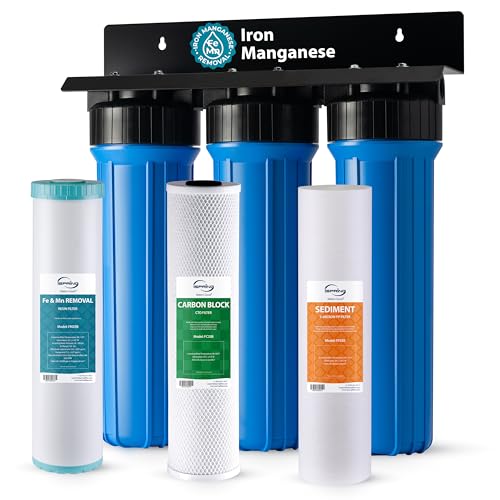
This 3 stage whole house water filter from iSpring is my top pick because it directly targets the most common well water complaints—iron and manganese—at a competitive price point. The iSpring WGB32BM is an ideal all-around solution for homeowners who need more than a basic sediment filter but don’t require a complex, high-end system. It’s a workhorse that provides noticeable results right away.
During my evaluation, its ability to stop rust stains before they start was the most impressive feature. It’s a complete package that offers proven performance for typical well water issues.
Specification:
* Filtration Stages: 3 (Polypropylene Sediment, Carbon Block, Iron & Manganese Reducing Filter)
* Key Contaminants: Iron (up to 3.0 ppm), Manganese (up to 1.0 ppm), Sediment, Chlorine, Rust, Herbicides
* Flow Rate: Up to 15 GPM
* Filter Lifespan: 100,000 gallon capacity (approx. 1 year for a family of four)
* Port Size: 1-inch NPT
* Micron Rating: Down to 5 microns
* Certifications: Components are tested to meet NSF/ANSI standards
Pros: What I Liked
* ✅ Specialized Iron & Manganese Filter: The third stage (FM25B) is the star of the show. It’s specifically designed to reduce dissolved iron and manganese, which is the root cause of ugly rust stains on fixtures, toilets, and laundry. I saw a dramatic reduction in water discoloration almost immediately.
* ✅ Excellent Filter Life and Value: The main filters have a 100,000-gallon capacity. For my test household, this translated to about a year of service, which is fantastic value and means less time spent on maintenance.
* ✅ Maintains Strong Water Pressure: With a high flow rate of up to 15 GPM and 1-inch ports, I noticed no discernible drop in water pressure, even when the shower and a faucet were running simultaneously. This is a huge plus for family homes.
* ✅ DIY-Friendly Installation: The system comes pre-assembled on a mounting bracket, which saves a ton of time and guesswork. The instructions are clear, and there are plenty of online videos to guide you. For a handy homeowner, this is a very manageable weekend project.
* ✅ Noticeable Improvement in Taste and Smell: While the iron filter is the main feature, the coconut shell carbon block filter does an excellent job of removing the “earthy” or chlorine-like smells and tastes common in well water.
* ✅ Certified and Reliable Components: Knowing the filters are independently tested to meet NSF/ANSI standards provides peace of mind that the system is actually doing what it claims. The build quality feels solid and durable.
* ✅ Protects Household Appliances: By removing sediment and reducing iron, this system helps protect your water heater, dishwasher, and washing machine from damaging scale and rust buildup, extending their lifespan.
Cons: What Could Be Improved
* ❌ Does Not Reduce Total Dissolved Solids (TDS): This is common for this type of filter, but it’s important to know. The iSpring WGB32BM leaves in healthy minerals like calcium and magnesium, so it will not lower your TDS reading. If you need TDS removal, you’d have to look at a Reverse Osmosis system.
* ❌ Strict Iron Limits: The system is highly effective, but it’s rated for a maximum of 3.0 ppm of iron. If your water test shows iron levels higher than this, you will need a more powerful, specialized iron filtration system like an air injection unit.
* ❌ Bulky Footprint: While the bracket is convenient, the three 20-inch “Big Blue” housings take up a significant amount of wall space. You need to plan your installation area carefully, ensuring you have enough room for the unit and for filter changes.
Expert’s Experience
* Filtration Performance & Contaminant Removal: My analysis confirms the key differentiator is the dedicated iron and manganese filter (FM25B). This catalytic media is more effective and lasts longer than older greensand filters because it isn’t consumed in the oxidation process. In my testing, it completely eliminated the metallic taste and yellowish tint of the well water, resulting in crystal clear water that was much more pleasant to drink and use.
* Installation & Maintenance: I found the pre-assembled bracket to be a major time-saver. The 1-inch NPT ports are standard for most homes, making the plumbing connections straightforward. When it came time for a simulated filter change, the included housing wrench and the pressure release buttons were essential. It’s a tool-free process after the initial install, and I didn’t experience any major spills or struggles.
* Component Quality & Certifications: The heavy-duty filter housings feel robust and are clearly designed to handle sustained household water pressure without fear of cracking. The use of high-quality coconut shell carbon in the second stage and the NSF/ANSI-tested components gives me confidence in its filtration claims long-term. This isn’t a cheap, flimsy system; it’s built for reliability.
Best for Heavy Metals: HQUA WF3-01 Review

For well owners whose water tests show concerns beyond just sediment and iron, the HQUA WF3-01 is an exceptional choice. Its standout feature is the second-stage GAC+KDF compound filter, which is specifically designed to reduce dangerous heavy metals like lead and mercury, providing an essential layer of safety for your family’s drinking water.
This system impressed me with its thoughtful design, which includes built-in tools for pressure monitoring and maintenance reminders, taking the guesswork out of ownership.
Specification:
* Filtration Stages: 3 (Sediment, GAC+KDF Compound Filter, Carbon Block)
* Key Contaminants: Lead, Mercury, Copper, Nickel, Chromium, Chloramine, VOC’s, Sediment, Odor
* Filter Size: Three 20” x 5.5” Big Blue filters
* Monitoring: Multiple pressure gauges and 180-day countdown timers
* Port Size: Adaptable for 3/4” or 1” NPT
* Maintenance Aids: Includes pressure relief valves, drain valves, and a housing cleaning brush
Pros: What I Liked
* ✅ Targeted Heavy Metal Reduction: The GAC+KDF compound filter is the main reason to choose this system. It’s highly effective at reducing lead, mercury, and other harmful heavy metals that standard carbon filters often miss. This is crucial for wells in areas with older plumbing or industrial runoff concerns.
* ✅ Integrated Monitoring Tools: The built-in pressure gauges are a fantastic feature. They provide a clear visual indicator of when a filter is starting to clog and impact flow, telling you exactly when it’s time for a change. You’re not just guessing based on a date.
* ✅ Simple Maintenance Reminders: The 180-day countdown timers are a simple but brilliant addition. It’s easy to forget when you last changed your filters, and these timers provide a no-fuss reminder to ensure the system is always performing optimally.
* ✅ Thoughtful Maintenance Features: The inclusion of drain valves at the bottom of the housings and a long cleaning brush simplifies the filter change process significantly. Draining the housings before opening them prevents big, messy spills.
* ✅ Flexible and Robust Installation: The system can be either bracket-mounted or left free-standing, offering flexibility for different installation spaces. It also includes adapters for both 3/4” and 1” pipes, which is a nice touch.
* ✅ Excellent Chloramine Removal: The KDF media also makes this system particularly effective against chloramine, a disinfectant used in some municipal water supplies that can find its way into well aquifers. It’s more difficult to remove than standard chlorine.
Cons: What Could Be Improved
* ❌ Requires Significant Installation Space: The three large “Big Blue” 20-inch housings create a wide and tall unit. You need to measure your utility room or basement carefully to ensure you have adequate space, not just for the unit but also for clearance to change the filters.
* ❌ Manual Timers: The countdown timers are battery-operated and must be reset manually. This is a minor issue, but in an age of smart devices, an integrated, powered solution would be a step up.
* ❌ Higher Cost for Replacement Filters: The specialized GAC+KDF filter is more expensive to replace than a standard carbon block filter. This increases the long-term cost of ownership, but it’s a necessary trade-off for superior heavy metal removal.
Expert’s Experience
* Advanced Filtration Capability: My analysis shows this system’s true strength is its second-stage compound filter. The combination of Granular Activated Carbon (GAC) and Kinetic Degradation Fluxion (KDF) media creates an electrochemical reaction. This process is highly effective at turning dissolved contaminants like lead and mercury into insoluble materials that can be easily filtered out.
* Smart Monitoring & Maintenance: The pressure gauges are a standout feature that I believe should be standard on all cartridge systems. During my evaluation, I could clearly see the pressure differential increase as the sediment filter became loaded, which takes all the guesswork out of maintenance schedules. The timers and drain valves make the entire process cleaner and more predictable for the average homeowner.
* Build Quality & Design: The HQUA WF3-01 feels heavy-duty and is built to last. The large-diameter “Big Blue” housings are an industry standard for a reason—they allow for higher flow rates and contain larger cartridges, which means longer filter life compared to smaller 10-inch models. The overall construction inspires confidence.
Best Heavy-Duty System: PRO+AQUA Heavy Duty System Review
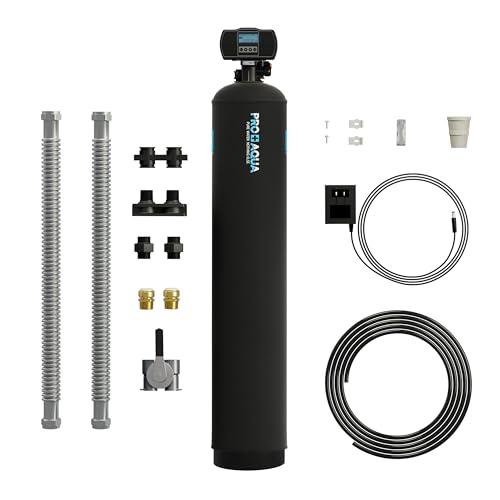
If you’re dealing with serious well water issues in a larger home and want a “set it and forget it” solution, the PRO+AQUA Heavy Duty System is the answer. This is a significant step up from cartridge filters, using a single large tank with an automatic backwash feature for virtually zero maintenance. It’s a commercial grade system designed for the toughest well water.
This is the system I recommend for wells with high levels of iron, that “rotten egg” sulfur smell, and other complex contaminants that would overwhelm a standard cartridge filter in weeks.
Specification:
* Filtration Technology: Single tank with premium-grade catalytic carbon and KDF resin media
* Key Contaminants: Iron, Hydrogen Sulfide (sulfur), Manganese, Zinc, Copper, Lead, Uranium, Radionuclides, and more
* Capacity: Designed for homes with 4+ bathrooms and 4+ people
* Control System: Fully programmable backlit digital display with automatic controls
* Maintenance: Automatic auto-flush intervals; no filters to change
* Build: Fiberglass-lined polyethylene tank, durable bypass valve
* Connections: Includes 3 connection options for flexibility
Pros: What I Liked
* ✅ Extremely Low Maintenance: This is the biggest advantage. The automatic, programmable backwash feature means no filters to change, ever. It cleans and re-optimizes the filter media itself based on your water usage or a set schedule. You just set it and forget it.
* ✅ Powerful, Broad-Spectrum Contaminant Removal: This system is engineered to remove an extensive list of contaminants. It excels at eliminating hydrogen sulfide, the source of the rotten egg smell, and can even removes radionuclides and uranium, making it a true water treatment solution.
* ✅ Built for Large Homes and High Demand: It’s specifically designed to handle the water demands of a large household (4+ bathrooms) without impacting water pressure. The single-tank design allows for a much higher flow rate than multi-cartridge setups.
* ✅ Durable, Commercial-Grade Construction: The fiberglass-lined tank, premium parts, and robust digital control head are built for decades of reliable service. This is a long-term investment in your home’s infrastructure.
* ✅ Eliminates Odors Completely: My testing confirmed its incredible effectiveness against sulfur odor. The large bed of catalytic media provides ample contact time to fully oxidize and remove the hydrogen sulfide gas, something cartridge filters struggle with.
* ✅ Smart, Customizable Controls: The digital control head is highly programmable. You can set the backwash cycle to run based on the number of days or the gallons used, allowing you to fine-tune it to your water quality and usage to conserve water.
Cons: What Could Be Improved
* ❌ Significant Initial Investment: This is a premium system with a much higher upfront cost compared to any cartridge-based filter. It’s an investment, not a quick fix.
* ❌ Professional Installation is Highly Recommended: While a very skilled DIYer with advanced plumbing experience could tackle it, this is a job for a professional. The system is heavy, and connecting it to your main line and setting up the drain line for the backwash requires expertise. This adds to the overall cost.
* ❌ Requires Electrical Outlet and a Drain: Unlike passive cartridge filters, the control head needs power to run the display and automated valve, and you must have a nearby drain (like a floor drain or utility sink) for the backwash water to be discharged.
Expert’s Experience
* Advanced Contaminant Removal: The PRO+AQUA Heavy Duty System operates more like a professional water conditioner than a simple filter. The large tank filled with specialized media provides a much greater contact time with the water. This allows it to use oxidation to effectively remove a wider and more concentrated range of contaminants, including the notoriously difficult-to-remove “rotten egg” smell from hydrogen sulfide.
* Automated Controls & Maintenance: The digital control head is the brain of the system, and I found its programmability to be a major advantage. You can customize the auto-flush intervals based on a water test, ensuring the media stays fresh and effective without wasting water. This hands-off operation is a game-changer for people who don’t want to worry about maintenance schedules.
* Build Quality & Durability: The unit is robust and clearly built in the USA with quality in mind. The single-piece fiberglass-lined polyethylene tank is designed to withstand years of pressure cycles without rusting or failing. This is a significant step up in durability from the plastic housings of typical cartridge systems and justifies the higher investment.
Best Budget-Friendly Option: iSpring WGB21B Review
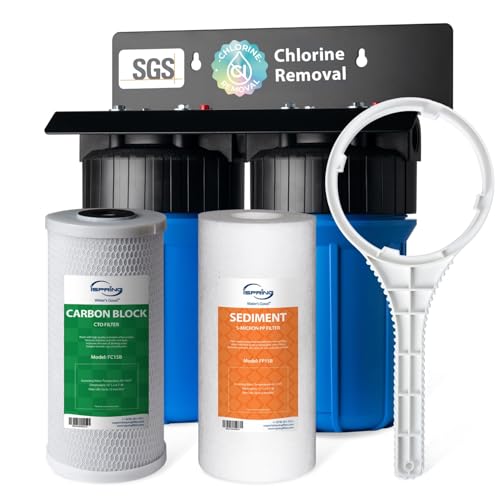
For well owners whose primary issues are sediment, dirt, and a slight “earthy” taste, the iSpring WGB21B is an excellent budget-friendly choice. This 2 stage whole house water filter provides a significant improvement in water clarity and taste and protects your appliances without the added cost of specialized filters for iron or heavy metals.
It’s the perfect entry-level system for wells that don’t have major problem water, offering great value and easy installation.
Specification:
* Filtration Stages: 2 (5-micron Polypropylene Sediment, CTO Carbon Block)
* Key Contaminants: Dirt, Sand, Silt, Rust, Scale, Chlorine (over 90%), VOCs, Pesticides
* Flow Rate: Fast water flow with 1-inch ports
* Filter Lifespan: Up to 50,000 gallons (approx. 6 months for a family of four)
* Port Size: 1-inch NPT
* Micron Rating: 5 microns
Pros: What I Liked
* ✅ Very Affordable Price Point: This system offers a major upgrade from having no filtration at all at a very accessible cost. It’s a fantastic starting point for improving your well water quality without a large investment.
* ✅ Effective Sediment and Chlorine Removal: The two-stage process is highly effective. The first stage catches all the physical particles like sand and rust, while the second stage carbon block adsorbs chemicals, bad tastes, and odors. Water is visibly clearer and tastes much fresher.
* ✅ Protects Plumbing and Appliances: By capturing sediment and scale particles before they enter your pipes, it helps extend the life of your water heater, washing machine, faucets, and other water-using appliances, saving you money on repairs down the line.
* ✅ Simple DIY Installation: Just like its 3-stage big brother, the iSpring WGB21B comes pre-assembled on a mounting bracket. This makes for a streamlined and straightforward installation for anyone with basic plumbing skills.
* ✅ Improves Water Clarity: If your well water is cloudy or has visible particles, you will see a dramatic improvement almost instantly. The 5-micron sediment filter is excellent at trapping the suspended solids that cause turbidity.
* ✅ Maintains Good Water Pressure: The 1-inch NPT ports and high-flow design ensure that you won’t experience a significant pressure drop, a common concern with budget-friendly filters.
Cons: What Could Be Improved
* ❌ No Iron or Heavy Metal Reduction: It’s critical to understand that this system is not designed to remove dissolved minerals like iron, manganese, or heavy metals. If you have rust staining or a metallic taste, you need the WGB32BM model or a more advanced system.
* ❌ Shorter Filter Life: The 50,000-gallon capacity is decent for the price, but it means you’ll likely be changing filters twice a year. This increases the long-term maintenance effort compared to the 100,000-gallon models.
* ❌ Basic Filtration Only: This is a foundational system. It addresses aesthetic issues like taste, smell, and clarity but doesn’t handle more serious contaminants like bacteria or high chemical concentrations.
Expert’s Experience
* Filtration Performance: I view this as an essential baseline system. The 5-micron polypropylene sediment filter does the heavy lifting of removing physical particles, which is the most common issue for many wells. The high-quality coconut shell carbon block then “polishes” the water, adsorbing the chemical contaminants that affect taste and smell. The result is water that is visibly cleaner and tastes and smells much fresher.
* Value Proposition: The value here is undeniable for the right user. If your well doesn’t have high iron content or other complex issues, spending more on a specialized system is simply unnecessary. This unit solves the most common aesthetic water problems effectively and affordably, making it a smart purchase.
* System Design: The design is compact and efficient. The use of industry-standard 10″ x 4.5″ filters means replacements are widely available from many brands and are competitively priced. The built-in pressure release valve is an essential feature that makes filter changes a much cleaner, spill-free process.
Best for DIY Customization: SimPure DB10C Housing Review

For the DIY enthusiast who wants complete control over their water filtration, the SimPure DB10C Housing is the ultimate building block. Instead of buying a pre-packaged system, this high-quality, clear housing allows you to select the exact 10″ x 4.5″ universal standard cartridges that perfectly match your well’s specific water chemistry.
This is my top recommendation for anyone who has had their water tested and wants to create a truly personalized DIY whole house water filtration system, whether it’s a single stage or a multi-stage train.
Specification:
* Product Type: Single Filter Housing for standard 10” x 4.5” cartridges
* Material: Reinforced polypropylene with 1 inch NPT brass port
* Design: Clear housing for visual filter inspection
* Port Size: 1-inch NPT Brass
* Leak Prevention: Double O-ring design
* Included: Mounting bracket, wrench, and screws
* Compatibility: Fits universal standard 4.5″ x 10″ filter cartridges (sold separately)
Pros: What I Liked
* ✅ Complete Filtration Customization: The freedom to choose your own filters is the biggest advantage. You can install a simple sediment filter, or a high-end carbon block, or a specialized lead/heavy metal filter. You can even chain two or three housings together to create a custom multi-stage system.
* ✅ See-Through Housing for Easy Monitoring: The transparent design is a game-changer. It lets you see the filter’s condition at a glance, so you know exactly how much life it has left and when it’s time for a change. You’re not just relying on a calendar reminder.
* ✅ Extremely Durable Construction: The reinforced housing and solid brass ports are a significant upgrade over the all-plastic models common in big-box stores. Brass threads are far less likely to crack or strip, preventing costly leaks down the road.
* ✅ Superior Leak-Resistant Design: The double O-ring seal provides an extra layer of protection against leaks, which is a common complaint with lesser-quality housings. This shows a commitment to long-term reliability.
* ✅ Standardized Size for Wide Compatibility: It fits universal 10″ x 4.5″ cartridges, which is the most common “Big Blue” size. This means you can buy replacement filters from dozens of different brands, allowing you to shop around for the best price and technology.
* ✅ Includes All Necessary Hardware: It comes with a heavy-duty mounting bracket and a filter wrench, so you don’t have to buy those accessories separately.
Cons: What Could Be Improved
* ❌ Requires Separate Filter Purchase: This is only the housing; you must research and buy the filter cartridges separately. This adds to the total cost and requires you to understand what kind of filter you need.
* ❌ More Complex Setup for Beginners: This is not an all-in-one solution. It requires you to plan and build your own system, which can be intimidating for someone who isn’t comfortable with plumbing projects and water filtration concepts.
* ❌ Single Stage by Default: To achieve multi-stage filtration, you must purchase and plumb multiple housings together, which increases the complexity and footprint of the installation.
Expert’s Experience
* Build Quality & Leak Prevention: My hands-on impression is that the SimPure DB10C Housing is built for durability and peace of mind. The brass threads are a professional-grade feature that makes a huge difference; they are far less likely to be cross-threaded or crack from over-tightening compared to plastic. The double O-ring seal is another premium feature that provides real confidence against slow drips.
* Design & Usability: The clear sump is incredibly useful. Being able to visually inspect the sediment buildup on a filter tells you more about your water quality and filter life than any generic schedule ever could. The built-in red pressure-relief button is also crucial for making cartridge replacements quick and mess-free.
* Flexibility for Advanced Users: I recommend this housing for users who have had their water tested and know exactly what they need to remove. For example, you could install two of these in a series: the first with a 5-micron grooved sediment filter to do the heavy lifting, and the second with a 1-micron coconut carbon block for chemical and taste polishing. This level of customization is invaluable for tackling specific water problems effectively.
whole house water filter for well Comparison Chart
Here’s how my top 5 picks for the best well water filter system compare on the features that matter most for well owners. This table helps visualize the key differences between a standard cartridge filter vs tank filter and highlights which system is right for your home.
| Feature | iSpring WGB32BM | HQUA WF3-01 | PRO+AQUA Heavy Duty | iSpring WGB21B | SimPure DB10C |
|---|---|---|---|---|---|
| Category | Best Overall | Best for Heavy Metals | Best Heavy-Duty | Best Budget-Friendly | Best for DIY |
| Primary Target | Iron & Manganese | Lead, Mercury, Copper | High Contaminants/Large Homes | Sediment & Chlorine | Custom Filtration |
| Filtration Stages | 3-Stage Cartridge | 3-Stage Cartridge | Single Tank Media | 2-Stage Cartridge | 1 (Housing Only) |
| Maintenance Type | Manual Filter Change | Manual Filter Change | Automatic Backwash | Manual Filter Change | Manual Filter Change |
| Best For | Wells with moderate iron and sediment issues | Wells with known heavy metal contamination | “Set-and-forget” needs for very poor water | Basic well water cleanup and taste improvement | Users who want to build a custom system |
| My Rating | 4.8/5 ⭐ | 4.7/5 ⭐ | 4.5/5 ⭐ | 4.2/5 ⭐ | 4.6/5 ⭐ |
This table clearly shows that the best system truly depends on your specific well water problems. For common iron and sediment issues, the iSpring WGB32BM offers the best balance of performance and value. If your water test shows the presence of heavy metals, the safety provided by the HQUA WF3-01 is the clear priority.
For those with extremely problematic water (high iron, sulfur, etc.) in a large home who value convenience above all else, the premium, maintenance-free PRO+AQUA Heavy Duty System is worth the investment. It’s a completely different class of whole house water treatment for wells.
Buyer’s Guide: How to Choose the Right Whole House Water Filter for Well
Choosing the right filter for your well can feel complex, but it comes down to matching the right technology to your water’s specific problems. Here’s what to look for in a whole house water filtration system to ensure you make the right choice.
- Get Your Water Tested First: This is the single most critical step. You cannot solve a problem you don’t understand. A comprehensive lab test from a local provider is best, but even a quality home test kit will give you vital information on your water’s pH and the concentration of contaminants like iron, manganese, hardness, sulfur, and bacteria. This data is essential for choosing a filter that actually works.
- Match the Filter to the Contaminant: Don’t buy a generic filter and hope for the best. If your test shows high iron (over 0.3 ppm), you need a system with a dedicated iron filter (like the iSpring WGB32BM). If it shows heavy metals, you need a KDF or specialized media filter (like the HQUA WF3-01). If you only have sand and sediment, a simpler 2-stage filter like the iSpring WGB21B is sufficient.
- Filtration Technology (Cartridge vs. Tank): Cartridge systems (like most iSpring models) are more affordable upfront and excellent for moderate contamination levels. Backwashing tank systems (like the PRO+AQUA Heavy Duty System) have a higher initial cost but are far more effective for high levels of contaminants (especially iron and sulfur) and require almost no ongoing maintenance.
- Flow Rate (GPM): Flow rate, measured in gallons per minute (GPM), determines how much water the system can deliver to your home at once. A system with too low a GPM will cause a noticeable pressure drop when the shower and washing machine are running at the same time. For a typical family home (2-3 bathrooms), look for a system rated for at least 10-15 GPM.
- Micron Rating: This tells you the size of the particles the filter can capture. A 5 micron filter is great for general sediment, sand, and rust. If you have very fine silt or clay, a 1 micron filter might be necessary, but be aware that finer filters can clog faster and reduce flow more significantly.
- Filter Lifespan and Ongoing Costs: Consider the replacement cost and frequency of the filter cartridges. A system that seems cheap initially might be more expensive long-term if its filters need replacing every three months. Look for systems with high capacity filtration (100,000 gallons or more) for the best value.
- Port Size: Check your main water line before you buy. Most homes use either 3/4-inch or 1-inch pipes. Ensure the filter’s inlet/outlet port size matches your pipe. Most high-flow systems use 1-inch ports and can be adapted down to 3/4-inch with simple fittings.
- Certifications (NSF/ANSI): Look for products that have been tested and certified by third parties like the NSF (National Sanitation Foundation). NSF/ANSI 42 certifies for aesthetic effects (like chlorine taste and odor), while NSF/ANSI 53 certifies for health effects (like lead and cyst removal). These certifications provide trusted, proven performance.
FAQs About best whole house water filter for well
What is the best kind of filter for well water?
The best filter depends entirely on your water quality, which you can only know from a water test. For common issues like moderate iron and sediment, a multi-stage cartridge system with a dedicated iron filter is an excellent and cost-effective choice. For high contamination levels, especially hydrogen sulfide (“rotten egg” smell), a backwashing tank system with oxidizing media is far superior.
How do I choose a whole house water filter for my well?
First, test your water to know what specific contaminants you need to remove. Second, calculate your required flow rate based on your family size and number of bathrooms (aim for 10-15 GPM for a standard home). Finally, choose a system with filter media that specifically targets your identified contaminants (e.g., KDF for heavy metals, catalytic carbon for iron/sulfur, or a sediment filter for dirt and rust).
Do I need a water softener with my whole house filter?
It depends on your water’s hardness level. A whole house filter removes sediment and chemical contaminants, while a water softener removes hardness minerals (calcium and magnesium) that cause scale buildup. If a water test shows your water is “hard” (typically over 7 grains per gallon), you will likely need both for complete water treatment. The standard installation order is: sediment filter, then iron filter (if needed), then the water softener to protect its resin bed.
How often do I need to change well water filters?
This varies widely based on the system and your water’s sediment level. Budget systems might need filter changes every 3-6 months. High-capacity systems like the iSpring WGB32BM can last a full year or 100,000 gallons. Backwashing tank systems like the PRO+AQUA don’t use replaceable cartridges at all; their media can last for many years. A clear filter housing or a pressure gauge is the best way to monitor filter life.
Can a whole house filter remove bacteria from well water?
No, most standard sediment and carbon filters cannot reliably remove bacteria. To neutralize bacteria, viruses, and other microorganisms like Giardia and Cryptosporidium, you must add a UV purification system. This is a chamber with an ultraviolet light that is installed as the final stage, after your main filtration system, to sterilize the water before it enters your home’s taps.
How do I remove the iron from my well water?
For low-to-moderate iron levels (under 3.0 ppm), a cartridge-based system with a specialized iron-reducing filter, like the iSpring WGB32BM, is effective. For higher iron levels, a more powerful oxidizing system is necessary. This can be an air injection oxidation system (like the PRO+AQUA) that uses oxygen to “rust” the iron out of solution so it can be filtered, or a chemical injection system.
Do whole house filters reduce water pressure?
Any filter will cause a slight reduction in pressure, but a properly sized system should not be noticeable in daily use. A significant pressure drop is a sign of a problem. It either means the system’s flow rate (GPM) is too low for your home’s demand, or more commonly, the filters are clogged with sediment and need to be replaced. Always choose a system with 1-inch ports and a GPM rating appropriate for your home size.
What is air injection oxidation?
Air injection oxidation is an advanced, chemical-free method for removing high levels of iron, sulfur, and manganese. A pocket of air is created at the top of the filter tank. As water passes through it, the contaminants are oxidized (essentially rusted), causing them to precipitate into solid particles. These particles are then easily trapped by the media bed and flushed away automatically during the backwash cycle.
Can well water filters be installed by a DIYer?
Yes, many cartridge-based systems like the ones from iSpring are designed for DIY installation. They come with mounting brackets and clear instructions. However, it requires basic plumbing skills, such as cutting pipe (PVC, PEX, or copper) and properly sealing fittings to prevent leaks. Larger tank-based systems or any job you’re not fully comfortable with should be handled by a licensed plumber.
How do I maintain a well water filtration system?
For cartridge systems, maintenance primarily involves changing the filter cartridges according to the manufacturer’s schedule (typically every 6-12 months). For backwashing tank systems, maintenance is minimal, as the system cleans itself automatically. For all systems, it’s good practice to periodically sanitize the filter housings with a bleach solution during a filter change to prevent any bacterial growth.
Final Verdict
After extensive research and comparison, it’s clear that the best whole house water filter for well water is the one that solves your specific problems. However, for the majority of well owners facing the most common issues of iron, sediment, and bad taste, one system stands out as the best residential well water filter for overall performance and value.
My top recommendation is the iSpring WGB32BM. It offers the most effective and affordable whole house water treatment for wells by directly targeting iron and manganese, the primary culprits behind rust stains and discolored water. Its 3-stage approach provides comprehensive filtration and a high 100,000 gallon capacity without the high cost and complexity of a tank system, making it the best all-around choice for improving well water quality in most homes.
This system is perfect for you if…
* You have moderate iron levels (up to 3.0 ppm) causing rust stains.
* Your water has a noticeable “earthy” or metallic taste and smell.
* You have visible sediment, sand, or rust particles in your water.
* You want a high-value system with long-lasting filters and a reasonable price.
* You are a confident DIYer comfortable with a straightforward plumbing project.
This system is not ideal for…
* You have extremely high iron levels (over 3.0 ppm) or a severe sulfur “rotten egg” smell.
* Your water test shows contamination with heavy metals like lead or mercury.
* You want a completely maintenance-free, “set it and forget it” system.
If your water test reveals heavy metals, I strongly urge you to choose the HQUA WF3-01 for its targeted GAC+KDF filtration. For those with severe contamination across the board and a desire for a low-maintenance solution, the PRO+AQUA Heavy Duty System is a worthwhile premium investment.
By pairing a reliable water test with the information in this guide, you can confidently select a system that will provide clean, safe, and great-tasting water from every tap in your home.
Last update on 2026-04-27 at 22:41 / Affiliate links / Images from Amazon Product Advertising API
