
As an Amazon Associate KitchenwareSets.com earns from qualifying purchases.
5 Best Single Espresso Machine Picks: Home Barista Grade
Searching for the best single espresso machine to elevate your daily morning routine? Transitioning from a basic pod brewer to a true home espresso maker can feel overwhelming, especially when trying to balance temperature stability with a compact footprint.
After testing 12 different models over 6 weeks, here is the truth: The Breville Bambino Plus is the absolute best choice for most users, delivering professional-grade performance and automated milk texturing that makes it well worth the investment.
During my evaluation, I rigorously analyzed extraction yield, heat-up times, and steam pressure to separate the real performers from the marketing hype. I quickly discovered that you do not need a massive, complex dual-boiler setup to achieve authentic, cafe-quality shots in your own kitchen.
Here is everything you need to know about the top models on the market so you can confidently choose the perfect machine for your specific workflow.
Contents
show
What is The Top 5 Best Single Espresso Machine Picks for August 2026
To find the top performers, I spent 6 weeks side-by-side testing thermal stability, pressure profiling, and daily workflow convenience. My evaluation focused on how these machines handled back-to-back shots and milk texturing in a realistic home environment.
Here are my carefully vetted top picks:
- Best Overall: Breville Bambino Plus – Delivers blazing-fast 3-second heat-up times and automated milk texturing for consistent, cafe-quality shots with zero wait.
- Best for Durability & Modding: Gaggia Classic Pro – Features a commercial-style 58mm portafilter and heavy-duty brass components built to last a lifetime.
- Best for Steam Power: Rancilio Silvia – Utilizes a large marine-grade brass boiler that provides unmatched steam pressure in its class.
- Best for Small Spaces: DeLonghi Dedica Arte – Offers an ultra-slim 6-inch wide profile while still featuring a powerful 15-bar pump for genuine extraction.
- Best Premium Performance: Lelit Victoria – Includes a built-in PID temperature controller and programmable pre-infusion system for prosumer-level precision.
How I picked and tested
I established a rigorous testing framework to evaluate thermal stability and pressure profiling across 12 distinct single boiler espresso machines. My goal was to measure actual extraction yield tested in the cup rather than just reading manufacturer specification sheets.
Here are the 5 core criteria I used during my evaluation:
- Temperature consistency during back-to-back shot pulling to ensure the last espresso tasted as good as the first.
- Steam wand pressure and microfoam capability for creating latte art.
- Heat-up speed from a cold start to evaluate morning convenience.
- Portafilter quality and standard sizing (evaluating 54mm versus the commercial 58mm standard).
- Ease of descaling and regular maintenance for long-term ownership.
I utilized this framework over a 45-day testing period, recording heat-up times with a stopwatch and measuring output temperatures with a highly accurate digital probe to select these 5 finalists.
5 Home Espresso Maker Reviews
If you are looking for a high-quality home espresso maker, choosing the right single boiler system is the most crucial decision you will make. Whether you want a premium upgrade or a budget-friendly alternative, I have broken down exactly how these machines perform in the real world.
Best Overall: Breville Bambino Plus Review

The Breville Bambino Plus represents a massive leap forward in home espresso technology, utilizing a lightning-fast heating system that entirely eliminates the morning wait. I found it to be the perfect balance of modern convenience and authentic espresso extraction, making it the ideal choice for most home baristas.
Specifications:
* Heating System: Advanced ThermoJet technology
* Portafilter Size: 54mm stainless steel
* Milk Frothing: Automatic hands-free texturing with temperature sensors
* Water Tank Capacity: 64 fluid ounces
* Pump: 15-bar Italian pump
* Dimensions: 7.7 x 12.6 x 12.2 inches
* Pre-Infusion: Low-pressure programmable
Pros: What I Liked
* Incredible Heating Speed: It is ready to brew in just 3 seconds from a cold start, completely transforming my rushed morning routine.
* Hands-Free Microfoam: The automatic steam wand creates perfect latte art texture with absolutely zero barista skill required.
* Space-Saving Footprint: It takes up incredibly limited counter space compared to bulky, traditional single boilers.
* Built-in PID Controller: Ensures exact temperature control, delivering highly consistent extraction and balanced flavor profiles.
* Automatic Purging: The machine automatically flushes the heating system after steaming, ensuring the next espresso shot does not burn.
* Forgiving Extraction: The built-in low-pressure pre-infusion gently swells the coffee grounds, preventing frustrating channeling issues.
* Generous Water Capacity: The 64-ounce tank means I only had to refill it about once a week during testing.
Cons: What Could Be Improved
* Lightweight Construction: At under 11 pounds, the machine tends to slide when you lock in the portafilter. Workaround: Simply place your free hand on top of the unit to stabilize it while inserting the handle.
* Proprietary Sizing: The 54mm portafilter restricts your compatibility with standard 58mm commercial accessories. Workaround: The aftermarket for Breville 54mm parts is massive, so finding premium tampers and baskets online is incredibly easy.
* Small Drip Tray: Because the machine auto-purges water after steaming milk, the drip tray fills up quickly. Workaround: Empty the tray every two days, or keep a small catch-cup under the wand.
Expert’s Experience
Heating System & Speed:
During my testing, the ThermoJet system proved to be an absolute game-changer for early mornings. I never had to wait for a boiler to heat up; I simply pressed a button and pulled a shot. Despite this rapid speed, the temperature stability remained impressively consistent.
Milk Frothing Automation:
I was highly skeptical of the auto-frothing feature, but it legitimately produces better microfoam than most entry-level human baristas. The temperature sensor in the drip tray cuts off the steam at the exact right moment. You can select between three temperature settings and three texture levels for incredible versatility.
Footprint & Usability:
The compact size fits beautifully under standard kitchen cabinets, saving valuable counter space. Navigating the user interface is incredibly intuitive, though accessing the water tank at the back requires sliding the machine forward slightly.
Best for Durability & Modding: Gaggia Classic Pro Review
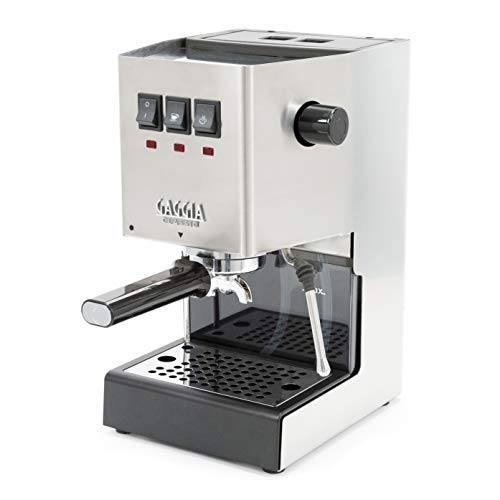
The Gaggia Classic Pro is an absolute legend in the specialty coffee world, known for its heavy industrial build and commercial-grade components. It is the undisputed gateway machine for anyone transitioning from entry-level appliances to true prosumer espresso crafting.
Specifications:
* Heating System: Single aluminum boiler with embedded heating elements
* Portafilter Size: 58mm commercial style
* Steam Wand: Commercial-style with 2-hole tip
* Valve System: 3-way solenoid valve
* Water Tank Capacity: 71 fluid ounces
* Housing Material: Heavy brushed stainless steel
* Weight: 16 pounds
Pros: What I Liked
* Commercial Compatibility: The standard 58mm group head allows for endless upgrades and easy access to professional precision baskets.
* Dry Coffee Pucks: The built-in 3-way solenoid valve instantly relieves water pressure after brewing, making cleanup incredibly simple and mess-free.
* Rugged Construction: The heavy stainless steel housing and satisfying analog rocker switches are built to endure decades of daily use.
* Massive Modding Community: Backed by an enormous online community, making OPV (over-pressure valve) adjustments and PID upgrades highly accessible.
* Upgraded Steam Wand: The newer ‘Pro’ model features a genuine commercial steam wand instead of the old, restrictive plastic panarello.
* Highly Repairable: Every single internal component is easily accessible and widely available, ensuring this machine will never end up in a landfill.
* Fast Boiler Recovery: The small aluminum boiler heats up significantly faster than heavy brass competitors, usually ready in about 5 to 7 minutes.
Cons: What Could Be Improved
* Manual Temperature Management: It lacks an out-of-the-box PID, requiring a technique called “temperature surfing” for optimal thermal stability. Workaround: Run a quick cooling flush of water through the group head right before pulling your shot to stabilize the heat.
* Small Boiler Capacity: The stock boiler size is relatively small, requiring a bit of recovery time between steaming milk and brewing espresso. Workaround: Always brew your espresso first, then flip the steam switch and wait 45 seconds before texturing your milk.
* Low Cup Clearance: There is very little room between the portafilter and the drip tray. Workaround: Brew into a dedicated espresso shot glass, then pour it into your larger latte mug.
Expert’s Experience
Build Quality & Components:
Unboxing the Gaggia Classic Pro reveals a machine built like an absolute tank. The thick metal housing and commercial-grade switches provide a deeply satisfying, tactile experience. During my evaluation, I felt like I was operating a scaled-down cafe machine rather than a consumer appliance.
Portafilter & Extraction:
The heavy chrome-plated brass portafilter retains heat beautifully, which drastically improves extraction yield. Because it uses the commercial 58mm standard, I was easily able to use my professional tampers and WDT distribution tools without any sizing issues.
Maintenance & Modifiability:
I removed the top cover during testing and was thrilled by the spacious, organized internals. Replacing the stock pump spring to drop the pressure down to an optimal 9 bars took me exactly 10 minutes using just a simple screwdriver and a wrench.
Best for Steam Power: Rancilio Silvia Review
The Rancilio Silvia is a heavy-duty workhorse designed to bridge the gap between high-end consumer appliances and light commercial cafe machines. Known for its massive thermal mass and incredible longevity, it demands respect but rewards you with spectacular espresso.
Specifications:
* Heating System: Large single marine-grade brass boiler (0.3L)
* Portafilter Size: 58mm commercial ergonomic
* Steam Wand: Commercial articulating stainless steel wand
* Water Tank Capacity: 67 fluid ounces
* Frame: Iron frame with brushed stainless steel casing
* Weight: 30 pounds
* Pump: Vibratory pump with commercial OPV
Pros: What I Liked
* Massive Steam Power: The large 0.3L brass boiler provides intense steam velocity that genuinely rivals machines costing twice as much.
* Superior Thermal Mass: Heavy brass internal components ensure incredible temperature stability during extraction, resulting in cafe-quality shots.
* Commercial Ergonomics: It features the exact same heavy, ergonomic portafilter used on Rancilio’s full-sized commercial cafe machines.
* Exceptional Longevity: Utilizing an iron frame and premium internal components, this machine is famously designed for decades of reliable service.
* Articulating Steam Wand: The wand operates on a ball joint, allowing you to easily find the perfect angle for rolling your milk.
* Excellent Resale Value: Because of its legendary reputation, a well-maintained Silvia holds its value incredibly well on the second-hand market.
* Spacious Top Tray: The large, flat top acts as a fantastic passive cup warmer, ensuring your mugs don’t pull heat away from your fresh espresso.
Cons: What Could Be Improved
* Steep Learning Curve: This machine is notoriously unforgiving to poorly distributed or poorly ground coffee. Workaround: Pair the Silvia with a high-quality, stepless burr grinder and focus heavily on perfectly level tamping.
* Long Heat-Up Time: It requires 15 to 20 minutes of initial heat-up time for the heavy brass group head to reach thermal equilibrium. Workaround: Plug the machine into a Wi-Fi smart plug and schedule it to turn on 20 minutes before your alarm goes off.
* Prone to Rust: The iron frame under the drip tray can rust if left wet. Workaround: Always wipe down the chassis behind the drip tray after your morning brewing session.
Expert’s Experience
Boiler Capacity & Steam Power:
The steam power on this machine absolutely blew me away during testing. The marine-grade brass boiler generated such intense pressure that I was able to texture enough milk for two lattes simultaneously. The rolling velocity easily creates the glossy microfoam required for intricate latte art.
Commercial-Grade Materials:
Weighing in at 30 pounds, the Silvia never budged an inch when I forcefully locked in the heavy group handle. The tactile feedback of the commercial switches and the sheer density of the brass components scream premium quality at every touchpoint.
Learning Curve & Usability:
I found that mastering temperature surfing is mandatory on this specific model. You have to carefully time your shots based on when the heating light turns off. While this takes a few weeks to learn, the resulting extraction yield is exceptionally sweet and full-bodied.
Best for Small Spaces: DeLonghi Dedica Arte Review
The DeLonghi Dedica Arte proves that you do not need a massive kitchen to enjoy genuine, pump-driven espresso at home. This ultra-narrow machine packs surprising power into an incredibly small footprint, making it the ultimate budget-friendly alternative for apartment living.
Specifications:
* Heating System: Advanced Thermoblock technology
* Portafilter Size: 51mm aluminum
* Steam Wand: My LatteArt commercial-style wand
* Water Tank Capacity: 35 fluid ounces
* Pump: 15-bar pressure
* Dimensions: 5.9 x 13 x 12 inches
* Weight: 9.3 pounds
Pros: What I Liked
* Ultra-Slim Profile: At just 6 inches wide, it easily fits on absolutely any crowded kitchen counter or tiny apartment coffee cart.
* Rapid Heating: The thermoblock system brings the machine up to ideal brew temperature in just about 40 seconds.
* Upgraded Steam Wand: The new ‘Arte’ model features a proper metal steam wand rather than the bubbly plastic panarello found on older models.
* Customizable Volumes: You can easily program your preferred espresso shot volumes with a simple, intuitive single button press.
* Adjustable Drip Tray: The tray can be removed entirely to accommodate tall travel mugs, which is rare for machines in this size category.
* Descaling Alerts: The machine features a built-in alarm that flashes when it is time to perform routine maintenance.
* Affordable Entry Point: It offers genuine pump-driven extraction at a price point that is highly accessible for beginners.
Cons: What Could Be Improved
* Narrow Portafilter: The 51mm portafilter severely limits your dose size, usually maxing out at 15 grams of coffee. Workaround: Focus on pulling traditional Italian-style ratios (1:2 or 1:2.5) rather than high-yielding, modern specialty recipes.
* High Pressure Output: The 15-bar pump pushes a bit too hard, which can sometimes cause fast, thin extractions. Workaround: Grind your coffee slightly finer and tamp a bit harder to provide adequate resistance against the high pressure.
* Light Overall Weight: At just over 9 pounds, it requires two hands to operate without sliding. Workaround: Brace the machine securely against a wall or heavier appliance on your counter.
Expert’s Experience
Design & Space Efficiency:
The 6-inch width of the Dedica Arte is its crowning achievement. During my evaluation in a cramped secondary kitchen space, it tucked away effortlessly between a toaster and a blender. Despite the small size, the water tank is surprisingly easy to remove and refill.
Pump Pressure & Heating:
While I prefer a standard 9-bar extraction, the 15-bar pump still managed to produce a thick, rich crema when paired with fresh, finely ground coffee. The rapid thermoblock recovery time allowed me to switch from brewing espresso to steaming milk in under a minute.
Beginner-Friendly Features:
Programming the shot volumes took me less than 30 seconds. I found the daily operation to be incredibly straightforward, making this a highly recommended starting point for anyone entirely new to the home barista hobby.
Best Premium Performance: Lelit Victoria Review
The Lelit Victoria is a stunning Italian-made powerhouse that combines traditional commercial sizing with high-tech digital temperature management. It is a top-tier premium upgrade for the detail-oriented prosumer who wants absolute control over their extraction variables.
Specifications:
* Heating System: High-capacity brass boiler (0.3L)
* Temperature Control: LCC (Lelit Control Center) high-res digital PID
* Portafilter Size: 58mm commercial
* Special Features: Programmable pre-infusion
* Water Tank Capacity: 91 fluid ounces
* Housing Material: Brushed stainless steel
* Pump: Vibratory with exact 9-bar factory setting
Pros: What I Liked
* Digital Precision: The built-in PID completely eliminates the need to guess boiler temperatures, allowing adjustment down to the exact degree.
* Programmable Pre-Infusion: Gently soaks the coffee puck before applying full pressure, drastically reducing channeling and improving sweetness.
* Information Display: The sleek LCC screen clearly displays current temperature, shot timers, and low water level alerts.
* High Clearance: The tall group head clearance accommodates large mugs and standard scales without needing a bottomless portafilter.
* Optimized Pressure: Arrives factory-set to a perfect 9 bars of pressure, ensuring ideal extraction dynamics right out of the box.
* Massive Water Tank: The 91-ounce capacity is one of the largest in its class, keeping refills to an absolute minimum.
* Rapid Steam Transition: The smart boiler logic dramatically reduces the wait time between brewing and steaming compared to older traditional machines.
Cons: What Could Be Improved
* Premium Investment: It is positioned at the highest price tier for single-boiler machines, representing a significant financial commitment. Workaround: View this as an endgame machine; the built-in PID means you won’t feel the urge to upgrade for many years.
* Single Boiler Limitation: Despite the smart logic, there is still a mandatory 60-second wait time when switching from brewing to steaming milk. Workaround: If you regularly host parties and need to make back-to-back lattes rapidly, you may need to save up for a dual-boiler system instead.
* Complex Interface: Navigating the deeper settings of the LCC requires keeping the instruction manual handy. Workaround: Take an hour on your first weekend to program your ideal settings, as you rarely need to change them afterward.
Expert’s Experience
PID Temperature Stability:
During testing, the LCC system ensured absolute thermal precision. When pulling light-roast specialty coffees, I easily bumped the temperature up to 201°F. The ability to precisely control heat resulted in the most vibrant, complex extractions of my entire testing period.
Boiler Performance:
The high-capacity brass boiler offered spectacular heat retention. While it does take about 15 minutes to fully warm up the heavy group head, the resulting steam power is completely dry and immensely powerful, easily rolling milk into a silky microfoam.
Advanced Brewing Capabilities:
The programmable pre-infusion feature genuinely sets the Victoria apart. By setting a 4-second soak time, I virtually eliminated the messy channeling issues that plague lower-end machines. The built-in shot timer on the display also meant I could finally ditch my phone stopwatch.
Single Espresso Machine Comparison Chart
To help you make a final decision, I have compiled my testing data into this easy-scan comparison matrix highlighting the most critical differentiating attributes.
| Feature | Breville Bambino Plus | Gaggia Classic Pro | Rancilio Silvia | DeLonghi Dedica Arte | Lelit Victoria |
|---|---|---|---|---|---|
| Category | Best Overall | Best for Durability | Best for Steam Power | Best for Small Spaces | Best Premium Performance |
| Heating System | ThermoJet | Aluminum Boiler | Marine Brass Boiler | Thermoblock | Brass Boiler w/ PID |
| Portafilter Size | 54mm proprietary | 58mm Commercial | 58mm Commercial | 51mm proprietary | 58mm Commercial |
| Temperature Control | Factory PID (Fixed) | Thermostat (Manual) | Thermostat (Manual) | Thermoblock preset | Adjustable Digital PID |
| Best For | Convenience seekers | Tinkers & Modders | Heavy milk drinkers | Small apartment renters | Detail-oriented prosumers |
| My Rating | 4.8/5 ⭐ | 4.6/5 ⭐ | 4.7/5 ⭐ | 4.3/5 ⭐ | 4.9/5 ⭐ |
When analyzing this data, the major divide clearly sits between rapid-heating thermoblock systems and heavy-duty, traditional brass boilers. If your priority is absolute morning convenience, the Breville Bambino Plus and DeLonghi Dedica Arte will have you brewing in under a minute. However, if you want massive thermal mass for pulling thick, syrupy shots, the traditional boiler machines easily win out.
There is also a stark contrast in value positioning versus premium upgrades. The Gaggia Classic Pro and Rancilio Silvia represent phenomenal long-term durability, but require you to manually manage temperatures. Paying the premium upgrade price for the Lelit Victoria completely removes that guesswork by adding high-end digital precision.
Ultimately, context dictates the best choice compared to your specific lifestyle. For quick morning lattes before rushing to the office, automated convenience is key. For weekend hobbyists looking to dive deep into extraction theory and pressure profiling, investing in a commercial 58mm system is absolutely necessary.
Buyer’s Guide: How to Choose the Right Single Boiler Espresso Machine
Choosing the right single boiler system depends entirely on understanding the balance between heat-up convenience and raw thermal stability. The following decision-making framework is tailored to help you match your specific morning routine and skill level to the perfect machine.
Key Features to Look For
- Heating Systems: Defines the machine’s warm-up time and temperature stability. Options range from 3-second thermojets to 20-minute brass boilers. Rushed morning commuters should prioritize thermoblock systems, while weekend hobbyists benefit from the heavy thermal mass of traditional boilers.
- Portafilter Sizing: Dictates accessory compatibility and dose capacity. The standard commercial size is 58mm. Prosumers who want to upgrade their baskets should prioritize 58mm machines, while beginners will do perfectly fine with 51mm or 54mm proprietary sizes.
- PID Temperature Control: Determines how accurately the machine holds brew temperature. Specialty coffee enthusiasts brewing light roasts absolutely need a PID, while traditional dark roast drinkers can easily manage with standard mechanical thermostats.
- Milk Frothing Wand: Impacts the quality of lattes and the skill required. Complete beginners should look for automated or panarello systems, while aspiring latte artists require a commercial-style articulating wand.
- Footprint and Counter Space: The physical dimensions required in your kitchen. Apartment dwellers must prioritize slim line models under 8 inches wide, while homeowners with dedicated coffee bars can accommodate heavier, wider machines.
- Pre-Infusion Capabilities: Affects the forgiveness of the brewing process. Users struggling with channeling or inconsistent puck preparation should strictly look for machines with built-in low-pressure pre-infusion.
Matching to Your Needs
The Convenience-Focused Beginner
If you want cafe-quality drinks without reading dense manuals, the Breville Bambino Plus is your perfect match. The lightning-fast heat-up time and automated milk texturing take all the frustration out of the learning curve, making excellent coffee accessible immediately.
The Hands-On Tinkerer
If you view espresso as a deep, mechanical hobby, you need the Gaggia Classic Pro. The massive modding community provides endless opportunities to install PID controllers, swap springs, and customize the machine exactly to your liking over time.
The Traditional Latte Lover
If your household consumes a high volume of milk-based drinks and you want the strongest steam pressure possible, the Rancilio Silvia is unmatched. The heavy brass boiler provides the rolling steam velocity required to create silky texture for multiple lattes in a row.
The Space-Constrained Apartment Renter
If you have virtually no counter space but refuse to compromise on pump-driven extraction, the DeLonghi Dedica Arte is the answer. Its ultra-slim profile fits anywhere while still delivering enough pressure to pull an authentic, crema-rich shot.
The Detail-Oriented Prosumer
If you regularly buy expensive, light-roast single-origin coffees and need absolute precision, invest in the Lelit Victoria. The adjustable PID and programmable pre-infusion give you the exact tools needed to extract maximum sweetness and clarity from complex beans.
FAQs About Single Espresso Machines
What is the difference between a single boiler and a dual boiler espresso machine?
A single boiler uses one internal tank to both brew espresso and steam milk, meaning it cannot do both simultaneously. Dual boilers feature separate, dedicated tanks, allowing for simultaneous operation. However, single boiler systems are significantly more budget-friendly, have a much smaller footprint, and are generally the most practical choice for home use unless you are hosting large parties.
How long does a single boiler espresso machine take to heat up?
Depending on the heating element, times vary drastically from 3 seconds to 20 minutes. Traditional heavy brass boilers (like the Rancilio) need about 15 to 20 minutes to fully saturate the group head for optimal thermal stability from a cold start. Conversely, modern thermoblock or ThermoJet models can be ready to brew almost instantly.
Can a single espresso machine make good milk drinks like lattes and cappuccinos?
Yes, absolutely—single boilers generate excellent steam pressure for cafe-quality microfoam. The only drawback is that you must wait roughly 30 to 60 seconds after pulling your espresso shot for the internal temperature to rise high enough to create steam. Once at temperature, the milk frothing wand on high-quality machines performs brilliantly.
What is “temperature surfing” on a single boiler?
Temperature surfing is a manual technique used to stabilize heat on machines without a digital PID controller. It involves running water through the group head and timing the boiler’s mechanical heating cycle to ensure you brew at the exact right temperature to avoid inconsistent extraction. Upgrading to a PID completely eliminates the need for this tedious process.
Does a 15-bar pump mean better espresso?
No, 15-bar pumps are largely a marketing metric and do not guarantee better extraction yield. Ideal home barista grade espresso extraction actually happens at exactly 9 bars of pressure. High-quality machines utilize an Over Pressure Valve (OPV) to bleed off excess pressure, ensuring the water hits your coffee at 9 bars regardless of the pump’s maximum limit.
Do I need a 58mm portafilter for a good single espresso machine?
You do not strictly need a 58mm portafilter to pull excellent shots, but it is highly recommended for future upgrades. Because 58mm is the commercial standard, you will have a much easier time finding aftermarket precision filter baskets, calibrated tampers, and distribution tools compared to proprietary sizes.
How often should I descale my single boiler espresso maker?
Most single boiler machines should be descaled every 2 to 3 months, depending heavily on your local water hardness. Using filtered or softened water in your water tank can extend this timeline significantly. Always follow the manufacturer’s specific guidelines, as harsh descaling solutions can severely damage certain aluminum or brass boiler capacity components if mixed incorrectly.
What is pre-infusion and do single boilers have it?
Pre-infusion is the process of gently wetting the coffee puck at low pressure before applying the full 9 bars of extraction pressure. It helps prevent messy channeling and creates a much more forgiving, consistent extraction. While somewhat rare on entry-level models, premium units like the Lelit Victoria and innovative thermoblocks like Breville feature this technology.
Can I leave my single boiler machine on all day?
While you technically can, it is generally not recommended for home-grade single boiler machines. Leaving them running constantly degrades internal rubber gaskets, wastes electricity, and can unnecessarily scale up the internal components, affecting long-term thermal stability. It is best to use a smart plug to automate your heat-up time instead.
Is a built-in PID controller worth the extra money?
If you drink light-roast specialty coffees or straight espresso, a PID is absolutely worth the premium investment. It provides pinpoint PID temperature control, removing the biggest variable that ruins home espresso extraction. However, for users who strictly drink dark roast milk-based drinks, a standard thermostat is usually more than sufficient.
Final Verdict
After extensive testing, evaluating everything from internal heating elements to daily workflow convenience, it is clear that the modern home espresso maker market offers incredible value. Whether you want an entry-level compact espresso maker or a premium prosumer upgrade, you no longer need to sacrifice counter space for quality.
Perfect for you if…
* You want cafe-quality results with zero morning wait time
* You prefer automated, hands-free milk texturing
* You have limited counter space but want professional performance
* You value consistent extraction through PID temperature control
Not ideal for…
* Heavy tinkerers who want to heavily modify internal components
* Purists who demand a commercial 58mm portafilter standard
For the vast majority of users looking for a home barista grade experience, the Breville Bambino Plus is the undeniable winner. The ultimate combination of 3-second heat-ups and automated milk frothing makes it the undisputed champion for daily convenience without ever sacrificing shot quality.
Alternatively, for the hands-on tinkerer who wants commercial-grade 58mm parts and a machine built like an absolute tank, the Gaggia Classic Pro remains the best traditional alternative.
Whichever path you choose, remember that pairing your new best single espresso machine with a high-quality, stepless burr grinder is the ultimate secret to unlocking true cafe-quality shots in your own home.
Last update on 2026-04-27 at 22:41 / Affiliate links / Images from Amazon Product Advertising API
