
As an Amazon Associate KitchenwareSets.com earns from qualifying purchases.
Inspiring Indoor Outdoor Kitchen Design: Modern Rustic Ideas for Your Dream House Exterior
Have you ever hosted a party where guests are crammed inside while a beautiful outdoor space sits empty just a few feet away? That frustrating disconnect between your home and your garden is a common design challenge. You have a vision for a flowing, expansive area perfect for entertaining, but the wall in between makes it feel impossible.
An indoor outdoor kitchen design is a hybrid architectural concept that seamlessly merges interior cooking and dining areas with an exterior patio or deck, creating a single, expansive entertaining space. This is achieved using elements like large glass doors, continuous flooring, and a consistent design aesthetic. The goal is to completely eliminate the boundary between your home and the outdoors.
Drawing from architect-led design principles and proven methodologies, this guide will show you exactly how to achieve that coveted seamless flow. We will explore practical, inspiring ideas that transform your home into a modern rustic oasis. Prepare to discover how to create a space that not only looks stunning but fundamentally enhances your lifestyle.
Contents
show
How Do You Perfectly Blend an Indoor Outdoor Kitchen Design?
The magic of a true indoor outdoor kitchen design lies in making the transition between the two spaces feel non-existent. It’s not just about placing a grill on a patio; it’s a holistic approach to architecture and interior design that creates one cohesive, multi-functional area. The core principle is continuity. This means using consistent or complementary materials, flooring, and color palettes to trick the eye into seeing a single, unified environment. Achieving this perfect blend requires careful planning around three key pillars: architectural openings, material consistency, and functional layout. When large glass walls disappear, the floor flows uninterrupted from the living room to the terrace, and the design language remains consistent, you’ve successfully created a hybrid kitchen space that truly expands your home. This approach elevates the concept from a simple backyard amenity to an integrated part of your daily life, perfect for everything from quiet morning coffees to large-scale entertaining.
9 Modern Rustic Ideas for Your Dream Indoor Outdoor Kitchen Design
Bringing the vision of a seamless modern rustic kitchen to life involves combining natural textures with clean, contemporary lines. It’s about creating a space that is both sophisticated and welcoming, highly functional yet deeply relaxing. Below, we explore nine distinct, actionable ideas that serve as blueprints for your dream project. Each concept breaks down the key elements, materials, and design steps needed to create an outdoor entertainment area that is perfectly integrated with your home. From dramatic glass walls that vanish on command to cozy fire features that extend your patio season, these ideas provide the inspiration and technical guidance to start planning your ultimate indoor outdoor living space.
1. Integrating a Seamless Transition with Bi-Fold Glass Walls

Pin this seamless design to your ‘Dream Home’ board!
The most impactful element of any indoor outdoor kitchen with bi-fold doors is the ability to completely remove the wall. This architectural feature is the cornerstone of creating true indoor outdoor flow, transforming two separate areas into one grand space for living and entertaining. Modern systems offer incredible energy efficiency and weatherproofing, ensuring comfort year-round.
Key Elements & Materials
- Thermally-Broken Bi-Fold Doors: Look for systems with a low U-value for energy efficiency, made from durable aluminum or steel.
- Continuous Flooring: Choose a material rated for both interior and exterior use, like porcelain tile, travertine, or sealed concrete for a seamless look.
- Recessed Floor Track: A flush or low-profile sill is crucial for a trip-free, barrier-free transition.
- Weatherstripping & Seals: High-quality compression seals are essential for a waterproof and airtight closure.
Design & Installation Steps
- Consult a Structural Engineer: Before removing any part of an exterior wall, have a professional assess the structural load and design the appropriate header (lintel).
- Choose Your System: Compare bi-fold vs sliding systems. Bi-folds offer a 90%+ clear opening, while sliders offer larger individual glass panes.
- Prepare the Opening: A licensed contractor should create the rough opening according to the manufacturer’s precise specifications.
- Install the Frame & Panels: This is a job for certified installers. Anchoring the frame correctly and ensuring it is perfectly plumb and level is critical for smooth operation.
- Integrate the Flooring: Ensure the indoor and outdoor flooring is laid at the exact same height, leading into the recessed track for a flawless seamless floor transition.
Pro-Tip: For coastal areas, insist on marine-grade powder coating on aluminum frames and 316 stainless steel hardware to prevent galvanic corrosion and ensure long-term durability against salt spray.

2. Designing a Modern Rustic L-Shaped Grill Island

Save this ultimate grill station idea to your ‘Backyard Goals’ board!
An L-shaped island is the workhorse of outdoor kitchen layout planning. It naturally creates distinct zones for cooking, prepping, and socializing, making it a highly efficient and engaging outdoor cooking station. This design provides ample counter space and allows the host to interact with guests seated at the bar while grilling.
Key Elements & Materials
- Steel or Concrete Block Frame: The core structure must be built from non-combustible zones materials.
- Built-in Grill: Choose a high-performance 304 or 316 stainless steel model. Decide between propane vs natural gas.
- Countertop: Durable materials like poured concrete, granite, or quartz countertops are ideal.
- Exterior Cladding: Reclaimed wood for the rustic look (installed on cement board with an air gap), stacked stone, or stucco.
- Outdoor-Rated Appliances: An under-counter refrigerator, trash pull-out, and storage drawers.
Design & Installation Steps
- Plan Your Layout: Use the outdoor kitchen layout principles to position the “hot zone” (grill), “wet zone” (sink), and “cold zone” (refrigerator). The L-shape is perfect for this.
- Run Utilities: Before building, have a licensed contractor run the gas + line, plumbing + sink lines, and electrical + outlet conduits to the island’s location.
- Build the Frame: Construct the island frame using steel studs or concrete blocks on a level concrete pad.
- Install Grill & Insulating Jacket: Mounting the grill requires an insulating jacket if the frame is made of combustible materials. This is a critical heat protection step.
- Clad the Exterior & Install Countertop: Attach your chosen facade (stone veneer, wood panels). The countertop is typically templated and installed by a professional.
- Connect Appliances: Have a certified professional make the final connections to the grill, refrigerator, and outlets.
Pro-Tip: To optimize BTU output optimization, ensure your natural gas line is the correct diameter (e.g., 3/4 inch) for the full length of the run to the grill. An undersized line will starve the grill of fuel and reduce its performance.

3. Creating Ambiance with a Covered Structure and Integrated Lighting

Pin this cozy evening vibe to your ‘Outdoor Living’ board!
A covered outdoor kitchen provides essential weather protection, but its true value lies in creating a cozy, room-like atmosphere. A pergola or pavilion provides the perfect structure for integrating layered ambient lighting, transforming the space into a usable and inviting hub long after the sun goes down.
Key Elements & Materials
- Pergola or Pavilion Structure: Cedar or redwood for a rustic look; aluminum for a contemporary, low-maintenance option.
- Roofing: Options range from a simple retractable fabric canopy for sunshade to a solid roof with shingles (covered vs uncovered) or polycarbonate panels for rain protection.
- Task Lighting: Directional spotlights (PAR38 bulbs) over the grill and prep areas.
- Ambient Lighting: IP-rated LED strip lighting under countertops or built into pergola posts, plus string lights for atmosphere.
- Safety Lighting: Low-voltage lights integrated into steps or along pathways.
Design & Installation Steps
- Choose a Structure: A pergola defines a space, while a pavilion with a solid roof offers full weather protection.
- Secure Footings: A pergola requires substantial concrete footings for its posts to withstand wind. Check local building code compliance for depth and size.
- Assemble the Structure: Follow the manufacturer’s instructions for a kit, or hire a carpenter for a custom build. Leveling the posts and beams is critical.
- Plan Your Lighting: Before running wires, design a layered lighting plan. Consider how you will use the space at night.
- Run Electrical: A licensed electrician must run outdoor-rated wiring (in conduit) to the structure for outlets and lights. All fixtures must be UL-rated appliances for outdoor/wet locations.
- Install Fixtures: Mount your task, ambient, and safety lights, ensuring all connections are waterproof.
Pro-Tip: When planning ventilation issues for a grill under a solid roof, you MUST install a powerful outdoor range hood. The hood’s CFM (cubic feet per minute) rating should be high (1200+ CFM) to handle the smoke from a high-BTU grill.

4. Achieving Continuity with Modern Rustic Flooring and Cabinetry

Love this seamless look? Pin it to your ‘Design Details’ board!
Design continuity is achieved by using weather-resistant outdoor kitchen materials that mimic the style and color of your interior finishes. A seamless floor transition is the most powerful tool for this, visually erasing the threshold. Matching the style of your exterior kitchen cabinets to your indoor ones completes the illusion of a single, expansive room.
Key Elements & Materials
- Continuous Flooring: Durable, non-porous porcelain tile with a high slip-resistance rating (DCOF > 0.42) is a top choice.
- Outdoor Cabinetry:
- Marine-grade Polymer (HDPE): Waterproof, UV-protected, and available in wood-grain finishes to match indoor styles.
- 316 Stainless Steel: Offers a modern, low-maintenance look but can get hot in the sun.
- Matching Hardware: Use 316 stainless steel handles and hinges on both indoor and outdoor cabinets to tie the look together and prevent rust prevention issues.
- Sealants: Use high-quality sealants for grout lines and countertop seams to prevent moisture intrusion.
Design & Installation Steps
- Select a Versatile Floor: Choose a flooring material that comes in an interior version and a slightly more textured, slip-resistant flooring exterior (paver) version from the same collection.
- Choose Cabinet Material: Select an outdoor cabinet material that can mimic your indoor style. Many companies offer HDPE cabinets in realistic rustic wood finishes.
- Specify Cabinet Layout: Design your outdoor cabinetry layout to mirror the functionality of your indoor kitchen, creating a sense of a single, larger space.
- Install Flooring: Ensure a professional installer lays the floor with a minimal grout line and a subtle slope for drainage solutions on the outdoor portion.
- Install Cabinets: Outdoor cabinets are often installed on adjustable stainless steel legs to keep them off the ground and allow for leveling on an uneven patio.
Pro-Tip: Be aware of thermal expansion gaps. Large format tiles, especially in dark colors exposed to direct sun, will expand and contract significantly. A skilled installer must use the correct flexible adhesive and leave appropriate expansion joints around the perimeter to prevent tiles from cracking or buckling.
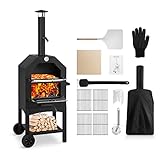
5. Incorporating a Rustic Stone Pizza Oven as a Focal Point

Dreaming of homemade pizza? Pin this stunning oven design!
A rustic outdoor kitchen with pizza oven creates an undeniable social magnet. More than just an appliance, it’s a centerpiece for alfresco dining and a unique cooking experience that gathers people together. The stone-clad aesthetic is a perfect match for the modern rustic theme, adding texture, warmth, and a touch of old-world charm to your outdoor entertainment area.
Key Elements & Materials
- Refractory Dome: The core cooking chamber, made from special fire-resistant cement or bricks that hold extreme heat.
- Fire Brick Floor: The cooking surface must be made of dense fire bricks to get a crispy crust.
- Insulation: A thick layer of ceramic fiber blanket insulation around the dome is critical to hold heat for hours.
- Exterior Shell: A concrete block structure that can be clad in stone veneer, brick, or stucco for a rustic look.
- Chimney/Flue: To properly vent smoke away from the cooking area.
Design & Installation Steps
- Choose Oven Type: Decide between a pre-fabricated modular kit, a fully custom built-in oven, or a more flexible countertop model.
- Pour a Foundation: A heavy masonry oven requires a substantial, reinforced concrete slab foundation.
- Build the Stand: Construct the base for the oven to bring it to a comfortable working height (around 40-44 inches).
- Assemble the Oven: If using a kit, follow the manufacturer’s installing instructions carefully, using refractory mortar to assemble the dome and floor.
- Insulate and Clad: Wrap the dome in several layers of ceramic insulation, then build the outer structural shell and apply your stone or brick finish.
- Cure the Oven: This is a critical multi-day process of lighting a series of small, progressively larger fires to slowly drive moisture out of the masonry without cracking it.
Pro-Tip: Proper thermodynamic airflow is key to a wood-fired oven. The door opening height should be approximately 63% of the interior dome height. This ratio ensures cold air is drawn in along the floor, circulates to feed the fire, and allows hot air and smoke to exhaust out the top of the opening without spilling into the cooking area.
6. Designing an Indoor-Outdoor Bar for Seamless Entertaining

The ultimate party setup! Pin this bar idea to your ‘Entertaining’ board.
A contemporary outdoor kitchen with bar seating that passes through a window is a brilliant way to connect the host with the party. This design creates a social hub, allowing drinks and food to be served directly from the indoor kitchen to guests on the patio. It’s a space-efficient solution that enhances the functionality of your indoor outdoor entertaining space.
Key Elements & Materials
- Pass-Through Window: Options include accordion-style folding windows, gas-strut awning windows, or simple sliding windows.
- Continuous Countertop: A single piece of durable granite or quartz is templated to pass through the window opening.
- Bar Stools: Choose weather-resistant stools (e.g., powder-coated aluminum, teak, or poly-resin) for the outdoor side and matching indoor stools.
- Outdoor Beverage Center: An under-counter wine cooler or beverage center on the outdoor side adds immense functionality.
- Task Lighting: Pendant lights over the indoor side of the bar and discreet puck lights under the outdoor overhang.
Design & Installation Steps
- Design the Opening: Work with a contractor to determine the size and location of the pass-through. It needs to be at a comfortable bar height (around 42 inches from the floor).
- Install the Window: Have a professional install the window, paying close attention to flashing and waterproofing to create a perfect seal when closed.
- Template the Countertop: A countertop professional will create a precise template for the single piece of stone. It will be fabricated with a seam designed to be hidden by the window track.
- Install the Countertop: The countertop is carefully installed in two parts and seamed in place.
- Add Seating and Amenities: Place your indoor and outdoor bar + stools. Install any under-counter appliances like a refrigerator + outdoor rated cooler.
Pro-Tip: When planning a cantilevered bar overhang on the exterior side (for legroom), adhere to the countertop industry rule: a maximum of 1/3 of the countertop width can be unsupported. For stone, this is typically 10-12 inches. For a deeper overhang, you must use hidden steel support brackets anchored to the wall framing.

7. Upgrading Functionality with a Full Outdoor Appliance Suite

Pin this dream appliance setup to your ‘Ultimate Kitchen’ board.
To create a truly fully equipped kitchen outdoors, you need more than just a grill. An outdoor appliance suite featuring professional grade appliances like an outdoor refrigerator, sink, and storage eliminates the need for endless trips back inside. This transforms your patio from a secondary cooking area into a primary one, streamlining your entertaining process completely.
Key Elements & Materials
- Outdoor Refrigerator: A UL-rated model is essential for safety. They have better insulation and more robust compressors to handle ambient temperature swings.
- Outdoor Sink: Look for 304 or marine-grade 316 stainless steel with an included cover to keep debris out.
- Side Burners & Griddles: Integrated next to the main grill for pots, pans, and breakfast cooking.
- Warming Drawers: Keep cooked food warm while you grill the next course.
- Storage: Waterproof drawers and cabinets to store utensils, cookware, and trash/recycling.
Design & Installation Steps
- Prioritize Your Needs: You don’t need every appliance. Start with the essentials for how you cook: a grill, a refrigerator, and a trash pull-out.
- Plan Utilities Meticulously: A full suite requires extensive utility planning: multiple electrical outlets (including GFCI), hot and cold plumbing, a gas + line, and a drainage + system. This is the most complex part of the planning.
- Purchase an Appliance Package: Many brands offer suites with matching handles and a consistent design language.
- Follow Cutout Specifications: Every appliance comes with a precise cutout dimension sheet for your cabinet builder or contractor. There is no room for error here.
- Ensure Proper Ventilation: Refrigerators need airflow, and grills need clearance. Follow all manufacturer guidelines for ventilation to prevent overheating and ensure safety.
Pro-Tip: Pay close attention to the grade of stainless steel. For most locations, 304-grade is sufficient. However, if you live in a coastal area with salt in the air, you MUST invest in appliances made from 316-grade (marine-grade stainless) to prevent pitting and corrosion resistance issues.
8. Maximizing a Small Patio with a Compact, Modular Kitchen

Small space? No problem! Pin this clever kitchen solution.
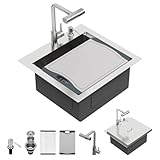
You don’t need a huge backyard to enjoy outdoor cooking. Outdoor kitchen ideas for small patios often revolve around smart, compact design and modular systems. These DIY modular outdoor kitchen kits offer a budget-friendly option to custom builds and can be configured to fit perfectly in tight spaces, providing essential functionality without overwhelming the area.
Key Elements & Materials
- Modular Cabinets: Pre-fabricated stainless steel or powder-coated steel cabinets that bolt together.
- Countertop Grill: An electric or small gas countertop grill may be more appropriate than a large built-in model. Check local fire codes.
- Portable Sink: A unit with self-contained water tanks can be a solution if running plumbing is not an option.
- Vertical Storage: Wall-mounted shelves, magnetic knife strips, and vertical herb gardens make use of unused wall space.
- Multi-functional Furniture: A storage bench that doubles as seating.
Design & Installation Steps
- Measure Your Space: Accurately measure your patio or balcony. Map out doors, windows, and any existing features.
- Check Regulations: Before buying anything, check your apartment or HOA rules regarding grills. Verify the weight capacity of your balcony.
- Choose a Modular System: Select a system that offers the components you need (grill cabinet, sink cabinet, storage).
- Design a Linear Layout: A straight run of cabinets against a wall is the most space-efficient layout.
- Assemble the Modules: Most systems are designed for DIY assembly. Bolt the cabinets together on a level surface.
- Connect Utilities (If Applicable): Connect a small propane tank, or plug in your electric grill. If you have a plumbed sink, connect the water and drain lines.
Pro-Tip: For a truly compact design, look for modules with integrated features. Some high-end units include a sink cover that doubles as a cutting board, or a refrigerator drawer hidden within a standard-looking cabinet, maximizing every square inch of your outdoor meal prep station.
9. Ensuring Year-Round Comfort with Heating and Cooling Systems

Extend your patio season! Pin these cozy heating ideas.
To maximize your home renovation ROI, you need to ensure your outdoor kitchen offers year-round outdoor comfort. Integrating heating elements like mounted infrared patio heaters or smokeless fire pits can extend your outdoor season by months. In hotter climates, ceiling fans and misting systems provide necessary cooling, making your investment usable no matter the weather.
Key Elements & Materials
- Electric Infrared Heaters: The most effective option for covered spaces. They heat objects (people, furniture), not the air, making them efficient even in a breeze.
- Gas Fire Pit or Table: Provides warmth and a strong social focal point. Choose a smokeless fire pit design for better comfort.
- Retractable Screens: Motorized screens can block wind and trap heat in the evening or keep insects out in the summer.
- Outdoor Ceiling Fan: In a covered area, a fan can create a cooling breeze in summer.
- Misting System: For very hot, dry climates, a high-pressure misting system can dramatically lower the ambient temperature.
Design & Installation Steps
- Assess Your Climate: Determine your primary need: Is it extending the season into fall, or making hot summer days bearable?
- Plan for Heating: For infrared heaters, work with an electrician to run dedicated 240V circuits. Mount them at the manufacturer-recommended height (typically 8-10 feet) and angle them towards the primary seating area.
- Integrate a Fire Feature: Plan the gas line for a built-in fire pit during the initial construction phase.
- Consider Cooling: Install an outdoor-rated ceiling fan in the center of a covered area. A misting system requires high-pressure water lines to be run around the perimeter of the roofline.
- Add Wind Protection: Install motorized screens. They retract into a housing when not in use, preserving your view.
Pro-Tip: Create overlapping radiant heat zones for maximum comfort. Instead of one very powerful heater, use two or more medium-power heaters angled to overlap in the main seating area. This creates a more even, comfortable “bubble” of warmth without any cold spots.
Key Takeaways: Your Quick Guide to Indoor Outdoor Kitchen Design
- Focus on the Seamless Transition: The core of a great indoor outdoor kitchen design is erasing the boundary. Use large glass walls (like bi-fold doors) and continuous flooring to create one large, unified space.
- Materials Are Everything: Do not use indoor products outside. Invest in weather-resistant materials like marine-grade polymers for cabinets, 304 or 316 stainless steel for appliances, and durable quartz or granite for countertops to prevent rust and degradation.
- Plan Utilities First: The most expensive mistake is forgetting a utility line. Before you build anything, have a licensed contractor meticulously plan and run all gas, plumbing, and electrical lines.
- Create Functional Zones: A good outdoor kitchen layout has a “hot zone” (grill), “cold zone” (fridge), and “wet zone” (sink). An L-shaped island is a highly efficient way to organize these zones.
- Prioritize Safety and Compliance: Always use UL-rated appliances for outdoor use. Follow all fire safety standards for grill clearance and ensure any work complies with local building code compliance.
- Extend Your Season: A significant investment should be usable for more than a few months. Incorporate heating elements like infrared heaters or a fire pit to make the space comfortable in cooler weather.
People Also Ask About Indoor Outdoor Kitchen Design
How much does an indoor outdoor kitchen cost?
The cost of an indoor outdoor kitchen varies dramatically from $15,000 for a basic modular setup to over $150,000 for a high-end custom project. Key cost drivers include the extent of structural changes (like adding bi-fold doors), the quality of appliances, the type of cabinetry and countertops, and the cost of running utilities like gas, plumbing, and electrical. A realistic average for a well-equipped, mid-range custom project is often between $40,000 and $80,000.
What are the best materials for outdoor kitchens?
The best materials are those designed to withstand moisture, UV rays, and temperature changes. For cabinetry, marine-grade polymer (HDPE) and 316 stainless steel are top choices. For countertops, non-porous materials like granite, quartz, and porcelain slabs are excellent. For the structure itself, use a steel frame or concrete blocks rather than wood to prevent rot and fire risk.
Do outdoor kitchens add home value?
Yes, a well-designed outdoor kitchen can significantly add to your home’s value and appeal. According to industry experts, homeowners can often recoup between 60% to 70% of their investment. More importantly, it dramatically increases the home’s “livability” and desirability for potential buyers, making it a strong selling feature that can help your home sell faster. It’s considered a high-impact home renovation ROI project.
Can you use indoor cabinets outside?
No, you should never use indoor cabinets outside. Indoor cabinets are typically made from MDF or particleboard, which will swell, warp, and disintegrate when exposed to moisture and humidity. They lack the UV protection to prevent fading and the structural integrity to withstand temperature fluctuations. Always use cabinets specifically manufactured for outdoor use from materials like polymer, stainless steel, or teak.
Should an outdoor kitchen be covered?
While not mandatory, covering your outdoor kitchen is highly recommended to protect your investment and increase usability. A cover like a pergola or solid roof provides weather protection from rain and intense sun, extending the life of your appliances and cabinets. It also allows you to use the space in less-than-perfect weather and provides a structure for adding lighting, fans, and heaters.
What is the most durable countertop for outside?
Granite is widely considered one of the most durable natural stone countertops for outdoor use. It is highly resistant to heat, scratches, and UV fading. Denser, non-porous stones are best. Engineered materials like porcelain slabs and some specific outdoor-rated quartz are also excellent, offering superior stain resistance and a more uniform appearance. Concrete is durable but requires regular sealing to prevent stains.
How do you handle drainage in an outdoor kitchen?
Proper drainage is critical to prevent water damage and safety hazards. The patio slab should have a subtle slope (about 1/4 inch per foot) directing water away from the house and kitchen area. A sink must be connected to your home’s wastewater system or a dedicated dry well, following local building codes. Installing a trench drain in front of bi-fold doors can also prevent driven rain from entering the house.
How do you prevent rust in outdoor kitchens?
Rust prevention starts with selecting the right materials. Use 316 “marine-grade” stainless steel for appliances, sinks, and hardware if you live near the coast. For all other areas, 304-grade stainless steel is sufficient. Keep steel surfaces clean from debris and grease. Regularly treat them with a stainless steel polish or protector that leaves a protective barrier. Address any scratches immediately as they are entry points for rust.
What are the electrical requirements for outdoor kitchens?
Outdoor kitchens require multiple GFCI (Ground Fault Circuit Interrupter) protected outlets for safety. All wiring must be rated for outdoor use and run in waterproof conduit by a licensed electrician. You will likely need dedicated circuits for high-draw appliances like refrigerators (20-amp), and potentially a 240V circuit for powerful infrared heaters. Proper outdoor lighting and task lighting are also essential considerations.
How do you winterize an outdoor kitchen?
Proper winterization protects your pipes and appliances from freeze damage. First, shut off the water supply to the kitchen and open all faucets to drain the lines completely. Use compressed air to blow out any remaining water. Unplug the refrigerator, clean it, and leave the door ajar to prevent mold. Deep clean your grill and cover it securely. For cabinets and countertops, give them a final cleaning and apply any recommended sealants.
Final Thoughts on Your Indoor Outdoor Kitchen Design
Creating an indoor outdoor kitchen design is more than just a home improvement project; it’s a fundamental transformation of your living space. By focusing on a seamless transition, investing in durable, weather-resistant materials, and planning for year-round comfort, you’re not just adding an amenity—you’re expanding your home and enhancing your lifestyle. This integrated space becomes the heart of your home, a versatile hub for everything from daily meals to celebratory gatherings. With thoughtful design and proper execution, you can build a stunning and functional environment that will bring joy and add significant value for years to come. Which of these modern rustic ideas inspired you the most to start planning?
Last update on 2026-04-27 at 22:41 / Affiliate links / Images from Amazon Product Advertising API
