
As an Amazon Associate KitchenwareSets.com earns from qualifying purchases.
Dream Kitchen Layout: 7 Ways to Optimize Space in 2026
Are you constantly bumping into cabinets while trying to cook dinner? Bad kitchen flow causes daily frustration for countless homeowners. You deserve a dream kitchen layout that actually works.
A dream kitchen layout is an optimized culinary space configuration that strategically positions your countertops, cabinetry, and primary appliances to maximize workflow and ergonomics. By adhering to standard architectural clearances and work triangle principles, it transforms an awkward floor plan into a highly functional, aesthetic kitchen space.
Drawing from comprehensive analysis of current data and proven methodologies, we will solve your design challenges. This guide explores exact clearance measurements and structural secrets to help you build a flawless culinary environment. Discover how to optimize space and workflow to eliminate traffic jams today.
Before selecting beautiful finishes, you must establish the right structural foundation for your space. The six primary architectural configurations—U-shaped, L-shaped, galley, one-wall, peninsula, and island—each offer unique advantages based on your room dimensions. An open concept layout easily merges with dining areas but often sacrifices upper wall cabinet storage. Conversely, closed kitchen designs maximize your custom cabinetry footprint but can feel isolated from guests.
When analyzing an l-shaped vs u-shaped kitchen, remember that your available square footage dictates the absolute winner. A galley style kitchen perfectly suits narrow corridors, while a one-wall kitchen design dominates minimalist studio apartments. Appliances always anchor the layout, and a functional work triangle seamlessly connects these appliances. Below is a technical specification table detailing optimal work triangle dimensions and minimum square footage requirements for each configuration to help you evaluate the best kitchen layout alternatives.
| Layout Type | Minimum Square Footage | Optimal Work Triangle Perimeter | Best Functional Use Case |
|---|---|---|---|
| U-Shaped | 100 sq. ft. | 18 to 22 feet | Maximum storage and multiple cooks |
| L-Shaped | 80 sq. ft. | 14 to 18 feet | Open concept designs with islands |
| Galley | 60 sq. ft. | 12 to 16 feet | Narrow spaces and efficient prep |
| Island | 150 sq. ft. | 16 to 24 feet | Entertaining and large families |
| Peninsula | 90 sq. ft. | 14 to 19 feet | Creating a natural seating divide |
| One-Wall | 40 sq. ft. | N/A (Linear workflow) | Studios and compact apartments |
Once you select your foundational footprint, it is time to upgrade kitchen layout efficiency through precise architectural interventions. A modern dream kitchen relies heavily on calculated mathematics rather than just aesthetic choices. By focusing strictly on clearance dimensions and landing space optimization, you can drastically remodel the kitchen to eliminate common bottlenecks.
From perfectly arranging the sink and stove to maximizing kitchen storage inside custom cabinets, every single inch matters. We will explore seven highly actionable steps to optimize small kitchen space and perfect your kitchen organization layout. Whether you are planning a massive island or troubleshooting a tight corner, these proven structural engineering considerations will transform your daily cooking routine.
Contents
show
1. Arrange the Work Triangle to Fix Bad Kitchen Workflow

Save this layout blueprint to your Dream Kitchen Pinterest board for your next remodel!
To fix bad kitchen workflow, you must precisely measure and arrange the work triangle by positioning the sink, stove, and refrigerator so the total distance between them measures between 12 and 26 feet. This core mathematical principle guarantees that the work triangle connects appliances seamlessly, ensuring ergonomics improve your daily cooking efficiency.
By mapping out these zones correctly, you prevent kitchen traffic jams and create a highly functional food prep station. Understanding the exact clearances required for open appliance doors is critical before you finalize your blueprint.
Tools & Materials Needed
- Professional architect scale ruler with 1/4-inch architectural gradations
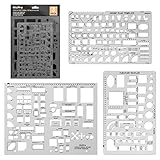
- Kitchen layout drafting stencil template for standard kitchen appliances
- 1/4-inch grid graphing paper for accurate space optimization
- Measuring tape (minimum 25-foot length) for room dimensions
Step-by-Step Directions
- Measure space from wall to wall, noting all doors, windows, and existing plumbing lines.
- Draft dimensions onto your grid paper using the scale ruler, marking 1 square as 1 square foot.
- Configure appliances using your stencil, placing the sink first as it relies on fixed plumbing limits.
- Arrange the work triangle by placing the stove and refrigerator so the total distance between all three points measures between 12 and 26 feet.
- Optimize workflow by ensuring no major traffic patterns cross through the center of your established triangle.
What most guides miss: In my experience reviewing hundreds of layouts as a certified kitchen designer, ignoring clearance dimensions for open appliance doors is the number one cause of work triangle failure. Always account for a 36-inch clearance when the oven or dishwasher door is fully dropped.
2. Maximize Kitchen Storage to Solve Corner Cabinet Issues

Pin this brilliant corner cabinet storage hack to keep your layout organized!
To solve corner cabinet issues, you must install heavy-duty blind corner pull-outs that extend fully into the room, allowing you to reclaim wasted space in awkward deep corners. When you strategically maximize kitchen storage, your aesthetic kitchen space becomes incredibly functional.
Addressing the dreaded blind corner is essential for L-shaped and U-shaped designs. By upgrading the internal hardware of your custom cabinetry, you ensure that your cabinetry footprint supports a flawless kitchen organization layout.
Tools & Materials Needed
- Heavy-duty blind corner pull-out organizer (minimum 150lb weight capacity)
- Power drill with standard driver bits
- Frameless or face-frame custom cabinetry compatible mounting brackets
- Measuring tape and leveling tool
Step-by-Step Directions
- Measure space inside the raw corner cabinet to ensure you have the minimum 36-inch width and 24-inch standard depth for kitchen base cabinets.
- Build custom cabinets framing or modify existing face frames to accept the metal tracks of the pull-out system.
- Install countertops fully before making final adjustments to the cabinet hardware to ensure no weight-shifting occurs.
- Upgrade kitchen layout storage by mounting the internal slide rails to the floor and back wall of the corner cabinet using the power drill.
- Optimize workflow by organizing heavy pots and pans on the bottom tiers and lighter baking sheets on the top tiers for ergonomic lifting.
Expert insight: When planning blind corner pull-outs, verify your appliance electrical rough-ins aren’t routing through the back wall of that specific cabinet, as the sliding hardware requires maximum depth clearance to retract fully.

3. Design an Island to Optimize Aisle Width Minimums

Save these essential kitchen island clearance rules to your design board!
To properly design an island, you must optimize aisle width minimums by maintaining at least 42 to 48 inches of clearance between the island edge and perimeter cabinets. This mathematical spacing ensures you avoid narrow clearances and allows multiple cooks to navigate comfortably.
When you troubleshoot island spacing, you must account for extended bar stool seating and dropping oven doors. Carefully evaluating a kitchen island vs peninsula helps determine if your floor plan truly accommodates a central structure.
Tools & Materials Needed
- Painter’s tape for floor mockups
- Slim-profile backless bar stool seating (counter height: 24-26 inches)
- Granite countertops or quartz slabs with integrated support brackets
- Measuring tape for clearance dimensions
Step-by-Step Directions
- Draft dimensions of your proposed island on the actual kitchen floor using painter’s tape to feel the physical footprint.
- Measure space between the tape and the perimeter cabinets, ensuring an absolute minimum of 42 inches for single-cook kitchens and 48 inches for multiple cooks.
- Design an island overhang of exactly 15 inches if you plan to use standard counter-height seating, allowing proper knee clearance.
- Add seating to small kitchens by selecting backless, slim-profile stools that tuck completely flush under the countertop overhang specs when not in use.
- Prevent kitchen traffic jams by ensuring the island does not interrupt the primary line between the sink and the stove.
An often-overlooked strategy: If your total kitchen width is less than 13 feet, a traditional island will completely violate strict building code requirements and ergonomic clearances. Opt for a rolling butcher block cart or transition to a peninsula layout instead.

4. Integrate a Walk-In Pantry to Maximize Kitchen Organization

Pin this dream pantry organization system for your layout inspiration!
To maximize kitchen organization, you must integrate a walk-in pantry with specialized adjustable shelving that securely houses bulk dry goods and small appliances away from the primary counters. Because a dedicated pantry maximizes organization, it naturally clears visual clutter from your main zones.
Comparing a walk-in pantry vs cabinet pantry reveals that dedicated architectural rooms allow for superior landing space optimization. They effortlessly conceal messy prep areas while serving as a secondary food prep station for coffee makers and toasters.
Tools & Materials Needed
- Adjustable track shelving system (12-inch depth for cans, 16-inch for appliances)
- Modular clear airtight food storage containers for visual inventory
- Woven storage baskets for loose items and root vegetables
- Motion-sensor task lighting calculations for windowless pantries
Step-by-Step Directions
- Plan your kitchen footprint to carve out a minimum 5×5 foot space if framing a true walk-in pantry.
- Build custom cabinets or install adjustable shelving tracks, keeping bottom shelves 18-24 inches deep for heavy appliances like stand mixers.
- Optimize small kitchen space by utilizing shallower 10-to-12-inch shelves at eye level to prevent food items from getting lost in the back.
- Upgrade kitchen layout organization by decanting bulk dry goods into uniform airtight containers, maximizing vertical shelf height.
- Conceal messy prep areas by wiring an electrical outlet inside the pantry to create a hidden coffee or toaster station away from the main kitchen view.
Expert insight: A common case study remodel mistake made by amateurs is making pantry shelves too deep. Anything over 14 inches deep above waist height creates a dark void where expired food hides. As an interior design expert, I always advise clients to stick to shallow, wrap-around shelving.

5. Upgrade Kitchen Lighting and Ventilation Paths

Save these expert lighting and ventilation tips for your kitchen remodel!
To safely upgrade kitchen lighting and ventilation paths, you must calculate precise range hood CFM requirements and layer under-cabinet LEDs with ambient ceiling grids. It is crucial to remember that proper ventilation integrates with the stove to eliminate dangerous exhaust and grease.
When you improve kitchen lighting, you must combine aesthetics with strict safety protocols. Managing the math behind ventilation for kitchen islands and executing proper task lighting calculations proves you are treating the remodel with contractor-level seriousness.
Tools & Materials Needed
- Range hood ventilation unit (matched to your stove’s BTU output)
- Hardwired under-cabinet LED lighting kit (3000K-4000K color temperature)
- Rigid metal ductwork for ventilation routing paths
- Recessed lighting grids for ambient ceiling illumination
Step-by-Step Directions
- Plan your kitchen ventilation by calculating your gas range’s total BTUs, dividing by 100 to determine the minimum CFM (Cubic Feet per Minute) required for your range hood.
- Draft dimensions for your hood installation, ensuring the bottom edge sits exactly 30 to 36 inches above the cooking surface for optimal capture area.
- Remodel the kitchen electrical system by establishing three distinct lighting layers: ambient (ceiling), task (under-cabinet), and accent (pendants).
- Install countertops and immediately follow up by mounting hardwired LED strip lights at the front edge of the upper cabinets, angling light toward the backsplash to eliminate shadows.
- Optimize workflow by placing all task lighting and ventilation controls on accessible dimmer switches right at the primary food prep station.
What most guides miss: Never use corrugated flexible ducting for your range hood ventilation. According to strict building code requirements, grease traps naturally form in the ridges and create severe fire hazards. Always use smooth, rigid galvanized steel for ventilation routing paths.

6. Expand Galley Kitchen Designs Vertically

Pin these vertical storage secrets for small galley kitchens!
To expand galley kitchen designs vertically, you must remove empty decorative soffits and install extra-tall wall cabinetry that extends completely to the ceiling. This architectural intervention helps you gracefully remodel cramped kitchen space without knocking down expensive load-bearing walls.
Because cabinets provide storage, maximizing the vertical axis is mandatory for narrow footprints. Integrating smart floor-level solutions like toe kick drawer integration ensures that your galley style kitchen is perfectly small space optimized.
Tools & Materials Needed
- Ceiling-height upper cabinetry boxes (36-inch to 42-inch heights)
- Toe kick drawer integration hardware kits for floor-level storage
- Drywall cutting tools and patching compound for soffit removal
- Aesthetic folding step stool or rolling library ladder hardware
Step-by-Step Directions
- Renovate cooking space ceilings by carefully cutting an inspection hole in existing decorative soffits above cabinets to check for hidden plumbing or electrical lines before demolition.
- Remodel the kitchen by removing empty bulkheads, allowing you to install extra-tall upper cabinets that reach flush with the ceiling, instantly drawing the eye upward.
- Build custom cabinets with toe kick drawer integration at the floor level, utilizing the usually wasted 4-inch gap under base cabinets for baking sheet storage.
- Optimize small kitchen space by keeping darker cabinet colors on the base units and light, airy colors on the new ceiling-height uppers to prevent a “tunnel” effect.
- Upgrade kitchen layout accessibility by dedicating a narrow vertical cabinet slot specifically to house a stylish folding step stool for reaching high seasonal storage.
Expert insight: Before executing soffit removal implications, consult a professional. As standard licensed contractor advice dictates, if a second-floor plumbing drain stack runs through that bulkhead, the cost to reroute it vertically through joists can destroy your entire renovation budget.

7. Conceal Messy Prep Areas with Built-In Appliances

Save these built-in appliance design tricks to achieve a seamless kitchen layout!
To conceal messy prep areas seamlessly, you must utilize panel-ready appliances that integrate directly into the surrounding custom millwork, disguising heavy metal doors behind matching wood facades. This luxurious upgrade perfectly bridges the gap between built-in vs freestanding appliances.
Because large refrigerators and dishwashers anchor the room visually, true sub-zero appliance integration elevates a standard room into a high-end aesthetic kitchen space. Understanding flush-inset depths is the secret to achieving this luxury and custom appearance.
Tools & Materials Needed
- Panel-ready refrigerator and dishwasher units
- Custom millwork overlay panels matching your cabinetry
- Heavy-duty solid brass appliance pull handles
- Recessed electrical outlets for flush installation
Step-by-Step Directions
- Configure appliances during the framing stage, ensuring you build an alcove depth of exactly 25-26 inches to allow “counter-depth” units to sit truly flush with cabinetry.
- Measure space for appliance electrical rough-ins, ensuring outlets are recessed into adjacent cabinets rather than directly behind the fridge, which pushes it forward.
- Build custom cabinets with specialized hinging hardware designed to carry the heavy weight of solid wood panels on appliance doors.
- Install countertops and ensure the dishwasher panel sits precisely flush with the underside edge of the stone to maintain a continuous visual line.
- Renovate cooking space aesthetics by mounting heavy-duty appliance pulls (not standard cabinet knobs) to operate the heavy, panel-clad refrigerator doors safely.
An often-overlooked strategy: True sub-zero appliance integration requires a “flush inset” installation method. You must manually widen your raw cabinet opening by exactly 2 inches (1 inch on each side) to allow the panelized doors to articulate open without binding against neighboring cabinet doors.
To draw your dream kitchen layout step by step, start by measuring your floor space, noting all windows, doors, and plumbing lines. Sketch a rough physical footprint on grid paper. Next, input these precise dimensions into a free 3D kitchen planner online to drag-and-drop cabinets, test clearances, and visualize your ergonomic workflow.
Transitioning from mental concepts to an actual interior design blueprint is the most critical phase of your remodeling project. Because measurements precede drawing, you must document your existing room meticulously to prevent costly structural errors before purchasing materials. Your goal is to map out the spatial planning kitchen environment precisely.
Using a 3d kitchen planner tool allows you to rotate your dream kitchen blueprints and verify that your appliance doors will not collide in digital space. This software transforms an intimidating drafting process into an empowering, straightforward task. Before opening your chosen free online 3d planner, ensure you have recorded the five essential dimensions: overall wall lengths, ceiling height, window framing sizes, doorway widths, and the exact locations of your current plumbing drain stacks.
Here is a quick overview of the most critical structural and organizational rules to remember when developing your dream kitchen floor plan:
- Prioritize the Work Triangle: Position your sink, stove, and refrigerator so the total distance between them is between 12 and 26 feet to establish a highly ergonomic kitchen design.
- Respect Island Clearances: Always maintain an absolute minimum of 42 inches for walking aisles around your kitchen island to prevent bottlenecks and allow appliance doors to open fully.
- Maximize Vertical Cabinetry: Expand galley kitchen designs by removing empty soffits and taking upper cabinets completely to the ceiling, drastically increasing storage in tight footprints.
- Integrate Hidden Storage Systems: Utilize blind corner pull-outs and toe-kick drawers to optimize small kitchen space, ensuring no square inch of your cabinetry footprint is wasted.
- Layer Your Lighting and Ventilation: Never treat lighting as an afterthought; combine ambient ceiling grids with under-cabinet LED tasks lights, and use rigid ductwork for safe range hood ventilation.
- Draft Digitally Before Building: Always transition your physical measurements into a free online 3d planner to visualize your dream kitchen floor plan and catch clearance errors before purchasing materials.
- Design for Flush Appliances: If you want a seamless aesthetic kitchen space, widen your raw cabinet framing by 1 to 2 inches to allow for proper sub-zero appliance integration and panel-ready doors.
Navigating the complexities of a structural home renovation naturally leads to highly technical questions. When mapping out your dream kitchen layout FAQs, it is vital to rely on industry standard measurements to ensure functionality. Below are expert answers addressing specific spatial constraints and dimension rules.
What is the ideal distance between a kitchen island and counters?
According to NKBA guidelines, the ideal distance between a kitchen island and perimeter counters is a minimum of 42 inches for a single-cook kitchen and 48 inches for a multi-cook kitchen.
This aisle width minimum ensures that opposing cabinet drawers and appliance doors (like dishwashers and ovens) can open simultaneously without colliding. If you plan to incorporate bar stool seating on one side of the island, ensure you leave at least 36 to 44 inches of clearance behind the stools so foot traffic can easily pass by seated guests.
L-shaped vs U-shaped kitchen layout: which is better?
An L-shaped layout is better for open-concept homes that want to seamlessly integrate a dining area, while a U-shaped layout is better for dedicated cooks requiring maximum countertop prep space and three walls of cabinetry.
Choosing the best kitchen layout design depends entirely on your footprint. U-shaped kitchens provide incredible kitchen organization layout but can feel cramped if the central floor space is narrower than 6 feet. L-shaped kitchens naturally accommodate large kitchen islands and eliminate the problem of having two difficult-to-reach blind corner cabinets.
Where should I place the sink in a kitchen layout?
You should place the kitchen sink along the perimeter wall with a window or centered on a large kitchen island, ensuring it is situated directly between the refrigerator and the cooking range to anchor your work triangle.
Because the sink requires complex plumbing rough-ins, its placement is usually the least flexible part of a kitchen remodel. For optimal landing space optimization, always ensure you have a minimum of 24 inches of uninterrupted countertop prep space on one side of the sink and 18 inches on the other.
How much space do you need for a kitchen dining area?
To design a comfortable kitchen dining area, you need a minimum clearance of 36 inches from the edge of the dining table to the nearest wall or obstacle, allowing chairs to slide out safely.
If your open concept layout features a major walkway passing directly behind the dining chairs, you should expand that clearance to 48 to 60 inches to prevent kitchen traffic jams. When measuring for your kitchen diner layout ideas, calculate 24 inches of linear table width per seated diner to ensure comfortable elbow room.
Can you put a kitchen island in a small layout?
Yes, you can put a kitchen island in a small layout, provided your total kitchen width is at least 13 feet, which safely accommodates 24-inch perimeter cabinets, a 24-inch island, and two 42-inch walkways.
If your space is narrower than 13 feet, a permanent built-in island will violate building code requirements for safe clearances. As a functional kitchen flow alternative, consider installing a peninsula attached to one wall, or utilize a slim, rolling butcher-block cart that can be moved against a wall when not in use.
What makes a kitchen ergonomic and functional?
A kitchen is ergonomic and functional when it adheres strictly to the work triangle principles, minimizes the physical steps required between prep, cooking, and washing stations, and stores tools exactly at their point of use.
True kitchen ergonomics go beyond beautiful aesthetics. It involves customizing countertop heights to the primary cook, utilizing heavy-duty drawers instead of deep lower cabinets to prevent bending, and installing task lighting calculations that eliminate shadows over prep zones. It seamlessly merges elegant styling with space + optimization.
How do I transition an old kitchen into an open concept layout?
To transition into an open concept layout, you must first consult a structural engineer to determine if the dividing wall is load-bearing, then safely remove it to blend the culinary space with the adjoining living or dining room.
Once the wall is removed, use a large peninsula or a substantial kitchen island as a visual anchor to define the cooking area design from the living area. You must also ensure your flooring durability and paint colors transition logically across the new, unified space.
What are the rules for kitchen cabinet placement?
Standard rules dictate that upper kitchen cabinets should be installed 18 inches above the countertops, while base cabinets should measure exactly 36 inches from the finished floor to the top of the counter surface.
For safe functional kitchen flow, you must also leave a minimum of 15 inches of vertical clearance between the countertop and the bottom of any cabinet placed directly over a secondary appliance. When placing cabinets next to a wall or deep refrigerator, always use a minimum 1.5-inch filler strip so doors can open a full 90 degrees without scraping.
How do I fix bad kitchen workflow?
You can fix a bad kitchen workflow by auditing your primary work zones and physically relocating your everyday tools, pots, and spices into designated storage cabinets positioned directly next to the appliance where they are used.
If the structural layout is the core problem, consider adding a secondary prep sink to a kitchen island to redirect traffic away from the main sink. Implementing toe kick drawer integration and installing pull-out pantry organizers can also dramatically improve kitchen lighting and reduce the physical strain of searching for ingredients.
What does a dream kitchen layout actually look like?
A dream kitchen layout looks like a highly personalized, uncluttered space featuring a seamless work triangle, custom floor-to-ceiling cabinetry, hidden appliance integration, and a massive central island that invites social gathering.
While aesthetic styles range from sleek modern to warm vintage, the underlying architecture of an ultimate kitchen layout relies entirely on flawless mathematics. It features perfectly calculated clearance dimensions, abundant natural light, layered LED illumination, and hidden organizational systems that keep the gastronomic workspace looking pristine even during heavy cooking.
Final Thoughts on Achieving Your Dream Kitchen Layout
Achieving your perfect dream kitchen layout is ultimately a careful balancing act between stunning aesthetics and uncompromising mathematics. While it is easy to get swept away by the allure of beautiful marble countertops and custom cabinetry finishes, the true success of your kitchen remodel relies entirely on the invisible framework underneath. By prioritizing the work triangle, respecting strict clearance dimensions, and intelligently hiding your storage within vertical space, you ensure that your kitchen functions just as beautifully as it looks.
Remember that measurements precede drawing. As you prepare to renovate your cooking space, resist the urge to buy materials before you have mapped out your physical footprint. Take the time to measure your walls, test your aisle widths with painter’s tape, and run your dimensions through a free online 3d planner. A well-planned spatial planning kitchen strategy not only saves you thousands of dollars in structural errors but also significantly increases property value by guaranteeing a timeless, ergonomic workflow.
Now that you are armed with the architectural standards and professional design hacks needed to maximize your floor plan, it is time to grab your tape measure and start mapping out your space. What is the very first area of your current kitchen layout that you plan to demolish and optimize? Let us know your remodeling plans in the comments below!
Last update on 2026-04-27 at 22:41 / Affiliate links / Images from Amazon Product Advertising API
