
As an Amazon Associate KitchenwareSets.com earns from qualifying purchases.
11 Essential Japanese Kitchen Tools To Elevate Your Cooking
Have you ever marveled at the beautiful precision of a Japanese dish and wondered, “How can I possibly make that at home?” The perfect cube of tofu in a clear miso soup, the flawlessly rolled sushi, the impossibly fluffy rice—it all seems like an art form reserved for master chefs.
You might have the best ingredients, but your attempts at authentic Japanese cuisine feel like something is missing. It can be frustrating when your food doesn’t have that distinct, refined quality you love from your favorite restaurant. You start to think maybe it’s a secret technique or years of training you just don’t have.
The truth is simpler than you think. Achieving authentic results often comes down to using the right tools. Just like a painter needs specific brushes, a Japanese cook relies on a set of traditional and specialized kitchenware designed for precision, efficiency, and enhancing the natural flavors of the ingredients.
Contents
show
Want to Cook Authentic Japanese Food? Start Here.
Japanese cooking is known for its precision and presentation. To achieve authentic results, certain traditional Japanese kitchen tools are essential for tasks like making perfect rice, finely slicing ingredients, and creating clear, flavorful broths. These specialized tools are not just for show; they enhance the efficiency of your cooking, improve safety, and dramatically elevate the quality and authenticity of the final dish. By incorporating a few key items into your kitchen, you can bridge the gap between cooking a meal and creating a true culinary experience.
11 Essential Japanese Kitchen Tools to Elevate Your Cooking in 2026
Ready to transform your cooking? This is the definitive list of the 11 most indispensable tools you’ll find in a true Japanese kitchen. We’ve curated this collection based on versatility and impact, choosing the items that will make the biggest difference in your journey to mastering Japanese cuisine. For each tool, we’ll explain what it is, why you need it, and exactly how to use it.
1. The Indispensable Electric Rice Cooker (Suihanki)

A Japanese electric rice cooker, or suihanki, is a non-negotiable appliance for consistently perfect rice. While you can cook rice on the stovetop, a dedicated cooker removes all guesswork, delivering fluffy, perfectly cooked grains every single time. It’s the foundation of countless Japanese meals, and modern cookers are incredibly versatile, with settings for different rice types, steaming, and even slow cooking.
- Materials Needed: Japanese short-grain rice, Water.
- Step-by-Step Directions:
- Measure your desired amount of rice using the cup provided with your cooker.
- Wash the rice by swirling it in a separate bowl with cold water and draining until the water runs mostly clear.
- Place the washed rice in the cooker’s inner pot and add water to the corresponding measurement line inside the pot.
- Close the lid, select the “white rice” or appropriate setting, and press start. The machine handles the rest. Many modern Japanese rice cookers use advanced fuzzy logic or induction heating to ensure flawless results every time.
Pro-Tip: For best results, let the rice steam in the cooker for 10-15 minutes after the cooking cycle finishes before opening the lid. This allows the moisture to distribute evenly.
Save this tip for perfect rice to your ‘Japanese Cooking’ board!

2. The Versatile Santoku Knife (三徳包丁)

The Santoku knife is the quintessential Japanese all-purpose kitchen knife. Its name translates to “three virtues,” referring to its ability to expertly slice, dice, and mince. With its distinctive sheepsfoot blade and razor-sharp edge, it’s a versatile workhorse perfect for preparing vegetables, fish, and boneless meats with incredible precision.
- Step-by-Step Directions:
- Grip the handle firmly but comfortably, with your thumb and index finger pinching the base of the blade for maximum control (a “pinch grip”).
- The Santoku’s flat edge profile is designed for a simple forward-and-down chopping motion, rather than the “rocking” motion used with Western chef’s knives.
- Utilize its razor-sharp edge for precise cuts on vegetables, fish, and boneless meats. A high-quality Santoku knife with a high-carbon steel blade will hold its edge longer. The Granton edge (dimples) helps reduce friction and prevents food from sticking to the blade.
Pro-Tip: Invest in a good whetstone and learn to sharpen your Santoku regularly. A sharp Japanese knife is safer and more effective than a dull one.
Pin this essential knife guide to your ‘Culinary Tools’ board!

3. The Traditional Suribachi and Surikogi (すり鉢, すりこぎ)

This is the Japanese version of a mortar and pestle, uniquely designed for maximum efficiency. The suribachi is a ceramic bowl with sharp, jagged grooves on the inside, and the surikogi is a wooden pestle. This combination is perfect for grinding sesame seeds, spices, and other ingredients into pastes for dressings and sauces, releasing incredible aroma and flavor.
- Materials Needed: Toasted sesame seeds, Suribachi and Surikogi.
- Step-by-Step Directions:
- Place a small amount of toasted sesame seeds into the suribachi bowl.
- Hold the surikogi pestle firmly and press the seeds against the sharp, grooved interior of the bowl.
- Grind in a circular motion, applying steady pressure. The specialized ceramic grooves, called kushinome, are designed to efficiently break down ingredients without turning them into a paste too quickly, giving you control over the final texture.
- Continue grinding until you achieve your desired consistency for dressings, sauces, or garnishes.
Pro-Tip: After use, clean the grooves of the suribachi with a small, stiff brush (like a tawashi brush) under running water to remove any remaining particles. Avoid using soap if possible to preserve the seasoning.
Add this traditional tool to your ‘Authentic Cooking’ Pinterest board!

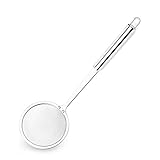
4. The Essential Fine Mesh Skimmer (Aku Tori)

A fine mesh skimmer is the secret to creating crystal-clear, refined broths and soups. Known as an aku tori, this simple tool is used to remove the foam, scum (aku), and excess fat that rises to the surface during simmering. This one small step makes a massive difference in the final taste and appearance of dishes like dashi, sukiyaki, and other hot pots.
- Step-by-Step Directions:
- As your soup, stock, or dashi comes to a simmer, you will notice foam and impurities (called aku in Japanese) rising to the surface.
- Gently glide the fine mesh skimmer across the surface of the liquid. The ultra-fine mesh is specifically designed to capture the smallest particles of scum and fat while leaving the precious broth behind.
- Lift the skimmer and discard the collected foam. Repeat as necessary until the broth is clear and clean. This simple step is key to the refined taste of many Japanese dishes.
Pro-Tip: A fine mesh skimmer is also invaluable when deep-frying foods like tempura. Use it to scoop out any stray bits of batter between batches to keep your oil clean and prevent burning.
Pin this secret to clear broth for your next soup recipe!
5. Long Cooking Chopsticks (Saibashi)

Saibashi are long chopsticks used for cooking, providing precision and keeping your hands safe from heat. They are far more nimble than tongs or a spatula, acting as an extension of your fingers. Use them for everything from stirring noodles and scrambling eggs to delicately handling ingredients during deep-frying and plating.
- Step-by-Step Directions:
- Hold the saibashi just as you would regular eating chopsticks, but further up the shafts to maximize your reach.
- Use them as an extension of your fingers for tasks requiring precision. Delicately flip a piece of fish in a pan without tearing the skin.
- Stir noodles or ingredients in a hot pot while keeping your hands safely away from the steam and heat.
- For deep-frying, use saibashi to carefully place ingredients into hot oil and retrieve them once cooked. Many high-quality saibashi are made from bamboo or wood that won’t scratch non-stick surfaces.
Pro-Tip: Keep a dedicated pair of saibashi for handling raw meat and another for general cooking to prevent cross-contamination. Some pairs even come with tethered ends to keep them together in a drawer.
Save this essential utensil idea to your ‘Kitchen Hacks’ board!

6. The Sushi Rice Bowl (Hangiri / Sushi Oke)

A hangiri is a traditional wooden bowl specifically designed for cooling and seasoning sushi rice. If you are serious about making sushi at home, this is a must-have. Its large, flat surface allows steam to escape quickly, and the unfinished wood absorbs excess moisture from the rice and vinegar, resulting in the perfect texture—fluffy and distinct, never mushy.
- Materials Needed: Hot cooked Japanese rice, Sushi vinegar, Hangiri, Rice paddle (shamoji).
- Step-by-Step Directions:
- Before first use, lightly dampen the inside of the hangiri with water to prevent the rice from sticking.
- Immediately transfer freshly cooked, hot rice into the hangiri. The large, flat surface area helps the rice cool down quickly.
- Pour the seasoned sushi vinegar evenly over the rice.
- Using a rice paddle, use a swift slicing and folding motion (“kiri-mazeru”) to incorporate the vinegar and separate the grains. The unfinished wood of the hangiri is key—it absorbs the excess moisture, resulting in rice that is perfectly fluffy and seasoned, never mushy.
Pro-Tip: Never soak your hangiri or wash it with harsh soap. After use, wash with water, wipe it completely dry with a cloth, and let it air dry in a shady, well-ventilated area to prevent cracking.
Planning a sushi night? Pin this essential tool!

7. The Bamboo Sushi Mat (Makisu)

A makisu is an inexpensive but indispensable tool for shaping perfect sushi rolls (maki). Made of woven bamboo sticks, it allows you to apply gentle, even pressure to form a tight, compact cylinder without crushing the delicate ingredients inside. It can also be used to shape other foods, like rolled omelets (tamagoyaki).
- Materials Needed: Makisu, Nori (seaweed sheet), Sushi rice, Fillings.
- Step-by-Step Directions:
- Place the makisu on a flat surface. Lay a sheet of nori, shiny side down, on the mat.
- Spread a thin, even layer of sushi rice over the nori, leaving a small border at the top edge.
- Arrange your desired fillings in a line across the center of the rice.
- Using the edge of the makisu closest to you, begin to roll the sushi away from you, tucking in the fillings tightly with your fingers.
- Continue rolling, applying gentle but firm pressure with the mat to create a compact, perfectly round cylinder. A quality bamboo sushi mat is essential for getting this uniform pressure.
Pro-Tip: To prevent rice from sticking and for easier cleanup, wrap your makisu in a layer of plastic wrap before you start rolling, especially for “inside-out” rolls where the rice is on the outside.
Pin this guide for your next DIY sushi night!

8. The Miso Strainer and Muddler Set

This specialized tool is the secret to perfectly smooth, lump-free miso soup. The set includes a deep, round strainer and a small pestle or muddler. It allows you to dissolve the thick miso paste directly into your pot of dashi broth, ensuring a silky, consistent texture every time.
- Materials Needed: Dashi broth, Miso paste, Miso strainer & muddler set.
- Step-by-Step Directions:
- Bring your dashi broth to a gentle simmer in a pot.
- Place a scoop of miso paste into the basket of the miso strainer.
- Hook the strainer onto the side of the pot and lower the basket into the hot broth.
- Use the muddler (or the back of a spoon) to press and stir the miso paste against the mesh. This dissolves the paste directly into the soup, ensuring there are no lumps and leaving behind any larger soybean bits for a silky-smooth texture.
Pro-Tip: Never boil miso soup after adding the paste. Boiling can kill the beneficial probiotics in the miso and alter its delicate flavor. Always add the miso at the very end of the cooking process over low heat.
Love miso soup? Pin this must-have gadget!

9. The Efficient Ceramic Grater (Oroshigane)

A Japanese ceramic grater, or oroshigane, is far superior to a metal grater for fibrous ingredients like ginger and daikon radish. The grater is covered in tiny, exceptionally sharp ceramic teeth that shred fibers into a fine paste rather than tearing them. A convenient moat around the edge collects all the precious, flavorful juices, so nothing goes to waste.
- Step-by-Step Directions:
- Hold the ceramic grater steady on a flat surface.
- Take a piece of peeled ginger, garlic, or daikon radish.
- Rub the ingredient in a circular motion over the grater’s very sharp, fine ceramic teeth. These teeth efficiently shred fibrous ingredients into a fine, almost puréed paste.
- The built-in moat or ring around the grater conveniently collects all the flavorful juices, which can then be easily poured into your dish, ensuring no flavor is wasted.
Pro-Tip: Ceramic graters are much easier to clean than metal ones, as fibrous material doesn’t get stuck in the teeth. Simply rinse it under water immediately after use.
Pin this clever gadget for fresh flavors!

10. The Communal Donabe Earthenware Pot (土鍋)

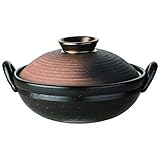
A donabe is a versatile and beautiful earthenware pot used for communal hot pot dishes (nabe), soups, and stews. Made from special clay, it has excellent heat retention properties, cooking food gently and evenly. It’s designed to go from the stovetop directly to the center of the dining table (often on a portable burner) for a cozy, interactive meal.
- Step-by-Step Directions:
- Before its first use, a new donabe needs to be seasoned. This typically involves cooking rice porridge (okayu) in it to seal the porous clay.
- For a hot pot (nabe), fill the donabe with broth and bring it to a simmer on the stove.
- Transfer the donabe to a portable tabletop burner in the center of the table.
- Diners then add their favorite ingredients (sliced meat, seafood, vegetables, tofu, noodles) to cook in the communal pot. The donabe’s superior heat retention keeps the broth hot long after the flame is lowered.
Pro-Tip: Always ensure the bottom of your donabe is completely dry before placing it on a heat source. Never heat an empty donabe, and avoid drastic temperature changes (like adding cold liquid to a hot pot) to prevent cracking.
Dreaming of a cozy hot pot night? Save this inspiration!
11. The Knife-Friendly Hinoki Cutting Board (檜まな板)

A hinoki cutting board is the perfect surface for protecting the razor-sharp edge of your high-quality Japanese knives. Made from soft Japanese cypress wood, it has a forgiving grain that “gives” slightly under the blade, preventing it from dulling quickly. Harder materials like bamboo or glass can damage a delicate knife edge.
- Step-by-Step Directions:
- Before each use, wet the surface of the hinoki board with water and wipe with a clean cloth. This creates a temporary barrier that helps prevent stains and odors from absorbing into the wood.
- Use the board for all your cutting tasks. The soft, forgiving grain of the hinoki cypress acts like a cushion for your knife’s blade, helping to preserve its delicate, razor-sharp edge far longer than harder boards like bamboo or plastic.
- After use, wash with a mild soap and water, then wipe completely dry and stand it on its side to air dry evenly.
Pro-Tip: Hinoki wood has natural antimicrobial properties, making it a hygienic choice for your kitchen. The pleasant, forest-like aroma is an added sensory bonus during food prep.
Protect your knives! Pin this cutting board tip to your ‘Kitchen Gear’ board.

Key Takeaways: Your Quick Guide to Japanese Kitchen Tools
- For Perfect Basics: An Electric Rice Cooker is non-negotiable for consistently fluffy rice, the foundation of many meals.
- For Precision Prep: A sharp Santoku Knife and a knife-friendly Hinoki Cutting Board are a powerhouse duo for preserving your blade and achieving perfect cuts.
- For Authentic Flavor: A Suribachi (mortar & pestle) for grinding seeds and a Fine Mesh Skimmer for clarifying broths are key to creating deep, refined tastes.
- For Specialized Dishes: If you love sushi or miso soup, a Hangiri, Makisu, and Miso Strainer are essential for achieving authentic, restaurant-quality results at home.
- For Communal Cooking: A Donabe pot transforms meals into a cozy, interactive experience, perfect for hot pot nights.
People Also Ask About Japanese Kitchen Tools
What are the three essential Japanese kitchen tools for a beginner?
For a beginner starting with Japanese cuisine, the three most essential tools are a high-quality Santoku Knife for versatile cutting, an Electric Rice Cooker for perfect rice every time, and a pair of Long Cooking Chopsticks (Saibashi) for safe and precise handling of food in hot pans and pots. These three cover preparation, a staple ingredient, and cooking technique.
Where can I buy authentic Japanese kitchenware online?
You can find a wide range of authentic Japanese kitchenware on Amazon, which often carries popular brands. For more specialized or artisan items, look to online stores like MTC Kitchen, Korin, or Globalkitchen Japan. These retailers specialize in high-quality, imported Japanese knives, cookware, and tableware directly from Japan.
Are Japanese kitchen tools expensive?
The price of Japanese kitchen tools can vary greatly. Functional items like a miso strainer or a bamboo makisu are very affordable. However, high-quality tools like a handcrafted Santoku knife or an advanced induction-heating rice cooker can be a significant investment. It’s best to start with a few affordable essentials and upgrade as your skills and interest grow.
Final Thoughts
Ready to bring the art of Japanese cooking into your own kitchen? These 11 essential tools are more than just gadgets; they are an invitation to embrace the precision, tradition, and mindfulness that make Japanese cuisine so special. Start with one or two that resonate with you, and you’ll be amazed at the difference they make.
Which Japanese kitchen tool are you most excited to try first? Let us know in the comments below
Last update on 2026-04-27 at 22:41 / Affiliate links / Images from Amazon Product Advertising API
