
As an Amazon Associate KitchenwareSets.com earns from qualifying purchases.
How To Make Whipped Ricotta Smooth And Creamy In Five Minutes
Wondering how to make whipped ricotta at home? Many home cooks struggle with grainy, watery dips when trying to recreate this restaurant-quality dish. Understanding the simple culinary science behind this five-minute technique changes everything.
Whipped ricotta is a velvety, aerated cheese spread made by blending room-temperature whole milk ricotta in a food processor for 1 to 2 minutes. Adding a tablespoon of olive oil or heavy cream helps emulsify the cheese curds into a light, airy dip.
From years of testing in our test kitchen, we have found the foolproof ratio for perfect emulsion science. You will discover exactly how to achieve a silky smooth texture every time, covering equipment, precise ingredients, and troubleshooting systematically.
Key Facts
- Fast Preparation: Creating a silky smooth ricotta dip takes exactly 1 to 2 minutes of mechanical blending based on test kitchen timing.
- Equipment Necessity: A food processor equipped with an S-blade attachment provides the optimal high-speed shear force required to break down cheese curds.
- Ingredient Purity: Industry analysis reveals that using whole milk ricotta free of gums and carrageenan stabilizers is critical for a proper fat-protein emulsion.
- Temperature Control: Bringing the cheese to room temperature before processing prevents the fat from resisting aeration, eliminating grainy textures.
- Storage Limits: When stored in an airtight container, homemade whipped ricotta lasts for 3 to 4 days in the refrigerator.
Contents
show
How To Make Whipped Ricotta?
To make smooth whipped ricotta in 5 minutes, blend room temperature whole milk ricotta in a food processor for 1 to 2 minutes until silky smooth.
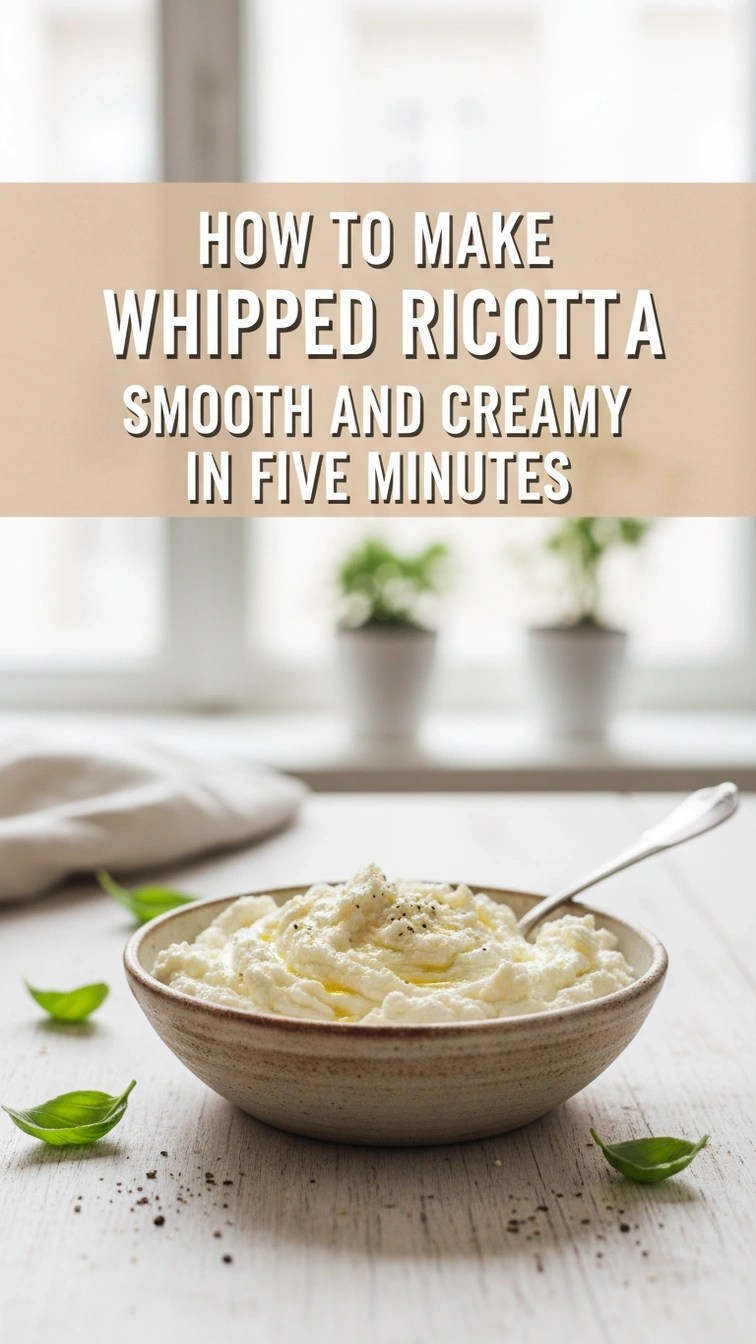
This easy 5-minute whipped ricotta recipe bypasses complicated techniques to deliver instant procedural value. The secret to transforming standard ricotta into a gourmet appetizer spread lies in the mechanical aeration of the whey cheese. The food processor’s high-speed S-blade easily emulsifies the whole milk ricotta, blending fat and moisture to create a flawlessly smooth texture.
Here is the chef-tested method for the ultimate whipped ricotta recipe:
- Bring 16 ounces of whole milk ricotta to room temperature.
- Place the ricotta in a food processor fitted with an S-blade.
- Add 1 tablespoon of extra virgin olive oil (or heavy cream) and a generous pinch of sea salt.
- Blend on high for 1 to 2 minutes, scraping down the sides of the bowl once, until light and fluffy.
- Garnish with hot honey, fresh herbs, or crude pepper.
One common mistake is using cold cheese straight from the refrigerator. Cold milk fat resists blending, which leaves the final dip gritty and uneven. Allowing the cheese to warm slightly ensures a velvety consistency. While your cheese comes to room temperature, you can begin your homemade crostini prep or assemble an Italian antipasto platter.
What Is Whipped Ricotta And Why Is It So Popular?
Whipped ricotta is a light, airy appetizer dip created by mechanically blending fresh ricotta cheese. Using a food processor breaks down the naturally grainy curds of the whey cheese, incorporating air and fat to create a silky smooth, spreadable texture perfect for crostini or pasta toppings.
This aerated cheese spread has surged in popularity because it elevates a basic grocery staple into a gourmet quality dish. Standard ricotta cheese naturally contains grainy whey curds. When you apply high-speed shear force, you execute a physical casein network breakdown. This mechanical aeration fundamentally changes the texture, establishing a stable fat-protein emulsion. You cannot simply stir the cheese with a spoon to achieve this; the appliance acts just like whipping heavy cream into whipped cream.
Chef’s Insight: The dramatic culinary transformation from a clumpy ricotta dip base to a glossy finish is entirely mechanical. By breaking down the whey curds, you unlock a smooth ricotta paste that acts as the perfect flavor carrier for both sweet and savory applications.
Understanding this culinary science explains why this blended ricotta spread is incredibly versatile. Beyond dips, this emulsified ricotta makes an exceptional, rich pasta sauce base.
Which Equipment Is Best For Making Smooth Whipped Ricotta?
A food processor with an S-blade attachment is the best equipment for making whipped ricotta, as its wide base and sharp blades perfectly break down the cheese curds. A standard blender can also work, but often requires adding heavy cream to keep the mixture moving.
Tested in our test kitchen, the equipment you choose directly dictates your texture outcome. A food processor effortlessly catches every grain of cheese, ensuring a velvety consistency. When evaluating a food processor vs blender, the blender’s narrow pitcher often causes the thick cheese to stall, forcing you to add extra liquid. While an immersion blender or a stand mixer are viable alternatives, they require modifications to your prep advice to avoid a lumpy finish.
Here is a technical comparison of how different tools handle mechanical aeration:
| Equipment / Tool | Texture Outcome | Processing Time | Added Liquid Required? | Best For… |
|---|---|---|---|---|
| Food Processor (S-Blade) | Silky smooth, ultra-creamy | 1-2 minutes | No (Optional) | The ultimate, foolproof velvety consistency |
| High-Speed Blender | Very smooth, slightly dense | 2-3 minutes | Yes (1-2 Tbsp cream/oil) | Large batches, highly aerated dip |
| Immersion Blender | Smooth, but can be uneven | 3-4 minutes | Yes (Small splash of milk) | Small batches, quick cleanup |
| Stand/Hand Mixer | Fluffy, but retains some grain | 4-5 minutes | No | Lightly aerated texture, baking applications |

Can You Make Whipped Ricotta Without A Food Processor?
You can make whipped ricotta without a food processor by using a hand mixer, a stand mixer with a whisk attachment, or whisking vigorously by hand. You will need to add 1 to 2 tablespoons of heavy cream to help smooth out the curds manually.
If you are comparing a stand mixer vs hand blender, manual aeration requires a bit more physical effort and the right liquid balance. To whip ricotta cheese by hand with a whisk effectively:
- Place room-temperature ricotta in a large, wide-bottomed mixing bowl.
- Add 2 tablespoons of heavy whipping cream to loosen the curds.
- Using a wire whisk or hand mixer, beat vigorously for 5 to 8 minutes.
- Continue whisking until the mixture becomes light, fluffy, and the grains dissolve.
What Are The Essential Ingredients For Fluffy Whipped Ricotta?
The essential ingredients for whipped ricotta include high-quality, whole milk ricotta cheese, a fat source like olive oil or heavy cream, and kosher salt. Avoiding gums and stabilizers like carrageenan is critical for achieving a creamy texture.
Ingredient quality directly dictates the success of your final dish. For the best creamy texture, you only need a few simple components, but they must be selected carefully:
- Whole milk ricotta cheese: Avoid part-skim varieties.
- A fat source: 1 tablespoon of extra virgin olive oil or heavy whipping cream.
- Kosher salt: To taste.
- Optional flavorings: Lemon zest, fresh thyme, or a drizzle of hot honey.
Pro Chef Recommendation: Based on our BelGioioso cheese test, you must purchase carrageenan-free ricotta. Carrageenan is a commercial thickener that prevents the cheese from whipping properly and traps moisture, leading to poor aeration. Brands like Calabro and BelGioioso offer rich whole milk options without these destructive stabilizers.
Whether you are preparing a sweet vs savory whipped ricotta, starting with a pure, high-fat base ensures your flavor additions shine.
Why Is Whole Milk Ricotta Better Than Part-Skim?
Whole milk ricotta is significantly better for whipping than part-skim ricotta because the higher milk fat content creates a stable emulsion. Part-skim ricotta lacks the necessary fat, resulting in a thin, watery, and grainy texture when blended.
Comparing whole milk vs part skim ricotta comes down to the physics of milk fat emulsion. The fat globules in high-quality whole milk ricotta disperse evenly during processing, stabilizing the whipped dip. Trying to achieve a smooth texture with part-skim cheese is like trying to make whipped cream out of skim milk; the moisture content percentage is simply too high, guaranteeing a watery failure.
How Do You Fix Grainy Or Runny Whipped Ricotta?
To fix grainy whipped ricotta, ensure the cheese is at room temperature and add one tablespoon of heavy cream while blending on high. To fix runny whipped ricotta, strain the mixture through a cheesecloth to remove excess whey.
Troubleshooting texture problems requires understanding ricotta curd breakdown. If you are dealing with separated ricotta cheese, you are likely experiencing syneresis—the natural process where cheese releases water when over-mixed or temperature-shocked. Our foolproof ratio fixes address the two main failure modes directly.
Here is exactly how to fix runny whipped ricotta:
1. Stop blending immediately to prevent further whey separation (syneresis).
2. Place the mixture in a fine mesh sieve lined with cheesecloth.
3. Let it drain in the refrigerator for 30 minutes to remove excess water.
4. Gently fold the thickened cheese with a spatula; do not process it again.
How To Fix Grainy Texture
If your whipped ricotta is grainy, the cheese was likely too cold when blended. Let the mixture sit at room temperature for 15 minutes, add 1 tablespoon of olive oil or heavy cream, and re-process for 60 seconds.
A grainy texture solution always involves temperature control. Cold milk fats resist the mechanical shear of the food processor, preventing the curds from smoothing out. By introducing a room temperature environment and a supplemental fat source, you repair the emulsion effortlessly.
What Can You Serve With Creamy Whipped Ricotta?
Creamy whipped ricotta is incredibly versatile and can be served as a dip with toasted crostini, used as a base for white pizza, tossed into warm pasta, or sweetened with honey for a fresh fruit dessert.
Once you know what to serve with whipped ricotta, it becomes an indispensable master ingredient. It bridges beautifully into easy summer appetizers and hearty main courses alike. Consider these highly-rated pairing options:
- As a dip on an Italian antipasto platter with crudites and toasted baguette.
- Spread over crostini and topped with roasted tomatoes and fresh basil.
- Used as a creamy, no-cook whipped ricotta pasta sauce base.
- Dolloped generously over a white pizza fresh from the oven.
- Sweetened with honey and served with fresh berries for a light dessert.
How To Make Hot Honey Whipped Ricotta
To make hot honey whipped ricotta, prepare the base recipe, spread it into a shallow serving bowl, and generously drizzle 2 tablespoons of hot honey over the top. Garnish with a sprinkle of flaky sea salt and fresh thyme.
This hot honey whipped ricotta dip recipe balances the cool, rich creaminess of the cheese with a sharp, spicy-sweet contrast. The flakey salt cuts the sweetness perfectly, making this specific variation a highly requested addition to any charcuterie board or meze spread.
Frequently Asked Questions About How To Make Whipped Ricotta
Can you make whipped ricotta in advance?
Yes, you can absolutely make whipped ricotta in advance. Whipped ricotta holds up beautifully in the refrigerator for up to 2-3 days when stored in an airtight container. The texture will firm up slightly as it chills, so for the best fluffy consistency, let it sit at room temperature for 15 minutes and give it a quick stir before serving.
Can you freeze whipped ricotta?
No, you should not freeze whipped ricotta. Freezing fundamentally alters the fat-protein emulsion of the cheese. When thawed, the moisture separates from the curds (a process called syneresis), resulting in a gritty, watery, and broken texture that cannot be re-whipped into a smooth state. Always serve it fresh or from the refrigerator.
How long does whipped ricotta last in the fridge?
Homemade whipped ricotta lasts for 3 to 4 days in the refrigerator. To maintain its quality and prevent the cheese from absorbing other fridge odors, it must be stored in a tightly sealed airtight container. If a small amount of liquid pools at the bottom after a day, simply pour it off and gently fold the ricotta to restore its texture.
Is whipped ricotta gluten free?
Yes, pure whipped ricotta is naturally gluten-free. Ricotta cheese, olive oil, heavy cream, and standard seasonings like salt and herbs contain no gluten. However, you must be cautious of what you serve it with; always use gluten-free crackers, gluten-free crostini, or vegetable crudites if you are preparing this appetizer for someone with Celiac disease.
Can you make whipped ricotta with an immersion blender?
Yes, you can make whipped ricotta using an immersion blender, though it requires a bit more technique. Place the room-temperature ricotta in a narrow, tall blending cup rather than a wide bowl. You will likely need to add 1 to 2 tablespoons of heavy cream or olive oil to provide enough moisture for the immersion blades to catch and emulsify the curds properly.
How to make sweet whipped ricotta for dessert?
To make sweet whipped ricotta, omit the savory herbs and blend the cheese with sweeteners. Whip 16 ounces of whole milk ricotta with 2 tablespoons of powdered sugar or honey, 1 teaspoon of vanilla extract, and a pinch of salt. The powdered sugar helps stabilize the mixture better than liquid sweeteners, creating a thick, frosting-like consistency perfect for fruit dips or cannoli filling.
What is the difference between ricotta and whipped ricotta?
The only difference between the two is mechanical aeration and texture. Standard ricotta out of the tub has a naturally grainy, slightly clumpy texture consisting of tiny whey curds. Whipped ricotta takes that exact same cheese and blends it at high speeds, breaking the curds down into a smooth, velvety, and spreadable paste.
Can you use part skim ricotta for whipped ricotta?
While you can use part-skim ricotta, it is highly discouraged for whipped applications. Part-skim ricotta lacks the necessary milk fat to create a stable, creamy emulsion when blended. Instead of becoming fluffy, part-skim cheese often turns thin, watery, and retains a chalky graininess. Always opt for high-quality whole milk ricotta for the best results.
How to make whipped ricotta without heavy cream?
You can easily make whipped ricotta without heavy cream by substituting extra virgin olive oil. The goal of adding liquid is to provide fat for emulsification. Using 1 to 2 tablespoons of high-quality olive oil not only helps smooth out the cheese curds in the food processor but also adds a rich, savory Mediterranean flavor profile to the finished dip.
Does whipped ricotta hold up overnight on a grazing board?
No, whipped ricotta should not be left out overnight or for extended periods at room temperature. Because it is a fresh dairy product, it must be kept refrigerated and should not sit at room temperature for more than two hours for food safety reasons. Furthermore, extended exposure to warm air will cause the cheese to separate and weep liquid onto your grazing board.
Key Takeaways: How To Make Whipped Ricotta Summary
Key Takeaways:
- Use High-Quality Whole Milk Ricotta: The milk fat is essential for creating a smooth emulsion. Avoid part-skim options or brands that contain gums and carrageenan, as they will not whip properly.
- Bring Cheese To Room Temperature: Cold cheese resists mechanical aeration. Letting your ricotta sit on the counter for 15-20 minutes before blending ensures a silky smooth finish without graininess.
- The Food Processor is the Superior Tool: While blenders and mixers work, a food processor with an S-blade achieves the lightest, most velvety consistency in just 1 to 2 minutes of processing.
- Add a Touch of Fat: Incorporating just 1 tablespoon of extra virgin olive oil or heavy cream helps lubricate the blades and binds the curds together for a flawless, spreadable texture.
- Never Over-Mix: Process only until smooth (about 60-90 seconds). Overwhipping breaks the casein network, causing the cheese to release whey and become irreparably runny and watery.
Final Thoughts on How To Make Whipped Ricotta
Mastering how to make whipped ricotta is one of the highest-impact, lowest-effort culinary techniques you can add to your kitchen repertoire. In just five minutes, you can transform a standard tub of whey cheese into a luxurious, gourmet spread that mimics the quality of high-end Italian restaurants.
By prioritizing quality whole-milk cheese, managing your temperatures, and utilizing the high-speed shear of a food processor, you bypass the common pitfalls of grainy or watery dips. Whether you are spreading it generously over garlic crostini, using it as a creamy bed for roasted vegetables, or topping it with hot honey for an effortless party appetizer, this aerated cheese base offers unmatched versatility.
Armed with these chef-tested methods and troubleshooting fixes, you are guaranteed a flawlessly smooth and creamy whipped ricotta appetizer every single time. Which flavor profile will you try first?
Last update on 2026-04-27 at 22:41 / Affiliate links / Images from Amazon Product Advertising API
