
As an Amazon Associate KitchenwareSets.com earns from qualifying purchases.
Modern Cabinet Pulls for Natural Wood Cabinets: Japandi Kitchen Inspiration for Homeowners
Has your hardware been holding your kitchen back? You’ve invested in beautiful natural wood cabinets, but outdated pulls can make them feel tired and mismatched.
Modern cabinet pulls for natural wood cabinets are understated hardware pieces that complement the wood’s grain while adding a clean, contemporary silhouette. They range from solid wood pulls in walnut or ash to minimalist metal designs in matte black or brushed bronze, all chosen to enhance the organic feel of the cabinetry.
Leveraging tested Japandi design principles and expert insights, this guide will help you choose the perfect pulls that honor the wood’s natural beauty. You’ll discover seven curated styles, installation tips, and maintenance advice to transform your kitchen with ease.
Contents
show
Modern Cabinet Pulls for Natural Wood Cabinets: Can Hardware Really Transform Your Japandi Kitchen?
Absolutely. The right hardware acts as a silent accent that respects the material while shifting the entire room’s energy. Japandi design thrives on a balance of warmth and restraint, and modern cabinet pulls for natural wood cabinets are the perfect vehicle to achieve that harmony. When you replace bulky, ornate handles with sleek, thoughtful choices, the wood grain becomes the star, and the kitchen feels more spacious and intentional.
But choosing among wood pulls, metal pulls, and hybrid designs can be overwhelming. That’s why we’ve curated seven specific styles that work beautifully with walnut, oak, ash, and pine. Each one brings a different texture and visual weight, and we’ll also cover installation, maintenance, and pro tips you won’t find in generic lists.
7 Japandi-Inspired Modern Cabinet Pulls That Elevate Natural Wood Cabinets
1. Walnut Arched Bridge Pulls – The Organic Modern Classic

Pin this elegant hardware idea to your ‘Japandi Kitchen’ board for later.
A walnut arched bridge pull creates a striking visual contrast when mounted on light oak or maple cabinets. The dark, rich walnut deepens the perception of the lighter wood’s grain, while the ergonomic curve offers a comfortable palm fit. It’s a classic choice for modern natural wood cabinets because it introduces a natural material that feels organic yet refined.
What You Need
- 1 set of walnut arched bridge pulls (3-inch length, 96mm center-to-center)
- Tape measure
- Pencil
- Drill with 5mm bit for pilot holes
- Screwdriver (phillips or flathead, depending on screws)
Installation Steps
- Measure the existing hole spacing on your cabinet door. If none, mark 96mm from the top edge.
- Hold the pull against the door and align the screws.
- Drill pilot holes carefully to avoid splitting the wood.
- Screw the pull firmly but don’t overtighten.
- Wipe with a dry cloth to remove any dust.
Pro-Tip: When installing on solid wood doors, pre-drill even if the pull comes with self-tapping screws. This prevents cracks in the grain – a lesson learned when I rushed a set on pine cabinets.

2. Oil-Rubbed Bronze Long Bar Pulls – The Subtle Contrast

Save this hardware idea to your ‘Modern Kitchen Inspiration’ board.
Oil-rubbed bronze bar pulls provide a warm metallic accent that doesn’t read as cold or industrial. They pair especially well with lighter wood species like ash and oak, where the dark bronze creates a subtle but deliberate contrast. The long bar design offers excellent leverage for heavy drawers and aligns with the clean lines of contemporary wood cabinet hardware.
What You Need
- 5-inch oil-rubbed bronze bar pulls (128mm spacing)
- Template jig (optional, for alignment)
- Drill with appropriate bit
- Screws (usually included)
- Level
Installation Steps
- Measure and mark center points on all doors/drawers.
- Use a template jig to drill perfectly aligned holes.
- Insert screws from the back, attach pull from the front.
- Tighten evenly – avoid warping the bar.
- Test open/close operation.
Pro-Tip: For pulls longer than 5 inches, use two screws per side to prevent twisting. I’ve seen these handles loosen over time on heavy drawers.

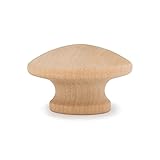
3. Unfinished Oak Round Knobs – The Bare Wood Accent

Pin this pure wood touch to your ‘Natural Home Decor’ board.
For those who want the purest natural aesthetic, unfinished oak knobs offer a tactile experience that ages beautifully with patina. They blend seamlessly with raw or lightly oiled cabinets, and because they are unfinished, you can customize the seal to match your kitchen’s humidity needs. Keep in mind that raw wood will absorb hand oils and kitchen grease over time, so a protective seal is recommended.
What You Need
- Unfinished oak knobs (1.5–2 inch diameter)
- Fine-grit sandpaper (220 grit)
- Food-safe mineral oil (optional)
- Screws matching knob size
- Screwdriver
Sealing & Installation Steps
- Lightly sand the knob surface if rough.
- Apply a thin coat of mineral oil with a lint-free cloth. Let soak 15 min.
- Wipe excess, let dry 24 hours.
- Mount with screws from the back of the drawer.
- Re-oil every 6 months for consistent look.
Pro-Tip: Skip sealing if you want the wood to patina naturally with hand oils. It will darken over time, giving a lived-in Japandi feel.
4. Stainless Steel Edge Pulls – The Invisible Grip

Save this sleek hardware for your contemporary Japandi board.
Stainless steel edge pulls are the ultimate expression of Japandi minimalism. They integrate directly into the cabinet door’s top edge, creating a flush, almost invisible grip that doesn’t interrupt the wood surface. This solution works best on flat-panel doors and is ideal for homeowners who want a clean, uninterrupted look. The brushed finish resists fingerprints and moisture, making it practical for busy kitchens.
What You Need
- Stainless steel edge pulls (3-inch length, 1.5-inch projection)
- Screws (usually included)
- Phillips screwdriver
- Drill (if new holes)
- Template from manufacturer
Installation Steps
- Determine pull placement along the top edge of the door.
- Mark screw locations using the provided template.
- Pre-drill holes slightly smaller than screws.
- Secure the pull with screws from the inside.
- Check alignment – adjust if warped.
Pro-Tip: For heavy slab doors, choose edge pulls with a minimum of 3 inches length to distribute force. I once used a 1-inch pull on a solid oak door – it wasn’t comfortable.

5. Handcrafted Leather Pulls with Brass Accents – The Textural Element

Pin this unique texture idea to your ‘Organic Modern’ board.
Leather pulls add warmth and tactile contrast that no metal or wood can replicate. Pairing dark brown leather with brass rivets brings an artisan feel that softens the hard lines of modern cabinets. They are particularly effective when used on low-traffic drawers or accent cabinets, as the leather will develop a beautiful patina over time. Choose sustainably sourced leather for an eco-friendly touch.
What You Need
- Leather strap pulls with brass backplates (comes as set)
- Leather conditioner (for maintenance)
- Soft cloth
- Screws (included)
- Drill
Maintenance & Installation Steps
- Condition the leather before installation if it feels stiff.
- Mark positions on cabinet face.
- Drill holes for backplate screws.
- Attach backplate from front, screw from back.
- Loop the leather through the backplate if separate.
- Test pull motion – should have slight give.
Pro-Tip: Avoid washing hands then touching raw leather – moisture can stain. Seal the leather with a wax-based conditioner for extra protection.

6. Recessed Finger Pulls in Solid Teak – The Hidden Grip

Save this seamless hardware idea to your ‘Hidden Hardware’ collection.
Recessed finger pulls are the ultimate concealed hardware solution. By routing a shallow groove directly into the cabinet door, you eliminate any visible pull while still providing a comfortable grip. Teak is an excellent choice because its natural oils resist moisture and decay, making it ideal for kitchen environments. This technique requires precision routing, so it’s best left to experienced DIYers or a professional cabinet maker.
What You Need
- Solid teak cabinet doors (pre-finished)
- Router with a straight bit (1/2 inch)
- Template jig for recessed pulls
- Clamps
- Safety goggles
- Fine sandpaper (320 grit)
Routing Steps (for experienced DIY)
- Mark the recess location – typically top center of door.
- Clamp the template firmly against the door edge.
- Set router depth to 1/4 inch (max).
- Rout the groove following the template.
- Sand edges smooth to avoid splinters.
- Apply teak oil to maintain natural protection.
Pro-Tip: If teak is unavailable, ipe or mahogany are equally moisture-resistant alternatives. Always route with the grain to minimize chipping.

7. Continuous Channel Pulls in Dark Stained Ash – The Long Span

Pin this dramatic long pull idea to your ‘Modern Kitchen Inspo’ board.
Continuous channel pulls create a monolithic hardware statement that unifies multiple cabinet fronts into a single visual line. When executed in dark-stained ash, they offer a bold contrast against light wood frames while maintaining the natural material ethos. These pulls are ideal for modern kitchens with long drawer banks, as the continuous line reduces visual clutter.
What You Need
- Continuous channel pull (custom length to fit cabinet width)
- Mounting brackets (usually sold separately)
- Screws and spacers
- Drill
- Level
- Measuring tape
Installation Steps
- Measure the full width of the cabinet drawer/door.
- Cut the channel pull to exact length (if not pre-cut).
- Mount brackets on the cabinet front at equal distances.
- Attach the channel to brackets using included screws.
- Use a level to ensure perfectly horizontal.
- Tighten all screws evenly.
Pro-Tip: For spans over 36 inches, use at least 4 mounting points to prevent sagging. I’ve seen these fail on wide pantries.
Key Takeaways: Your Quick Guide to Modern Cabinet Pulls for Natural Wood Cabinets
- Choose walnut arched bridge pulls for a classic organic modern contrast on light oak or maple cabinets.
- Oil-rubbed bronze bar pulls add warm, dark contrast without the cold look of stainless steel.
- Unfinished oak knobs offer the purest natural aesthetic but require periodic sealing to protect from kitchen oils.
- Stainless steel edge pulls provide an invisible grip ideal for true minimalist Japandi interiors.
- Leather pulls with brass accents introduce soft texture and a handcrafted feel that warms up any wood species.
- Recessed finger pulls in teak demand professional routing skills but deliver the ultimate seamless look.
- Continuous channel pulls in dark-stained ash unify large cabinet runs while providing a dramatic contrast against light wood frames.
People Also Ask About Modern Cabinet Pulls for Natural Wood Cabinets
What are the best modern pulls for natural wood cabinets?
The best modern pulls are those that complement the wood grain without overpowering it. Choose walnut or teak arched bridge pulls for a warm match, or oil-rubbed bronze and matte black metal for contrast. Avoid polished chrome or brass which can clash with natural wood tones. The pull’s finish should echo the wood’s undertones – warm metals for warm wood, cool metals for ash or grey-toned wood.
How to choose hardware for natural wood cabinets?
Match the hardware finish to the wood’s undertone and the cabinet style. For light woods (oak, ash, pine), darker finishes like oil-rubbed bronze or black create a clean contrast. For dark woods (walnut, mahogany), choose warm metals (brass, copper) or matching wood finishes. Also consider the cabinet door style – recessed panel calls for traditional pulls, flat slab suits edge pulls or channels.
Which cabinet pulls look best on oak cabinets?
Oil-rubbed bronze and matte black bar pulls look exceptional on oak cabinets. The warm brown tones of oak pair well with dark, earthy metals. Walnut arched bridge pulls also create a beautiful tonal layering. Avoid polished silver or brass unless you’re going for a modern farmhouse look. Oak’s pronounced grain means you can also opt for raw wood pulls to keep the focus on texture.
What color hardware goes with natural walnut?
Warm metallic finishes like unlacquered brass, satin gold, and copper complement natural walnut beautifully. These metals echo the warm orange and brown undertones of walnut. For a more modern contrast, choose matte black or gunmetal. Avoid cool silvers and chrome, as they can make walnut look orange and unrefined. Matching walnut wood pulls also work for a monochromatic look.
How to install wood cabinet pulls?
Install wood pulls by first measuring the hole spacing (usually 96mm or 128mm) and marking the centers. Pre-drill pilot holes slightly smaller than the screw diameter to prevent splitting the wood. Attach the pull from the front, inserting screws from the inside of the cabinet door. Use a level for alignment. For long pulls, use a template jig to keep spacing consistent across all doors.
Why choose natural wood handles for kitchens?
Natural wood handles maintain the organic warmth that Japandi and Scandinavian styles demand. Unlike metal, wood softens the tactile experience and ages gracefully. They also eliminate the risk of cold metal contrasts. However, wood requires sealing (oil or lacquer) to resist kitchen moisture and grease. For a truly unified look, match the handle wood to the cabinet wood.
Can you put modern pulls on rustic wood cabinets?
Absolutely, and the contrast can be stunning. A sleek stainless steel edge pull or a minimal bar pull on a rough-sawn rustic door creates a striking Japandi fusion. The key is to choose a pull that has clean lines but a matte finish to avoid looking sterile. Dark bronze or black pulls work best to bridge the rustic-modern gap.
What size drawer pulls for natural wood cabinets?
Standard size for cabinet doors is 3 to 5 inches (76–128mm) center-to-center. For wide drawers (24+ inches), use a single long pull (12–18 inches) or two smaller pulls positioned evenly. The pull should be about one-third the width of the drawer face. For Japandi kitchens, consider continuous channel pulls that span the full drawer width for a streamlined look.
How to clean natural wood cabinet handles?
Clean wood handles with a dry or slightly damp microfiber cloth – never soak them. Use a mild soap solution (few drops of dish soap in water) for grease, then immediately dry. Avoid harsh chemicals, vinegar, or abrasive scrubbers that can strip the finish. Reapply a thin coat of mineral oil or furniture wax every 3–6 months to maintain appearance and protect against moisture.
Are wood cabinet pulls durable for daily use?
Yes, when properly sealed, solid wood pulls last for decades. The key is the wood species – dense hardwoods like walnut, teak, and oak are naturally durable and resist wear. Soft woods like pine may dent or absorb oils. Always check the finish: a good lacquer or hard wax oil will protect against hand oils and cleaning. Avoid raw pulls in high-traffic areas unless you’re prepared for patina.
Final Thoughts on Modern Cabinet Pulls for Natural Wood Cabinets
The beauty of a Japandi kitchen lies in the careful balance between natural materials and clean lines. Modern cabinet pulls for natural wood cabinets aren’t just functional hardware – they are the punctuation marks that complete your design story. Whether you choose the quiet warmth of walnut arched bridges or the invisible precision of edge pulls, every decision should honor the wood’s natural grain.
We’ve walked through seven specific styles that range from pure organic to subtly architectural. Each has its own installation quirks and maintenance needs, but they all share one thing: the ability to transform your kitchen with minimal visual noise.
Which of these pulls speaks to your kitchen’s soul? Have you already installed hardware on natural wood cabinets? Drop your experience in the comments – your tips might help someone else avoid a common mistake.
Last update on 2026-09-18 at 11:32 / Affiliate links / Images from Amazon Product Advertising API
