
As an Amazon Associate KitchenwareSets.com earns from qualifying purchases.
7 Simple DIY Kids Mud Kitchen Plans: Rustic Backyard Play for Families
Tired of spending a fortune on bulky outdoor toys your children quickly outgrow? You want a creative DIY kids mud kitchen but high retail prices feel incredibly frustrating. Fortunately, building a cheap and easy outdoor messy play station is much simpler than you expect.
A DIY kids mud kitchen is a specialized outdoor play station built from weather-resistant wood, designed to encourage sensory-rich, open-ended play. You can build a budget-friendly mud kitchen using repurposed pallets, cedar fence boards, and stainless steel drop-in sinks. These simple backyard learning environments develop fine motor skills without requiring advanced carpentry.
Drawing from comprehensive analysis of current data and proven child development methodologies, we know what works safely. Our detailed guide explores how to build these sensory play stations using safe, non-toxic materials. You will discover precise structural blueprints to craft a beautiful backyard play space on a budget.
Contents
show
How to Build a Budget-Friendly DIY Kids Mud Kitchen for Backyard Play 2026
Building an outdoor play kitchen does not have to drain your wallet or require advanced carpentry skills. Store-bought options often come with hefty price tags, but you can create a customized, budget-friendly masterpiece using simple repurposed materials. By following our comprehensive step-by-step guide, you can easily transform basic pallet wood and inexpensive cedar fence boards into a magical backyard mud kitchen. This project directly encourages creativity and develops fine motor skills through engaging outdoor messy play.
Before you grab your power tools, take a moment to evaluate your available backyard space and current skill level. Assessing what tools you already own helps you choose the perfect blueprint for your family. Our comprehensive mud kitchen for children blueprints will help you achieve a sturdy, weatherproof, and sensory-rich learning environment for a fraction of retail prices, all while keeping child safety as the primary focus.
7 Simple DIY Kids Mud Kitchen Plans: Rustic Backyard Play for Families
When it comes to designing an outdoor messy play station for toddlers, having the right structural blueprint is absolutely essential. We have compiled seven highly actionable, budget-conscious plans that cater to various skill levels and backyard sizes. Whether you are assembling a simple cedar frame or upcycling a free wooden pallet, these projects focus heavily on affordable, heavy-duty stability.
You will find detailed guidance on measuring, cutting, assembling, and securing your custom build. By utilizing recycled wood and clever dollar tree utensils, you can easily create a sensory-rich environment that integrates beautifully with water play. These diverse plans ensure you find the exact fit for your specific space while keeping costs incredibly low. Let’s explore these simple mud kitchen build tutorials to help you create the ultimate backyard learning environment.
1. Assembling the $30 Cedar Fence Board Mud Kitchen

Pin this brilliant $30 backyard build to your DIY Kids Projects board!
Building a cedar fence board mud kitchen tutorial: This approach offers the most cost-effective way to create a scratch-built wooden play kitchen using easily accessible hardware store materials. It prioritizes longevity and aesthetics without breaking the bank.
This foundational build relies on precise measuring, cutting, and utilizing affordable wood sources. We explicitly chose a cedar-based design because cedar naturally withstands outdoor weather better than standard untreated pine. With a sturdy width of 55 inches and a depth of 22 inches, this scratch-built frame perfectly accommodates a large stainless steel sink.
Materials Needed
- 6-8 cedar fence boards (standard 6ft dog-ear)
- 2×4 framing lumber (pressure treated for the base legs)
- 1 stainless steel drop-in mixing bowl (8-10 inch diameter)
- 1 box of 1.5-inch exterior-grade wood screws
- 1 bottle of non-toxic finish or natural linseed oil
- Basic tool kit: power drill, jigsaw, measuring tape, and orbital sander
Step-by-Step Directions
- Measuring and marking your 2×4 lumber to create a basic rectangular frame (suggested height: 20 inches for toddlers).
- Cutting the cedar fence boards to your desired width (typically 48 to 55 inches) using a chop saw or circular saw.
- Assembling the base frame by securing the legs to the upper and lower support rectangles using your exterior screws.
- Fastening the cedar boards across the top to create the main countertop surface.
- Tracing the outline of your stainless steel bowl onto the countertop, drawing a second circle 1/2 inch inside the first line.
- Drilling a pilot hole, then using your jigsaw to cut out the inner circle for the sink drop-in.
- Sanding all edges rigorously to ensure child-safe edges and preventing splinters.
- Finishing the wood by rubbing in a generous coat of food-safe, non-toxic sealant to protect against weather.
Pro-Tip: From my first-hand build experience, always buy cedar fence boards slightly damp from the lumber yard to prevent splitting when drilling, and let the finished mud kitchen station acclimate in your yard for a week before applying the final sealant.

2. Upcycling a Free Repurposed Wooden Pallet Mud Kitchen

Save this brilliant pallet wood upcycle idea to your DIY Backyard Projects board!
Executing a pallet mud kitchen tutorial: Building a zero-cost kitchen using scavenged shipping pallets requires a bit of elbow grease, but it yields a beautifully rustic, highly durable outdoor sensory station.
Upcycling repurposed wooden pallets is the ultimate budget-friendly approach to outdoor furniture. However, prioritizing safety is critical when working with scavenged materials. Always inspect pallets for the “HT” (Heat Treated) stamp rather than the toxic “MB” (Methyl Bromide) stamp to ensure you are using non-toxic materials. Thorough sanding and careful upcycling will guarantee heavy-duty stability without the high cost of new lumber.
Materials Needed
- 2-3 clean, HT-stamped (Heat Treated) repurposed wooden pallets
- 1 sheet of marine-grade plywood (for the countertop)
- Crowbar or pallet-buster tool
- 2-inch galvanized decking screws
- 80-grit and 120-grit sandpaper
- “S” hooks and dollar tree utensils for accessories
Step-by-Step Directions
- Inspecting the pallets closely to ensure they are stamped “HT” (Heat Treated) and NOT “MB” (Methyl Bromide—toxic).
- Dismantling one pallet completely using a crowbar, carefully removing all old, rusty nails to prioritize safety.
- Mounting an intact pallet vertically against a sturdy fence to act as the backboard and backsplash of your kitchen.
- Measuring and cutting your plywood to fit the width of the pallet to serve as a smooth, splinter-free work surface.
- Assembling the base using the dismantled pallet planks, screwing them into a sturdy box shape for heavy-duty stability.
- Securing the plywood countertop to the base using your galvanized decking screws.
- Sanding the entire structure—first with 80-grit to remove rough splinters, then 120-grit for a smooth finish.
- Installing simple hooks along the vertical pallet slats to hang your mud kitchen accessories.
Pro-Tip: Wood rot solution: Because pallet wood is highly porous, seal the bottom legs of your upcycled kitchen in a thick coat of rubberized flex-seal or rest them on patio pavers to keep them from soaking up ground moisture and rotting.
3. Installing a Working Water Tap for Sensory Play

Pin this genius working tap mud kitchen hack for later!
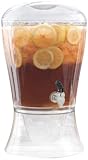
Adding a working water tap: Upgrading a basic wooden frame by adding real flowing water functionality transforms simple play into an immersive sensory experience without needing complex outdoor plumbing.
If you are wondering how to build a mud kitchen with a working tap, the beverage dispenser hack is incredibly effective. A working tap vs pitcher setup significantly elevates the experience by integrating seamlessly with water play. It supports sensory development by allowing kids to control the flow of a safe water source independently. Proper plumbing and waterproofing are key here, especially focusing on adequate drainage for mud sinks.
Materials Needed
- 1 large, durable plastic or glass beverage dispenser with a spigot (2-3 gallon capacity)
- 1 heavy-duty floating shelf board (sized to fit the dispenser)
- 2 galvanized shelf brackets
- 1 large plastic or metal basin (for the sink)
- Drill and 1-inch paddle bit (for drainage)
- Non-toxic sealant for the shelf
Step-by-Step Directions
- Measuring the height of your child to ensure the tap will be at an accessible, ergonomic reaching level.
- Mounting the two galvanized brackets securely onto the backsplash of your backyard mud kitchen.
- Securing the floating shelf onto the brackets to create a stable elevated platform.
- Positioning your large beverage dispenser on the shelf so the spigot hangs directly over the center of your drop-in sink basin.
- Drilling several small holes in the bottom of your sink basin to act as a permanent drainage for mud sink, preventing stagnant water.
- Waterproofing the shelf heavily, as it will be exposed to constant water splashing.
- Filling the dispenser with fresh water before playtime—allowing kids to turn the spigot on and off to control their own safe water source.
Pro-Tip: If you want a more permanent working water tap, you can purchase a standard brass garden hose bibb, mount it to the backsplash, and use a quick-connect adapter to attach your garden hose directly to the back of the play kitchen.
12% offBestseller No. 3
4. Converting a Small Garden Potting Bench

Repin this incredibly easy potting bench transformation!
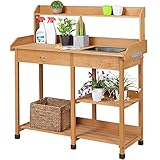
Making a mud kitchen from a potting bench: Bypassing heavy woodworking entirely by modifying pre-existing outdoor furniture is the fastest way to create a durable, compact design for small spaces.
Repurposing a pre-made wooden potting bench is one of the most brilliant small garden solutions available. These free-standing units already possess a charming rustic aesthetic and are incredibly easy to convert into child-sized play areas. By focusing on fixing wobbly legs and adjusting the height, this compact design instantly enables open-ended play and sparks a child’s imagination without requiring extensive power tools.
Materials Needed
- 1 pre-fabricated wooden potting bench (ones with a built-in “dry sink” or soil bin are perfect)
- Hand saw or circular saw
- 1 can of exterior waterproof clear coat
- Sandpaper (120-grit)
- Mud kitchen accessories (measuring cups, wooden spoons, muffin tins)
Step-by-Step Directions
- Measuring the height of your child from the ground to their waist. Standard potting benches are built for adults (around 36 inches high).
- Marking the legs of the potting bench to cut them down to a toddler-friendly height (usually 20 to 24 inches from the ground).
- Cutting the bottom of all four legs evenly using your hand saw or circular saw.
- Leveling the bench on your patio to ensure fixing wobbly legs so it won’t tip over during vigorous play.
- Sanding the freshly cut leg bottoms to prevent moisture wicking from the ground.
- Protecting the entire bench by painting on a thick layer of exterior waterproof clear coat, as potting benches aren’t always fully sealed.
- Organizing your dollar tree utensils by hanging them on the pre-existing hooks that most potting benches feature on the backboard.
Pro-Tip: Use the slatted lower shelves of the potting bench as dedicated outdoor toy storage using plastic crates to keep your sensory mud kitchen tidy when not in use.
5. Upcycling an Old Dresser into a Mud Cafe

Pin this brilliant dresser upcycle to your Kids Play Area board!
Repurposing an old dresser: Recycling indoor furniture into a highly aesthetic, functional outdoor play space provides excellent built-in storage and visual appeal for your DIY mud cafe.
Because an indoor dresser needs an upgrade to survive outside, painting and finishing are critical steps. Thorough sun damage protection keeps the wood from warping. It is imperative to remember that when working with vintage furniture, you must test for lead paint before sanding. A DIY vs store-bought comparison here highlights that an upcycled dresser encourages creativity through its unique, charming cafe appearance while housing outdoor storage crates perfectly.
Materials Needed
- 1 old, solid wood dresser (avoid MDF or particleboard, as they swell and disintegrate outdoors)
- Exterior primer and exterior enamel paint
- 2 plastic wash basins
- Power jigsaw
- Child-safe edges hardware (new drawer pulls)
- Exterior grade caulk
Step-by-Step Directions
- Testing the old dresser for lead paint if it is a vintage piece, ensuring absolute safety before beginning.
- Removing the top row of drawers entirely to create empty cavities for your sink basins.
- Measuring your plastic wash basins and cutting precise holes in the top dresser surface using a jigsaw if the drawer cavities aren’t perfectly sized.
- Sanding the entire dresser lightly to remove the glossy indoor finish, giving the new paint a textured surface to grip.
- Painting the dresser with a heavy-duty exterior primer, followed by two coats of exterior enamel paint for sun damage protection.
- Sealing every joint, seam, and crack with exterior grade caulk to prevent rainwater from seeping into the wooden joints.
- Installing your sink basins into the top holes, gluing them down with a bead of waterproof silicone.
Pro-Tip: To ensure heavy-duty stability, remove the remaining bottom drawers and replace them with plastic outdoor storage crates. Wooden drawers will eventually warp outdoors and become impossible for toddlers to open.

6. Fitting a Double Stainless Steel Sink Setup

Save this double-sink mud kitchen layout for your backyard planning!
Designing a double-sink station: Building a larger, multi-station kitchen accommodating multiple children effectively prevents fighting over resources while promoting collaborative schematic play patterns.
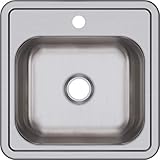
Fitting and joining two sinks into a wide countertop immediately elevates the play experience. A real sink vs plastic bowl debate is easily settled here: stainless steel provides incredible acoustic feedback and durability in a messy play area. This double-sink setup inherently promotes social interaction and deeply develops fine motor skills as children transfer materials between wet and dry zones. It serves as a fantastic hybrid between a traditional mud kitchen vs water table.
Materials Needed
- 2 small stainless steel sink basins (bar prep sinks or large dog bowls with lips work perfectly)
- Expanded wooden countertop (at least 60 inches wide)
- Jigsaw with a wood-cutting blade
- Power drill
- Clear waterproof silicone sealant
- 120-grit sandpaper
Step-by-Step Directions
- Planning your layout by placing both sinks upside down on your wooden countertop, leaving at least 12 inches of prep space between them.
- Tracing the lips of both sinks with a pencil to map out your cut zones.
- Measuring inward by 1/2 inch from your traced lines and drawing a second, smaller inner circle (so the lip of the sink has wood to rest on).
- Drilling pilot holes on the inner circle line to create a starting point for your jigsaw blade.
- Cutting out both holes carefully, following the inner lines.
- Fitting the double-sink basins into the holes to ensure they sit flush and securely.
- Sealing the edges by running a bead of clear waterproof silicone under the lip of each sink, joining the metal firmly to the wood and preventing water from seeping into the cut edges.
Pro-Tip: If using real plumbing sinks, take advantage of the pre-existing drain holes! Place a large bucket directly underneath each drain to catch the muddy water, creating an easy-to-clean surface that doesn’t flood your patio.
7. Waterproofing a Simple IKEA Duktig Outdoor Hack

Don’t forget to pin this brilliant outdoor IKEA hack!
Adapting the IKEA Duktig: Adapting a popular, already-owned indoor toy for outdoor use is a brilliant way to minimize new material purchases and cut down your overall building time.
Transitioning from indoor vs outdoor play means an indoor MDF kitchen needs an upgrade to survive the elements. The famous IKEA Duktig hack requires intense waterproofing and protecting with UV-resistant finishes. Plastic vs wooden elements must be evaluated, as untreated MDF acts like a sponge outdoors. While this modification requires adult supervision, taking the time to apply marine-grade varnishes transforms this classic into a resilient outdoor fixture that rivals heavy-duty Little Tikes vs homemade builds.
Materials Needed
- 1 IKEA Duktig play kitchen (pre-owned or new)
- Marine-grade spar urethane (clear satin finish)
- Exterior oil-based primer
- Synthetic bristle paint brushes
- 4 small rubber furniture feet or casters
- Wood rot solution caulk
Step-by-Step Directions
- Dismantling the IKEA Duktig if it is already built, removing the plastic sink, faucet, and stovetop electronics (these are not weatherproof).
- Sanding all the white and birch veneer surfaces lightly with 120-grit paper so the primer will stick.
- Painting every single piece—especially the exposed bottom edges—with a heavy-duty exterior oil-based primer.
- Protecting the primed wood by applying three thin, even coats of marine-grade spar urethane. This is the only way to seal MDF for outdoor use.
- Installing rubber furniture feet or casters to the bottom of the kitchen legs. Elevating the MDF off the wet ground is critical for preventing mold and swelling.
- Assembling the kitchen back together, securing all joints tightly.
- Sealing every interior seam and screw hole with exterior waterproof caulk to ensure zero moisture penetration.
Pro-Tip: To increase the educational benefits, replace the electronic stovetop sticker with an outdoor chalkboard decal so kids can write down their “recipes” and practice early literacy skills!

Crucial Safety and Maintenance Tips for Outdoor Play Equipment
Maintaining your outdoor play kitchen: To ensure the time and money invested in your project results in a long-lasting, medically safe play environment for young children, diligent upkeep and safe material selection are absolutely non-negotiable.
When building equipment that requires adult supervision yet withstands outdoor weather, you must prioritize structural integrity. Expert DIY tips always emphasize preventing splinters by using safe sanding techniques on every exposed edge. Utilizing a food-grade, non-toxic sealant guarantees that even if a toddler drops their play food onto the counter and puts it in their mouth, they are not ingesting harsh chemicals. Achieving child-safe edges and understanding rot-resistance ratings will keep your build completely safe year after year.
What most guides miss on wood safety: Modern pressure-treated wood (manufactured after 2003) is considered much safer because it no longer contains arsenic (CCA). However, many experts still recommend using untreated, naturally rot-resistant woods like cedar or redwood for high-contact surfaces. If you do use pressure-treated lumber for the base frame, you must allow it to dry completely and then seal it thoroughly.
A reliable wood rot solution involves more than just paint; it requires elevating the legs off wet ground using rubber feet or pavers. Furthermore, implementing proper winter storage tips—such as covering the unit with a heavy-duty tarp or moving it into a garage—will drastically extend the lifespan of your affordable wood sources. Protect your investment by executing this simple yearly maintenance checklist:
- Spring: Sand down any rough spots that developed over the winter and reapply a fresh coat of non-toxic sealant to ensure sun damage protection.
- Summer: Check for loose screws caused by wood expansion and ensure fixing wobbly legs immediately to maintain heavy-duty stability.
- Fall: Clear out wet leaves from the sink basins and check for proper drainage for mud sink to aid in preventing mold.
- Winter: Drain all beverage dispensers, remove plastic basins that might crack in the freeze, and cover securely.
Key Takeaways: Your Quick Guide to DIY Kids Mud Kitchens
Before embarking on your backyard transformation, reviewing the core principles ensures a smooth build. This DIY kids mud kitchen overview consolidates the most vital construction logic. Whether you are building from scratch or following a pallet mud kitchen tutorial, keeping these step-by-step guide takeaways in mind will guarantee your messy play activities are safe and successful.
Key Takeaways:
- Prioritize Naturally Durable Woods: For the longest lifespan, build your DIY kids mud kitchen using naturally rot-resistant woods like cedar or redwood rather than untreated pine.
- Source Safe Pallet Wood: If following a budget pallet mud kitchen tutorial, strictly use pallets stamped “HT” (Heat Treated) to ensure you are avoiding toxic chemical treatments.
- Ensure Heavy-Duty Stability: Always secure your structure to a fence or widen the base footprint, as wet mud and water make the station incredibly top-heavy.
- Elevate to Prevent Rot: Use rubber feet, casters, or patio pavers to lift the wooden legs off the damp grass, which is the ultimate wood rot solution.
- Focus on Child-Safe Finishes: Use raw linseed oil or dedicated non-toxic finishes on the countertops where kids might place play food they could accidentally put in their mouths.
- Incorporate Real Sink Basins: Using a stainless steel sink drop-in rather than plastic bowls ensures longevity and provides a highly satisfying acoustic feedback during sensory-rich play.
People Also Ask About DIY Kids Mud Kitchens
Navigating the details of outdoor messy play stations often brings up common mud kitchen queries. To resolve lingering logistical questions about DIY kids mud kitchens, we have compiled expert answers to help you figure out how to make a mud kitchen cheap, safe, and highly functional.
How to make a mud kitchen for kids?
You can make a mud kitchen for kids by building a basic wooden frame out of cedar fence boards, attaching a flat plywood countertop, and dropping in a stainless steel mixing bowl to act as the sink.
To complete the station, attach a vertical backboard for hanging dollar tree utensils. Sand all edges thoroughly to prevent splinters and apply a non-toxic outdoor sealant to protect the wood from weather and messy play.
What is a mud kitchen used for?
A mud kitchen is used for outdoor, open-ended sensory play, allowing children to mix soil, water, leaves, and pebbles to create imaginary “food.”
This type of unstructured messy play is heavily promoted in Montessori and Waldorf education. It develops fine motor skills, encourages creativity, and provides vital proprioceptive input as children lift heavy wet sand and pour water.
How to build a mud kitchen with a working tap?
The easiest way to build a mud kitchen with a working tap without plumbing is to mount a 2-gallon beverage dispenser with a spigot on a shelf directly above the sink basin.
Children can turn the spigot on and off themselves to dispense clean water. Just be sure to drill drainage holes in the bottom of your sink basin to prevent the play area from overflowing with stagnant water.
What age is a mud kitchen for?
Mud kitchens are ideal for children between the ages of 2 and 7 years old.
Toddlers (ages 2-3) benefit heavily from the basic sensory exploration of touching mud and water. Preschoolers and early primary children (ages 4-7) use the space for complex imaginative play, social role-playing, and schematic play patterns like transporting and transforming materials.
How to make a mud kitchen cheap?
To make a mud kitchen cheaply, upcycle heat-treated (HT) wooden shipping pallets for your lumber and purchase your pots, pans, and utensils from a dollar store or thrift shop.
Instead of buying an expensive real sink, cut a hole in your countertop and drop in a cheap plastic wash basin or a large metal dog bowl. Using repurposed materials can keep your total build cost well under your budget.
How to waterproof a mud kitchen?
Waterproof a mud kitchen by applying two to three coats of exterior marine-grade spar urethane or a natural, heavy-duty linseed oil.
Pay special attention to sealing the end-grain of the wood and the bottom of the legs, as these areas absorb the most moisture. For painted kitchens, use an exterior enamel paint and seal all joints with waterproof silicone caulk.
Where to put a mud kitchen in the garden?
Place your mud kitchen in a shaded, easily supervised area of your garden that has good ground drainage, such as on a concrete patio, a bed of gravel, or outdoor rubber mats.
Avoid placing it directly on soft grass if possible, as the constant water spills will quickly turn the area into a slippery, eroded mud pit, and ground moisture will rot the wooden legs faster.
What tools are needed for a DIY mud kitchen?
The essential tools needed for a DIY mud kitchen include a measuring tape, a power drill, a jigsaw (for cutting the sink hole), an orbital sander, and a circular saw or hand saw.
You will also need exterior-grade wood screws and synthetic bristle brushes for applying your weatherproof sealant or paint.
Is treated wood safe for mud kitchens?
Modern pressure-treated wood (manufactured after 2003) is generally considered safe for outdoor play equipment, as it no longer contains arsenic.
However, because toddlers interact closely with mud kitchen surfaces, many experts recommend using untreated, naturally rot-resistant woods like cedar or redwood for the countertops, or ensuring treated wood is completely sealed with a non-toxic finish.
Can a mud kitchen stay out in winter?
Yes, a mud kitchen can stay out in winter if it is built from rot-resistant wood, heavily sealed, and properly prepared for the freezing temperatures.
For winter storage tips, completely drain all water taps, remove plastic basins (which can crack in freezing weather), and ideally cover the wooden structure with a waterproof outdoor furniture tarp to protect it from heavy snow accumulation.
Final Thoughts on DIY Kids Mud Kitchen Builds
Creating a DIY kids mud kitchen is one of the most impactful investments you can make in your backyard’s outdoor learning environment. The sensory play benefits of mud kitchens for preschoolers align perfectly with the core principles of the Early Years Foundation Stage (EYFS), offering incredible developmental value through open-ended discovery, problem-solving, and tactile engagement.
While taking on a woodworking project requires a weekend of measuring, cutting, and sealing, the immense child development benefits far outweigh the initial labor. You do not need a massive budget or expert carpentry skills to provide a magical, sensory-rich space that will occupy your children for hours. Gather your materials, prioritize safety, and enjoy watching your children cook up incredible natural creations right in your own backyard!
Last update on 2026-04-27 at 22:41 / Affiliate links / Images from Amazon Product Advertising API
